
How Do You Measure a Frame on a Bike
Introduction
Choosing the right How do you measure a frame for a bike is one of the most critical decisions any rider can make. Whether you’re buying a brand-new road bike, checking a used mountain bike, or upgrading your current ride, understanding how to measure a frame on a bike ensures comfort, performance, and safety.
Unfortunately, most riders rely on guesswork or basic height charts—which often leads to poor fit, discomfort, and even long-term injuries. A properly measured bike frame improves pedaling efficiency, enhances control, and makes your riding experience significantly more enjoyable.
In this complete guide, you’ll learn step-by-step methods, formulas, geometry insights, and pro-level tips used by professionals worldwide. Whether you’re a beginner or an experienced cyclist, this guide will help you confidently measure any bike frame like an expert.
What Does Bike Frame Size Mean?
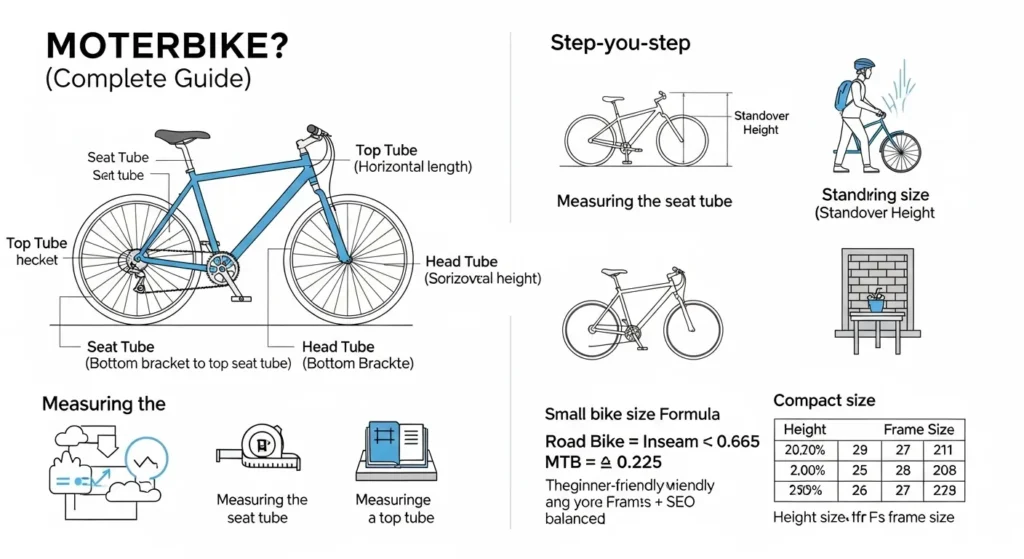
Bike frame size refers to the distance between the bottom bracket (crank center) and the top of the seat tube.
This measurement determines:
- Riding posture
- Comfort level
- Leg extension efficiency
- Overall bike handling
Different bike types use different units:
- Road bikes: centimeters (cm)
- Mountain bikes (MTB): inches
- Hybrid bikes: either cm or inches
Why Measuring Your Bike Frame Correctly Matters
A correct frame size is not just about comfort—it directly impacts performance and health.
Key Benefits:
Prevents knee, back, and wrist pain
Improves pedaling efficiency
Enhances bike control and balance
Reduces fatigue on long rides
Boosts confidence, especially for beginners
A wrong frame size can lead to poor posture and long-term injuries.
Tools You Need to Measure a Bike Frame
Before starting, gather these simple tools:
- Tape measure (essential)
- Book (for inseam measurement)
- Wall (for support)
- Level or straight edge (optional but helpful)
Step-by-Step: How Do You Measure a Frame on a Bike?
This is the core section—follow these methods carefully.
Method 1: Seat Tube Measurement (Standard Method)
This is the most widely used and accurate method.
Steps:
- Place the bike upright against a wall
- Locate the bottom bracket (center of crankset)
- Measure vertically to the top of the seat tube
This gives your frame size
Example:
- 54 cm = Medium road bike
- 17” = Medium MTB
Method 2: Center-to-Center Measurement (Older Bikes)
Used mainly in vintage or classic bikes.
Steps:
- Measure from the bottom bracket
- Measure up to the center of the top tube
Typically results in a slightly smaller measurement than modern sizing.
Method 3: Top Tube Length (Important for Fit)
This determines your reach and riding comfort.
Steps:
- Measure horizontally
- From seat tube → head tube
This is especially important for:
- Road bikes
- Performance cycling
- Long-distance riding
Measurement Methods Comparison Table
| Method | Measurement Points | Accuracy | Best For |
| Seat Tube (C-T) | Bottom bracket → top tube | ⭐⭐⭐⭐⭐ | Modern bikes |
| Center-to-Center | Bottom bracket → top tube center | ⭐⭐⭐ | Vintage bikes |
| Top Tube Length | Seat tube → head tube | ⭐⭐⭐⭐⭐ | Fit & comfort |
How to Measure Your Inseam
Your inseam is the foundation of correct bike sizing.
Steps:
- Stand barefoot against a wall
- Place a book firmly between your legs
- Measure from the floor to the top of the book
This gives your inseam length
Bike Frame Size Calculation Formula
Use these formulas for accurate sizing:
Road Bike:
Frame Size (cm) = Inseam × 0.665
Mountain Bike:
Frame Size (inches) = Inseam × 0.225
Example:
- Inseam = 80 cm
- Road bike = 53 cm frame
Bike Frame Size Chart (Global Quick Guide)
| Rider Height | Road Bike Size | MTB Size |
| 5’5”–5’8” | 52–54 cm | 16–17” |
| 5’8”–5’11” | 54–56 cm | 17–18” |
| 5’11”–6’2” | 56–58 cm | 18–19” |
| 6’2”+ | 58–62 cm | 19–21” |
Note: Sizes vary slightly by brand (Europe vs Asia vs USA).
Key Bike Geometry Measurements Explained
Understanding geometry gives you a pro-level advantage.
Stack
- Vertical distance from the bottom bracket to the head tube
- Affects upright vs aggressive position
Higher stack = more comfort
Reach
- Horizontal distance from the bottom bracket to the handlebars
Longer reach = more aerodynamic position
Standover Height
- Distance from ground to top tube
Must be slightly less than your inseam for safety
Common Mistakes When Measuring a Bike Frame
Avoid these costly errors:
Measuring along curved tubes
Ignoring bike type differences
Using height only (no inseam)
Confusing cm and inches
Assuming all brands use the same sizing
There is no universal sizing standard across manufacturers.
How to Measure a Used or Unknown Bike Frame
Buying a second-hand bike? Follow this:
Steps:
- Measure the seat tube
- Measure top tube length
- Check wheel size
- Compare with brand geometry charts
This is the most reliable method when labels are missing.
Global Sizing Differences
Different regions follow different sizing trends:
- 🇪🇺 Europe: Precise cm-based sizing
- 🇺🇸 USA: Mix of inches and S/M/L
- 🇯🇵 Japan: Compact geometry (smaller frames)
- 🇵🇰 Pakistan / 🇮🇳 India: Mostly generic sizing
Always check brand-specific charts before buying.
Pros & Cons
Pros
- Saves money (no bike fitting cost)
- Helps when buying used bikes
- Gives a better understanding of geometry
- Improves long-term riding comfort
Cons
- Easy to make measurement errors
- Requires basic tools and patience
- Doesn’t replace professional bike fitting
FAQs
A: Measure the seat tube from the bottom bracket to the top of the tube.
A: Not accurately. A tape measure is essential.
A: If you struggle to reach the handlebars or stand over safely.
A: Inseam provides much more accurate sizing.
A: Each brand has slightly different geometry.
Final Expert
Measuring a bike frame isn’t complicated—but doing it correctly makes a massive difference in your riding experience.
Seat tube measurement (core size)
Inseam calculation (accuracy)
Geometry understanding (advanced fit)
Whether you’re buying a high-performance road bike in Europe or a used MTB in Asia, these principles apply globally.
Once you understand how to measure a frame on a bike, you’ll never choose the wrong size again—and your riding comfort will improve instantly.
