
Dual Motor Electric Bike
Introduction
Dual motor electric bike are evolving fast, but one category that’s gaining serious attention worldwide is the dual motor electric bike. Designed for maximum power, traction, and performance, these bikes are becoming popular among off-road riders, delivery professionals, and adventure enthusiasts.
But here’s the big question: Are dual motor e-bikes really worth it in 2026?
Many buyers get confused between single motor and dual motor systems. Some think more power always means better performance—but that’s not always true depending on your riding style and needs.
In this complete guide, we’ll break down everything you need to know—from how dual motor e-bikes work to real-world use cases, pros & cons, comparisons, and buying tips. By the end, you’ll know exactly whether this powerful machine is right for you.
What Is a Dual Motor Electric Bike?
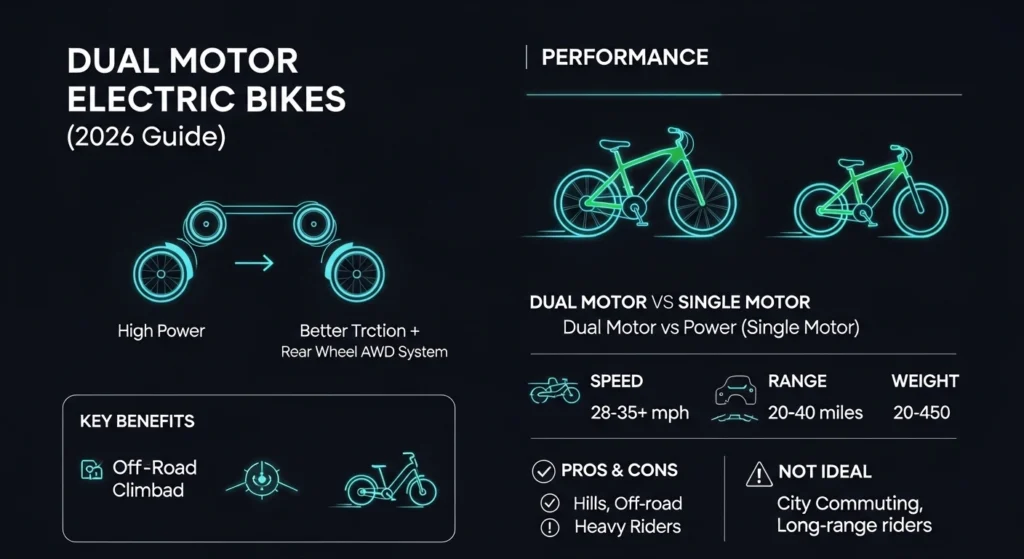
A dual motor electric bike is an e-bike equipped with two motors—one in the front wheel and one in the rear wheel, creating an all-wheel-drive (AWD) system.
Quick Verdict:
- Best for: hills, off-road riding, heavy loads
- Not ideal for: city commuting or long-range rides
How Dual Motor Ebikes Work
Dual motor systems distribute power across both wheels, improving balance and traction.
Key Mechanism:
- Front Motor: Pulls the bike forward
- Rear Motor: Pushes the bike forward
- Combined Output: Delivers high torque and acceleration
What This Means:
- Better grip on slippery surfaces
- Faster acceleration from standstill
- Improved stability on rough terrain
Many modern bikes also allow switching between single and dual motor modes, helping save battery when needed.
Dual Motor vs Single Motor Electric Bike
Here’s a clear comparison to help users decide:
| Feature | Dual Motor E-Bike | Single Motor E-Bike |
| Power | Very High | Moderate |
| Speed | 28–35+ mph | 20–28 mph |
| Range | 20–40 miles | 30–60 miles |
| Traction | Excellent (AWD) | Standard |
| Weight | Heavy | Lightweight |
| Cost | Expensive | Budget-friendly |
Conclusion: Dual motor bikes offer unmatched power but sacrifice range and efficiency.
Benefits of Dual Motor Electric Bikes
Extreme Power & Torque
Dual motors provide significantly higher wattage (2000W–3000W+), making steep climbs effortless.
Superior Hill Climbing
Perfect for mountainous regions or cities with steep roads.
All-Terrain Capability
Performs exceptionally well on:
- Sand
- Snow
- Mud
- Gravel
Faster Acceleration
Ideal for riders who need quick starts, such as delivery riders.
Drawbacks You Must Know
Higher Cost
Dual motor bikes are typically $500–$1000 more expensive than single motor models.
Faster Battery Drain
Using two motors consumes more energy, reducing range.
Heavier Build
Most dual motor e-bikes weigh between 60–80 lbs, making them harder to carry.
More Maintenance
More components mean more potential repairs.
Who Should Buy a Dual Motor Ebike?
Ideal For:
- Riders in hilly or mountainous areas
- Off-road and adventure enthusiasts
- Delivery riders carrying heavy loads
- Performance-focused users
Who Should Avoid It?
- City commuters with flat roads
- Riders needing long battery range
- Beginners unfamiliar with high-power bikes
- Users wanting lightweight portability
Types of Dual Motor Electric Bikes
1. Fat Tire Dual Motor Bikes
- Best for extreme terrain (snow, sand)
2. Folding Dual Motor Bikes
- Compact yet powerful
3. Mountain Dual Motor Bikes
- Designed for trails and off-road riding
4. Dual Battery + Dual Motor Bikes
- Extended range for long-distance riders
How Fast Are Dual Motor Ebikes?
- Average speed: 28–35 mph
- High-performance models: 35+ mph
Note: Speed limits vary by country (EU typically limits to 25 km/h for legal road use).
Range & Battery Life Explained
Average Range:
- Dual motor: 20–40 miles per charge
Factors Affecting Range:
- Motor usage (single vs dual mode)
- Terrain (flat vs hills)
- Rider weight
- Battery size
Pro Tip: Use single motor mode on flat roads to extend battery life.
How to Choose the Best Dual Motor Electric Bike
Motor Power
- 1000W–2000W → Balanced use
- 3000W+ → High performance
Battery Capacity
- Minimum: 48V 15Ah
- Ideal: 48V 20Ah+
Terrain Type
- City → Not necessary
- Off-road → Highly recommended
Weight & Frame
- Folding vs full-size
- Aluminum frames for lighter build
Best Dual Motor Electric Bikes (2026 Picks)
| Model | Power | Top Speed | Best For |
| Wallke X3 Max | 2800W | 35 mph | All-terrain |
| VICTRIP SURNAT N12 | 2000W | 30 mph | Budget performance |
| ENGWE Dual Motor | 1500W+ | 28 mph | Daily + light trails |
Pros & Cons Summary
Pros:
- High power & torque
- Excellent traction (AWD)
- Great for hills and off-road
- Faster acceleration
Cons:
- Expensive
- Lower range
- Heavy
- More maintenance
Are Dual Motor Electric Bikes Worth It?
Final Verdict: YES — but not for everyone
Worth It If You Need:
- Extreme power
- Off-road capability
- Hill climbing performance
Not Worth It If You Want:
- Lightweight commuting
- Long-distance efficiency
- Budget-friendly option
FAQs
A: They typically reach speeds of 28–35+ mph, depending on motor power.
A: Running two motors consumes more energy, reducing range.
A: Most modern models allow switching between single and dual motor modes.
A: They are better suited for experienced riders due to higher power.
A: Regulations vary—EU and UK have stricter speed limits compared to the USA.
Conclusion
Dual motor electric bikes push performance to the next level, delivering exceptional power, superior traction, and true all-terrain capability. They are built for riders who demand more than just basic commuting—especially those tackling hills, rough trails, or carrying heavy loads.
That Said, they aren’t the perfect choice for everyone. If your goal is daily city commuting, longer range, and efficiency, a single motor e-bike may suit you better. But if you want raw power, adventure-ready performance, and maximum control on challenging terrain, a dual motor electric bike is definitely worth the investment.
