
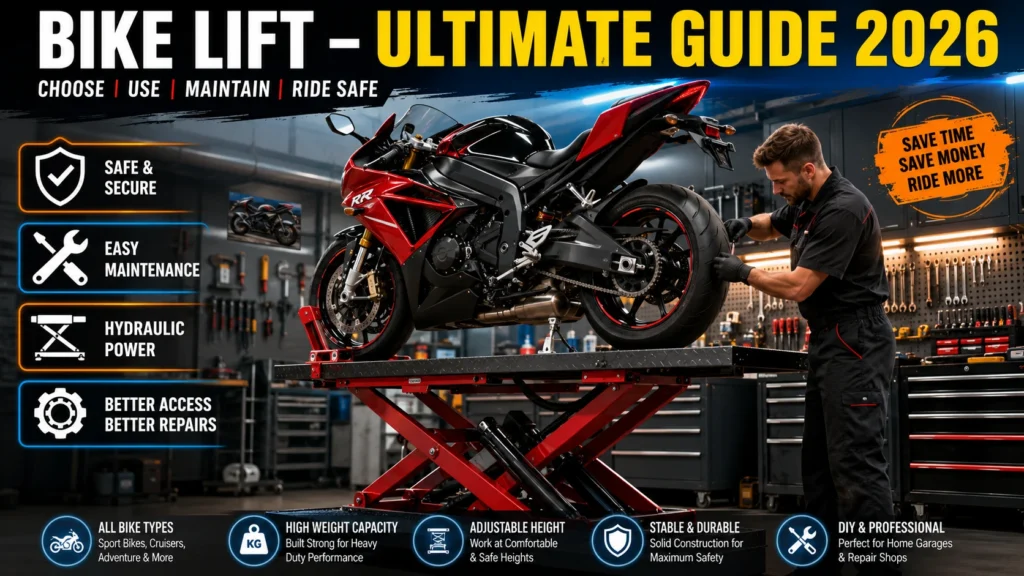
A Bike Lift is one of the best investments for motorcycle owners, whether you’re a weekend rider, DIY mechanic, or professional technician. It transforms difficult maintenance jobs into safer, faster, and more comfortable tasks by raising your motorcycle to an ergonomic working height. Instead of crouching on the floor or struggling to access critical components, a quality bike lift allows you to work efficiently while reducing strain on your back and knees.
Modern motorcycle lifts come in various designs, including hydraulic, pneumatic, electric, scissor, and table lifts. Each type offers unique advantages depending on your workspace, motorcycle weight, maintenance frequency, and budget. Choosing the right lift not only improves workshop productivity but also enhances safety by providing a stable platform during repairs.
Whether you’re changing tires, replacing brake pads, servicing the chain, or performing a complete engine rebuild, a dependable bike lift makes every job easier. This comprehensive guide explores everything you need to know about bike lifts—from their benefits and working principles to buying tips, maintenance practices, and safety recommendations—helping you make an informed decision in 2026.
What Is a Bike Lift?
A bike lift, often called a motorcycle lift, motorcycle jack, or motorcycle table lift, is a specialized tool designed to safely raise motorcycles off the ground. Unlike standard automotive jacks, motorcycle lifts are engineered specifically for the weight distribution and frame structure of motorcycles, ensuring stability while you work.
Most bike lifts feature a robust steel frame, non-slip platform, hydraulic or pneumatic lifting mechanism, safety locking bars, adjustable wheel chocks, and tie-down points to secure the motorcycle. These features allow users to lift motorcycles to a comfortable working height, making inspections, repairs, cleaning, and upgrades much more convenient.
Bike lifts are widely used for routine maintenance such as oil changes, chain lubrication, brake servicing, suspension adjustments, tire replacement, and detailing. Professional repair shops also rely on heavy-duty table lifts for extensive engine work and custom motorcycle builds.
Why Every Motorcycle Owner Should Own a Bike Lift
Owning a bike lift isn’t just about convenience—it significantly improves safety, efficiency, and the overall maintenance experience.
Enhanced Safety
Working on a motorcycle while it’s balanced on a side stand or center stand can be risky. A quality bike lift securely supports the motorcycle, reducing the chance of tipping over during repairs.
Greater Comfort
A lift raises your motorcycle to waist height, allowing you to work without constant bending or kneeling. This minimizes fatigue and helps prevent long-term back or knee pain.
Faster Maintenance
With easier access to every part of the motorcycle, repairs and inspections become quicker and more precise, saving valuable time.
Professional Results
A stable motorcycle enables more accurate adjustments, cleaner installations, and higher-quality workmanship, whether you’re replacing brake components or installing aftermarket accessories.
Long-Term Savings
Routine maintenance performed at home reduces dependence on repair shops, saving money over the life of your motorcycle.
How Does a Bike Lift Work?
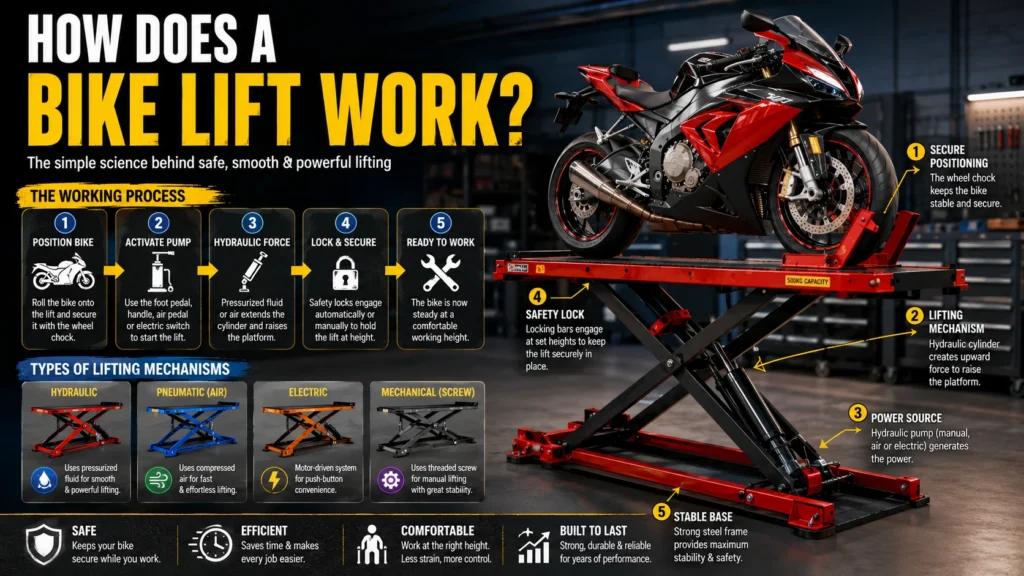
A bike lift Functions by applying upward force beneath the motorcycle until it reaches the desired working height. The lifting mechanism varies depending on the type of lift.
Hydraulic Bike Lift
Hydraulic lifts use pressurized fluid inside a cylinder to raise the platform. They are known for smooth operation, high weight capacity, reliability, and affordable pricing, making them ideal for home garages.
Pneumatic (Air) Bike Lift
Air-powered lifts use compressed air from an external compressor. They lift motorcycles quickly with minimal physical effort and are commonly found in busy commercial workshops.
Electric Bike Lift
Electric lifts use a motor-driven system that raises and lowers the platform at the push of a button. These lifts are perfect for professional garages requiring frequent use.
Mechanical Screw Lift
Mechanical lifts use threaded screws operated manually to raise the platform. While slower than hydraulic systems, they offer excellent stability, simple maintenance, and budget-friendly operation.
Types of Bike Lifts
Hydraulic Motorcycle Lift
Hydraulic lifts are among the most popular options due to their balance of affordability, lifting power, and ease of use. They are suitable for sport bikes, cruisers, touring motorcycles, and adventure bikes.
Pros
- Affordable
- High lifting capacity
- Reliable performance
- Easy maintenance
Cons
- Manual pumping required
- Slower than pneumatic lifts
Pneumatic Motorcycle Lift
Air-powered lifts are designed for professional mechanics who require fast lifting and high productivity.
Ideal For
- Commercial repair shops
- Heavy motorcycles
- Daily workshop use
Electric Motorcycle Lift
Electric lifts provide effortless push-button operation and are excellent for workshops handling multiple motorcycles every day.
Scissor Motorcycle Lift
Scissor lifts are compact, portable, and ideal for quick maintenance tasks such as tire replacement, brake servicing, and chain lubrication.
Table Motorcycle Lift
Table lifts provide full support beneath the motorcycle, making them the safest option for complete restorations, engine rebuilding, and long-term projects.
Choosing the Right Bike Lift
Selecting the right lift depends on several important factors.
Weight Capacity
Always choose a lift that exceeds your motorcycle’s weight by at least 20–30% to ensure maximum stability and safety.
Lift Height
Higher lifting ranges reduce physical strain and make major repairs more comfortable.
Platform Size
Larger platforms provide greater stability, especially for touring motorcycles and cruisers.
Safety Locks
Mechanical locking systems prevent accidental lowering and should always be engaged while working.
Wheel Chocks
Integrated wheel chocks help secure the front wheel and keep the motorcycle upright during lifting.
Portability
If you have limited workshop space, consider lifts equipped with caster wheels for easy movement.
Recommended Weight Capacity
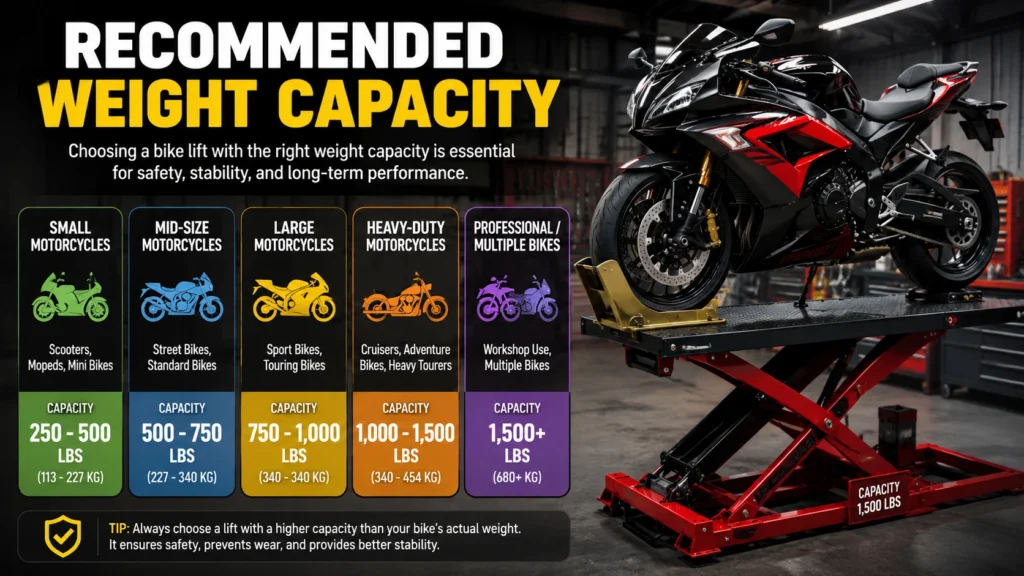
| Motorcycle Type | Recommended Lift Capacity |
| Dirt Bike | 300–500 lbs |
| Sport Bike | 500–1,000 lbs |
| Cruiser | 800–1,200 lbs |
| Adventure Bike | 1,000–1,500 lbs |
| Touring Motorcycle | 1,200–1,800 lbs |
Choosing a lift with additional capacity provides better stability and allows for future motorcycle upgrades.
Essential Features to Look For
A quality bike lift should include:
- Heavy-duty steel construction
- Powder-coated finish
- Non-slip platform
- Adjustable wheel chock
- Hydraulic or pneumatic lifting system
- Safety locking mechanism
- Rubber lift pads
- Tie-down anchor points
- Corrosion-resistant components
- Smooth-rolling caster wheels
- Wide lifting platform
- Easy-access foot pedal or control system
These features improve durability, ease of use, and overall workshop safety.
Benefits of Using a Bike Lift
Using a motorcycle lift provides numerous advantages beyond simple convenience.
- Reduces back and knee strain
- Improves repair precision
- Speeds up maintenance tasks
- Enhances workplace safety
- Simplifies motorcycle cleaning
- Makes inspections easier
- Supports heavy motorcycles securely
- Increases workshop productivity
- Protects expensive motorcycle components from accidental damage
Whether you’re maintaining a daily commuter or restoring a classic motorcycle, a lift significantly improves the overall repair experience.
Common Maintenance Tasks Using a Bike Lift
A motorcycle lift is suitable for a wide variety of service jobs, including:
- Oil and filter replacement
- Tire changes
- Brake pad replacement
- Wheel balancing
- Chain cleaning and lubrication
- Suspension adjustments
- Exhaust installation
- Electrical troubleshooting
- Engine diagnostics
- Spark plug replacement
- Clutch servicing
- Motorcycle detailing and polishing
Maintaining Your Bike Lift
Proper maintenance extends the life of your lift and ensures safe operation.
Inspect hydraulic cylinders regularly for leaks and damaged seals. Lubricate moving joints and pivot points according to the manufacturer’s recommendations. Keep the lifting platform clean to prevent dirt buildup that may interfere with operation.
Check bolts, fasteners, safety locks, and wheel chocks before every use. Replace worn rubber pads and damaged tie-down straps immediately. If using an air-powered lift, inspect air hoses and fittings for leaks.
Store the lift indoors in a dry environment to minimize rust and corrosion.
Safety Tips for Using a Bike Lift
Safety should always be your top priority.
- Read the manufacturer’s instructions before operating the lift.
- Position the lift on a flat, level surface.
- Never exceed the rated weight capacity.
- Secure the motorcycle using high-quality tie-down straps.
- Engage the mechanical safety lock after raising the bike.
- Inspect the lift before each use.
- Keep hands and feet away from moving components.
- Wear gloves and eye protection.
- Maintain a clean, clutter-free workspace.
- Never work beneath an unstable motorcycle.
Common Mistakes to Avoid
Avoid these Frequent errors that can compromise safety:
- Overloading the lift
- Skipping safety locks
- Failing to use tie-down straps
- Lifting on uneven floors
- Ignoring hydraulic leaks
- Using damaged equipment
- Raising the motorcycle too quickly
- Neglecting routine maintenance
- Incorrectly positioning the motorcycle
- Working beneath an unsecured bike
Preventing these mistakes reduces the risk of accidents and equipment damage.
FAQs
1. What is a bike lift used for?
A bike lift is designed to raise a motorcycle to a comfortable working height, making maintenance, repairs, cleaning, and inspections easier and safer. It’s commonly used for oil changes, chain lubrication, tire replacement, brake servicing, suspension work, and detailing.
2. What type of bike lift is best for home garages?
A hydraulic bike lift is the best choice for most home garages. It offers excellent lifting capacity, reliable performance, affordability, and requires minimal maintenance. It’s suitable for sport bikes, cruisers, adventure bikes, and touring motorcycles.
3. How much weight can a motorcycle bike lift hold?
The weight capacity depends on the model. Most motorcycle lifts support between 300 and 1,500 pounds, while heavy-duty table lifts can handle up to 2,000 pounds or more. Always choose a lift with a higher capacity than your motorcycle’s weight.
4. Are motorcycle bike lifts safe to use?
Yes, motorcycle bike lifts are safe when used correctly. Always place the lift on a level surface, secure the motorcycle with tie-down straps, engage the safety locking mechanism, and never exceed the lift’s maximum weight capacity.
Final Thoughts
A bike lift is an essential tool for anyone serious about Motorcycle maintenance. Whether you choose a hydraulic, pneumatic, electric, scissor, or table lift, investing in the right equipment makes every repair safer, faster, and more comfortable. By selecting a lift with the appropriate weight capacity, reliable safety features, and durable construction, you’ll improve your workshop efficiency while protecting your motorcycle.
With regular maintenance, proper operation, and careful attention to safety, a high-quality bike lift will provide years of dependable service. From simple oil changes to complete engine rebuilds, it helps transform challenging repairs into smooth, professional-quality maintenance tasks, making it one of the smartest investments any motorcycle owner can make.
