
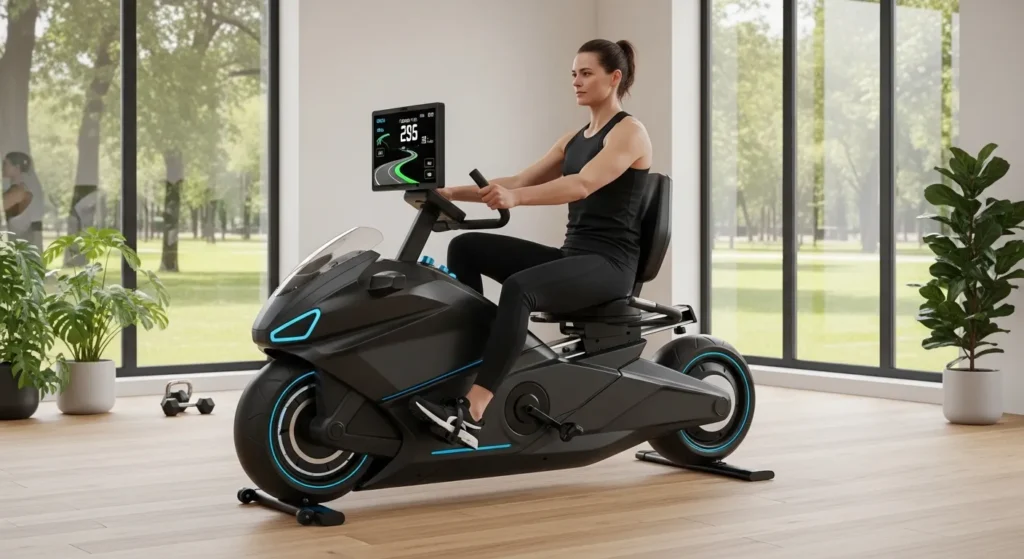
Best Recumbent Bike Exercise
At BikesLover.com, we focus on bikes that transform lives—from powerful motorcycles to smooth indoor rides. Our goal is to help riders and fitness enthusiasts make smarter choices that improve health, performance, and everyday comfort.
The Best recumbent bike exercise has become a popular choice for home gyms across the world. Their ergonomic design, back support, and ease of use make them ideal for beginners, seniors, and anyone seeking low-impact exercise.
Why does this matter? Poorly structured cardio leads to boredom and plateaus, but these plans deliver results: torch 300-600 calories per session, boost heart health, and sculpt legs without strain. Stick around for comparisons, tables, pro tips, and FAQs to make your next ride your best.
What Is a Recumbent Bike?
A recumbent bike positions you in a laid-back recline, with your feet forward on pedals and a supportive bucket seat cradling your back. Picture lounging while cycling – that’s the vibe. This design traces back to the 1890s but exploded in the 1980s for fitness, thanks to pioneers like Schwinn.
Globally, brands like Life Fitness (USA), Technogym (Italy), and Matrix (Asia/Europe) dominate. In Europe, expect CE-certified models with quiet magnetic resistance; in Pakistan or India, budget imports from China emphasize durability for humid climates. Key specs? Flywheel weights from 10-20kg for smooth spins, LCD consoles tracking watts/RPM, and adjustable seats fitting heights 150-200cm.
Unlike road bikes we cover at BikesLover.com, recumbents prioritize low-impact cardio over speed. They’re stationary staples in gyms from London to Lahore, ideal for 20-60 minute sessions without saddle sores.
Benefits of Recumbent Bike Exercise
Recumbent biking packs punches that upright alternatives can’t match, blending comfort with serious fitness gains.
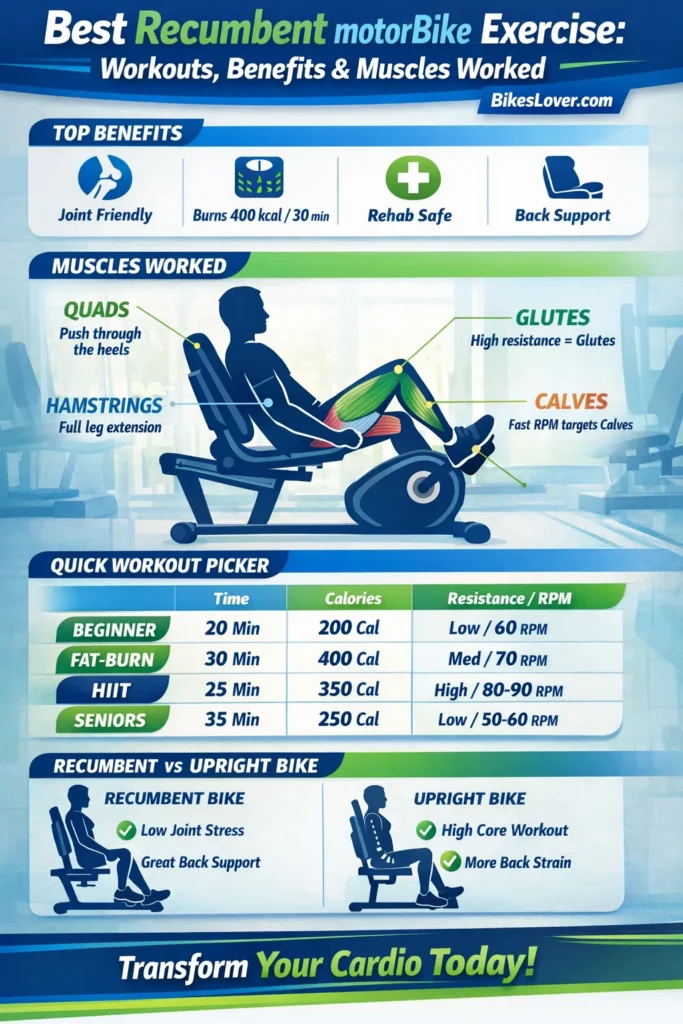
- Joint Protection: Zero forward lean slashes knee torque by 30-50% (per studies from the American Council on Exercise). Perfect for osteoarthritis sufferers in aging European populations.
- Back and Posture Support: Full lumbar cushioning prevents slouching – a boon for desk workers in tech hubs like Berlin or Islamabad.
- Calorie Torcher: Steady rides burn 250-400 kcal/hour at a moderate pace; HIIT spikes it to 500+. Weight loss seekers in the UK love this for steady deficits.
- Cardio Without Boredom: Built-in programs (hill climbs, intervals) keep sessions fresh, building VO2 max like running but gentler.
- Rehab Gold: Physiotherapists in Australia and the UAE prescribe them post-surgery for controlled blood flow.
Real-world win: A 2023 UK study showed seniors gained 15% more endurance in 8 weeks versus treadmills. Globally, they’re rising in home setups, especially electric-hybrid models blending bike tech with e-assist.
Muscles Worked on a Recumbent Bike
Don’t Dismiss recumbents as “easy” – they hammer your lower body while sneaking in stabilizers. Primary movers fire during the pedal stroke, but tweaks shift emphasis.
Core Muscles Targeted:
| Muscle Group | Role in Pedaling | How to Emphasize |
| Quadriceps (front thighs) | Push phase power | High cadence (90+ RPM), light resistance |
| Hamstrings (back thighs) | Pull phase pull-back | Heavy resistance, slower cadence (60-70 RPM) |
| Glutes (buttocks) | Hip extension drive | Seated climbs with resistance 6-8 |
| Calves (gastrocnemius/soleus) | Ankle push-off | Point toes slightly, add heel lifts |
| Core/Lower Back | Posture stability | Brace abs, avoid slumping |
Secondary players like hip flexors (iliopsoas) and tibialis anterior (shins) activate for balance. Unlike motorcycle riding’s upper-body lean, recumbents build leg endurance quietly.
Pro Tip: Vary resistance weekly – low for quads/calves (quad-dominant like sprinting), high for glutes/hams (power-focused). A German fitness trial found that this balanced muscle growth 20% better than static routines.
How to Use a Recumbent Exercise Bike
Nail setup first – bad form turns gains into strains. Follow this global-standard checklist, adapted for home bikes from Peloton to local Pakistani assemblers.
Step-by-Step Setup Guide
- Seat Adjustment: Slide so knees bend 25-35° at pedal bottom (full extension = knee lock, bad news).
- Pedal Alignment: Ball of foot over axle; straps secure for HIIT.
- Handlebar Position: Light grip at chest height – no death-clutching.
- Back Posture: Natural spine curve, shoulders relaxed.
- Console Check: Input age/weight for accurate calorie/RPE reads.
Common Form Fixes:
- Hunching? Engage core like prepping for a punch.
- Knee wobble? Shorten the crank arm if possible.
- Numb feet? Loosen shoes, vary pressure.
In Europe, ISO standards mandate anti-slip pedals; check yours. Warm-up 5 mins easy (50-60 RPM, level 1) prevents pulls.
Best Recumbent Bike Workouts
Here’s where we crush competitors: detailed, progressive plans with metrics. Scale resistance 1-10 (1=easy spin), cadence via console. Rest 24-48 hours between sessions. Track via apps like Strava or Zwift.
20-Minute Beginner Recumbent Bike Workout
Ease in post-injury or new to fitness. Builds base without overwhelm.
- Warm-up (5 mins): Level 1-2, 55-65 RPM. Focus breath.
- Main (10 mins): Steady level 3, 65-75 RPM. RPE 4/10.
- Cool-down (5 mins): Level 1, 50 RPM. Stretch legs.
Progression: Add 2 mins/week. Burns ~200 kcal. Ideal for Pakistani home users on entry-level bikes.
30-Minute Fat-Burn Recumbent Workout
Steady-state gold for weight loss – sustains fat oxidation.
- Warm-up (5 mins): Level 2, 70 RPM.
- Main (20 mins): Level 4-5, 80-85 RPM. Hold RPE 6/10.
- Cool-down (5 mins): Level 2, 60 RPM.
Progression: Up resistance 0.5/week. ~400 kcal/session. UK cyclists pair with salads for a 1kg/week loss.
25-Minute Recumbent HIIT Session
Time-crunched power: alternates burn glycogen fast.
- Warm-up (5 mins): Level 2-3, 70 RPM.
- Intervals (15 mins, 5 rounds): 45s sprint (level 7, 95 RPM), 2:15 recovery (level 2, 60 RPM).
- Cool-down (5 mins): Level 1-2.
Progression: Shorten recovery 15s/week. ~350 kcal + EPOC boost. Advanced like German triathletes.
Recumbent Bike Workout for Seniors & Rehab
Gentle mobility focus – circulation without risk.
- Warm-up (5 mins): Level 1, 50 RPM.
- Main (25 mins): Level 1-3, 55-65 RPM. Pause if in pain.
- Cool-down (5 mins): Level 1, stretch.
Progression: +5 mins/month. UAE physios swear by it post-hip ops.
Workout Comparison Table:
| Workout | Duration | Intensity (RPE) | Calories Burned | Best For |
| Beginner | 20 mins | 4/10 | 200 | Newbies/Rehab |
| Fat-Burn | 30 mins | 6/10 | 400 | Weight Loss |
| HIIT | 25 mins | 8/10 peaks | 350 | Stamina/Fat |
| Seniors | 35 mins | 3-5/10 | 250 | Mobility |
Recumbent Bike vs Upright Bike: Which Is Better?
Head-to-head: Recumbents win comfort; uprights edge intensity.
Detailed Comparison Table:
| Feature | Recumbent Bike | Upright Bike |
| Posture | Reclined, back-supported | Upright, forward lean |
| Joint Impact | Low (knees/hips) | Medium-high |
| Core Work | Minimal | High |
| Max Speed Potential | High with resistance | Slightly higher cadence |
| Comfort Rating | 9/10 | 6/10 long rides |
| Price Range (Europe) | €300-€1500 | €200-€1200 |
| Best Users | Seniors, back pain | Athletes, core focus |
Recumbent Pros: Safer, sustainable sessions. Cons: Less upper-body burn.
Upright Pros: Simulates road cycling. Cons: Strains city riders.
Europe leans toward apartments; Asia favors uprights for space.
How Often Should You Do Recumbent Bike Exercise?
Balance is key – overdo it, risk burnout.
- Beginners: 3x/week, 20-30 mins.
- Weight Loss: 4-5x/week, mix steady/HIIT.
- Advanced: 5-6x/week, <90 mins total.
- Seniors/Rehab: 3x/week, consult doc.
Rest days? Walk or strength train legs. Global guideline: 150 mins moderate cardio weekly (WHO).
Tips to Maximize Results and Avoid Injury
Elevate your game safely.
- Progress Smart: 10% weekly increase (time/resistance).
- Hydrate & Fuel: 500ml water/session; banana pre-ride.
- Pair with Strength: Squats 2x/week, balance bikes’ quad bias.
- Maintenance: Wipe sweat, lube chain quarterly.
- Tech Hacks: Heart rate zones (60-80% max) via chest strap.
Injury Prevention Checklist:
- Daily: Check seat bolts.
- Weekly: Clean sensors.
- Avoid: Sudden resistance jumps.
Pros and Cons of Recumbent Bike Exercise
Pros:
- Ultra-low injury risk.
- Scalable for all levels.
- Space-efficient for homes.
- Fun metrics track progress.
Cons:
- Less full-body than ellipticals.
- Higher upfront cost for premiums.
- Can feel “too easy” initially.
- Limited upper-body engagement.
FAQs
A: consistent 30-min sessions create 500kcal deficits weekly, accelerating loss with diet.
A: Recumbents hit legs evenly; uprights add core/shoulders more.
A: Start with our 20-min plan; focus on form over speed.
A: The rehab routine: low resistance, steady pace.
A: Ideal – support unloads spine; avoid if acute injury.
Conclusion
Mastering the best recumbent bike exercise routines unlocks joint-friendly cardio that delivers real results – whether you’re a beginner in Europe building stamina, a senior in Pakistan prioritizing rehab, or anyone chasing weight loss through structured HIIT. With proper form, progressive workouts, and smart tweaks like resistance variation, you’ll target quads, glutes, and hamstrings effectively while sidestepping common pitfalls like vague plans or poor posture.
This guide arms you with everything top pages miss: detailed cadence/RPM metrics, audience-specific routines, and practical tables for quick reference. Start with the 20-minute beginner session today, track progress weekly, and pair with strength work for balanced gains. At BikesLover.com, we’re here for your fitness journey – from motorcycles to recumbents, ride stronger, safer, and smarter. What’s your first workout?
