
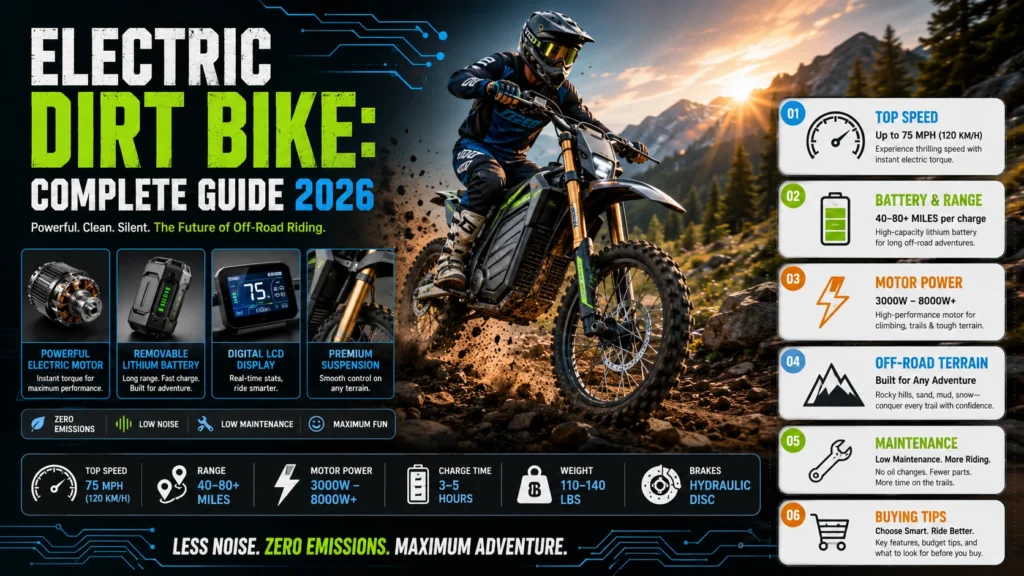
Electric dirt bikes are changing the future of off-road riding by combining powerful electric motors, advanced battery technology, and environmentally friendly performance into one exciting machine. Whether you’re a beginner exploring local trails, an experienced motocross rider chasing adrenaline, or an outdoor enthusiast looking for a quieter alternative to gas-powered bikes, an electric dirt bike offers a thrilling riding experience with fewer maintenance requirements.
Unlike traditional dirt bikes that rely on gasoline engines, electric dirt bikes are powered by rechargeable lithium-ion batteries and high-torque electric motors. The result is instant acceleration, smooth throttle response, reduced noise, and zero tailpipe emissions. As battery technology continues to improve, today’s electric dirt bikes deliver longer riding ranges, faster charging times, and impressive power that rivals many conventional off-road motorcycles.
One of the biggest advantages of owning an electric dirt bike is its simplicity. With fewer moving parts, riders spend less time on maintenance and more time enjoying the trails. There are no oil changes, spark plug replacements, fuel filters, or carburetors to worry about. This not only lowers long-term ownership costs but also makes electric dirt bikes ideal for riders who want a hassle-free experience.
The popularity of electric dirt bikes has grown rapidly in recent years thanks to technological advancements and increasing awareness of sustainable transportation. Many manufacturers now offer models designed for children, beginners, trail riders, motocross racers, and professional off-road enthusiasts. Whether you’re looking for a lightweight bike for weekend adventures or a high-performance machine capable of tackling steep hills and technical terrain, there is an electric dirt bike to suit your riding style and budget.
What Is an Electric Dirt Bike?
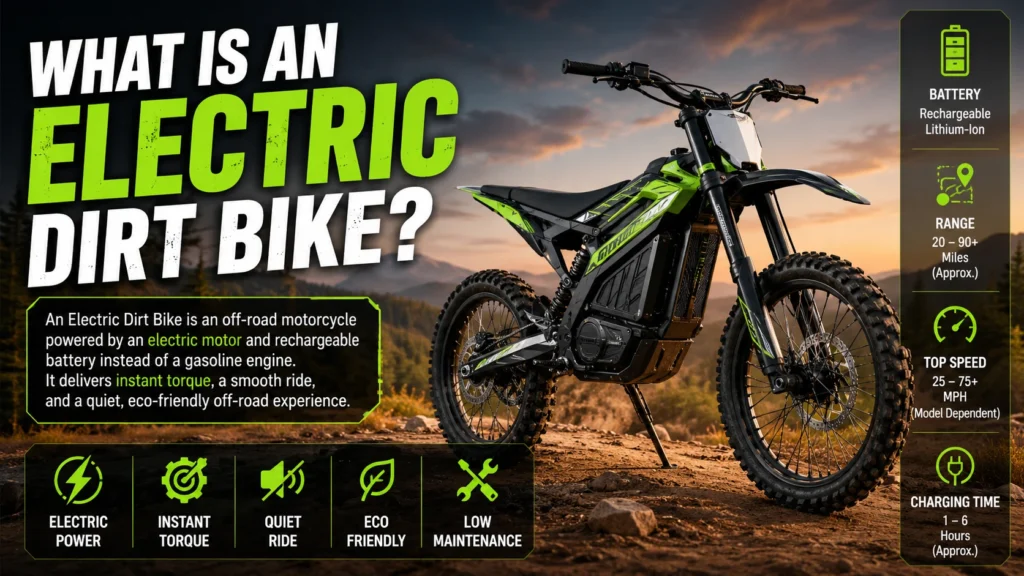
An electric dirt bike is an off-road motorcycle powered by an electric motor instead of a gasoline engine. It is specifically built to handle rugged environments such as forest trails, rocky paths, sandy deserts, muddy tracks, mountain climbs, and motocross circuits.
Electric dirt bikes store energy in rechargeable lithium-ion battery packs. When the rider twists the throttle, the controller sends power from the battery to the electric motor, which instantly delivers torque to the rear wheel. Unlike traditional motorcycles, most electric dirt bikes feature a single-speed drivetrain, making them easier to ride and reducing mechanical complexity.
These bikes are appreciated for their quiet operation, smooth acceleration, eco-friendly performance, and low maintenance. They are suitable for riders of all ages, from children learning basic riding skills to professionals competing in high-performance racing events.
Key Features of an Electric Dirt Bike
- Instant torque for fast acceleration
- Rechargeable lithium-ion battery
- Quiet and smooth operation
- Low maintenance requirements
- Lightweight frame construction
- Zero tailpipe emissions
- Beginner-friendly controls
- High energy efficiency
- Advanced digital displays
- Multiple riding modes
Types of Electric Dirt Bikes
Choosing the right electric dirt bike depends on your riding style, experience level, and the terrain you plan to explore. Manufacturers design different models to meet a wide range of needs, from recreational trail riding to competitive motocross racing.
Trail Electric Dirt Bikes
Trail electric dirt bikes are designed for recreational off-road riding. They prioritize comfort, battery efficiency, and smooth power delivery, making them perfect for exploring forests, hills, and natural landscapes.
Best For:
- Forest trails
- Mountain riding
- Weekend adventures
- Beginners
- Casual riders
Motocross Electric Dirt Bikes
Motocross models focus on speed, agility, and aggressive performance. They feature lightweight frames, long-travel suspension, and powerful motors capable of handling jumps, corners, and race tracks.
Best For:
- Motocross tracks
- Competitive racing
- Experienced riders
- High-speed performance
Enduro Electric Dirt Bikes
Enduro electric dirt bikes combine the comfort of trail bikes with the durability needed for long-distance off-road adventures. They perform well across rocky terrain, steep climbs, and technical trails.
Best For:
- Long-distance rides
- Technical terrain
- Hill climbing
- Adventure riding
Mini Electric Dirt Bikes
Mini electric dirt bikes are designed specifically for children and young riders. They feature adjustable speed settings, lightweight frames, and enhanced safety features to help beginners build confidence.
Best For:
- Kids
- Teenagers
- Backyard riding
- Learning basic skills
High-Performance Electric Dirt Bikes
These premium models are built for riders who demand maximum power, advanced technology, and professional-level performance. Many include regenerative braking, customizable riding modes, and large-capacity batteries.
Best For:
- Professional riders
- Extreme trails
- Racing
- Advanced off-road enthusiasts
Benefits of Electric Dirt Bikes
Electric dirt bikes offer several advantages over traditional gasoline-powered motorcycles.
Instant Torque
Electric motors provide maximum torque immediately, delivering quick acceleration and outstanding hill-climbing performance without waiting for engine RPM to build.
Low Maintenance
Electric bikes have fewer mechanical components, eliminating routine services such as oil changes, spark plug replacements, fuel system cleaning, and carburetor adjustments.
Quiet Operation
Compared to gasoline engines, electric dirt bikes operate much more quietly, making them suitable for riding in areas where noise restrictions apply.
Eco-Friendly Riding
Electric dirt bikes produce zero tailpipe emissions, helping reduce air pollution while promoting sustainable outdoor recreation.
Lower Operating Costs
Charging an electric bike is typically much cheaper than purchasing gasoline, and reduced maintenance costs make ownership more affordable over time.
Beginner-Friendly
Smooth throttle response and single-speed drivetrains make electric dirt bikes easier to learn and control than traditional motorcycles.
Advanced Technology
Modern electric dirt bikes often include:
- Ride modes
- Regenerative braking
- Smartphone connectivity
- Digital displays
- Battery management systems
- GPS tracking
- Anti-theft features
How Does an Electric Dirt Bike Work?
An electric dirt bike converts stored electrical energy into mechanical power using a simple yet highly efficient drivetrain.
Battery Pack
The lithium-ion battery stores electrical energy that powers the motor. Battery capacities generally range from 1.5 kWh to more than 6 kWh depending on the bike’s intended use.
Electric Motor
The motor transforms electrical energy into rotational force, delivering instant torque and responsive acceleration.
Controller
The controller acts as the bike’s electronic brain by regulating power delivery based on throttle input, ensuring smooth acceleration and efficient battery usage.
Drivetrain
Most electric dirt bikes use a chain drive connected to a single-speed transmission, reducing complexity while maximizing reliability.
Charging System
When the battery becomes low, riders simply connect the bike to a compatible charger. Charging times usually range from 2 to 8 hours depending on battery size and charger type.
Why Electric Dirt Bikes Are the Future
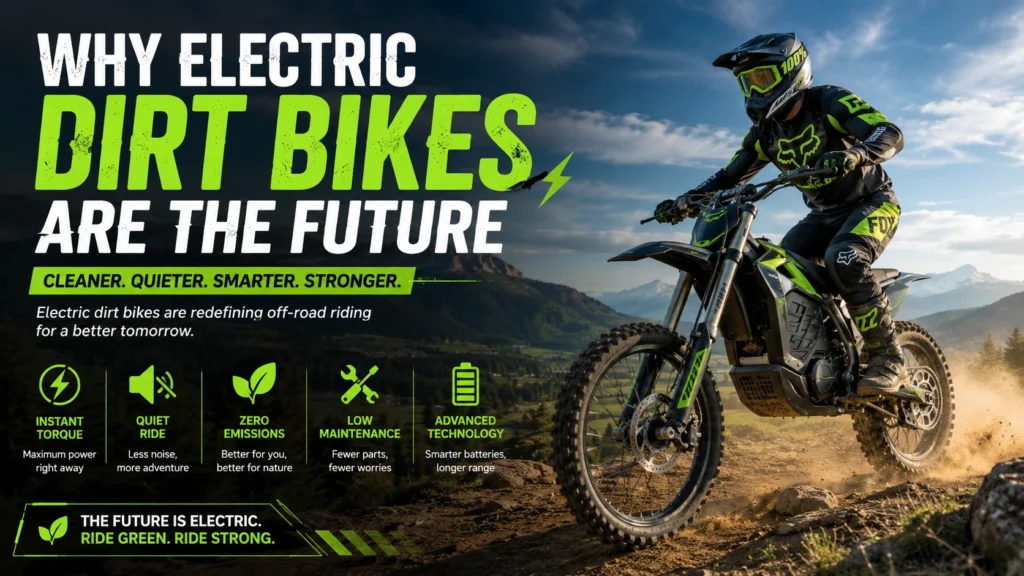
As battery technology continues to improve, electric dirt bikes are becoming more powerful, more reliable, and more practical for everyday off-road riding. They provide exceptional performance while reducing maintenance costs, noise pollution, and environmental impact.
Whether you’re looking for your first dirt bike or upgrading from a gas-powered model, investing in an electric dirt bike offers a cleaner, quieter, and more efficient way to enjoy off-road adventures.
How to Choose the Best Electric Dirt Bike
Choosing the right electric dirt bike is about more than simply picking the fastest or most expensive model. The best bike should match your riding style, experience level, terrain, and budget while offering the performance and reliability you expect. Whether you’re a beginner looking for a confidence-inspiring ride or an experienced off-road enthusiast seeking maximum power, understanding the key buying factors will help you make a smarter investment.
Start by deciding where you’ll ride most often. Trail riders typically need long battery life and comfortable suspension, while motocross riders require powerful motors, lightweight frames, and race-ready handling. Enduro riders should focus on durability, climbing ability, and extended range. Kids and beginners benefit from smaller, lower-powered bikes with adjustable riding modes and safety features.
Finally, compare battery capacity, motor power, charging time, suspension quality, brakes, and overall build quality. A well-balanced electric dirt bike will provide years of exciting off-road adventures with minimal maintenance.
Key Features to Consider Before Buying an Electric Dirt Bike
Motor Power
Motor power directly affects acceleration, climbing ability, and top speed. Choosing the right motor depends on your skill level and intended riding style.
| Rider Type | Recommended Motor Power |
| Kids | 250W–1,000W |
| Beginners | 2kW–5kW |
| Intermediate Riders | 5kW–10kW |
| Advanced Riders | 10kW–20kW+ |
Higher-powered motors provide stronger acceleration but usually consume battery power more quickly.
Battery Capacity
The battery determines how far you can ride before recharging. Larger batteries provide greater range but also increase bike weight.
| Battery Capacity | Estimated Riding Range |
| 1.5–2 kWh | 20–30 Miles |
| 3–4 kWh | 35–55 Miles |
| 5–6 kWh | 60–80 Miles |
| 6+ kWh | 80–100+ Miles |
Actual range depends on terrain, rider weight, riding mode, speed, weather conditions, and tire pressure.
Top Speed
Top speed varies depending on motor output and bike design.
| Bike Category | Typical Top Speed |
| Kids Models | 10–20 mph |
| Recreational Bikes | 25–40 mph |
| Trail Bikes | 40–55 mph |
| Performance Bikes | 60–75+ mph |
Always ride responsibly and follow local laws and trail regulations.
Suspension System
A high-quality suspension system improves comfort, traction, and stability across rough terrain.
Look for features such as:
- Adjustable front forks
- Hydraulic rear shock
- Long suspension travel
- Compression adjustment
- Rebound adjustment
Premium suspension provides better control on rocky trails, jumps, and uneven surfaces.
Braking System
Reliable brakes are essential for safe off-road riding.
Modern electric dirt bikes generally use hydraulic disc brakes because they offer excellent stopping power in dry, wet, and muddy conditions.
Important features include:
- Hydraulic disc brakes
- Large brake rotors
- Adjustable brake levers
- Regenerative braking (on supported models)
Frame Material
Frame construction affects durability, handling, and overall bike weight.
Common materials include:
- Aluminum Alloy
- Steel
- Chromoly Steel
- Carbon Fiber (Premium Models)
Aluminum alloy frames offer the best balance between strength and lightweight performance.
Tire Selection
The right tires significantly improve traction and handling.
Choose tires based on your riding terrain:
- Hard Terrain Tires
- Soft Terrain Tires
- Mud Tires
- Sand Tires
- All-Terrain Knobby Tires
Riding Modes
Many modern electric dirt bikes include multiple riding modes that allow riders to balance performance and battery life.
Common riding modes include:
- Eco Mode
- Trail Mode
- Sport Mode
- Race Mode
These modes adjust throttle response and power output to suit different riding conditions.
Electric Dirt Bike Battery Guide
The battery is the most valuable component of an electric dirt bike. Understanding battery technology helps riders maximize performance while extending battery life.
Lithium-Ion Batteries
Nearly all modern electric dirt bikes use lithium-ion batteries because they offer:
- High energy density
- Lightweight design
- Long lifespan
- Fast charging
- Consistent power delivery
- Low maintenance
Most lithium-ion batteries last between 800 and 1,500 charging cycles when properly maintained.
Tips to Extend Battery Life
- Avoid completely draining the battery.
- Use only the manufacturer’s recommended charger.
- Store the battery in a cool, dry place.
- Keep the battery partially charged during long-term storage.
- Avoid extreme heat and freezing temperatures.
- Charge regularly if the bike is unused for several weeks.
Electric Dirt Bike Motor Guide
The motor is responsible for converting electrical energy into mechanical power.
Mid-Drive Motors
Mid-drive motors are commonly found on premium electric dirt bikes because they provide:
- Better weight distribution
- Superior hill climbing
- Improved efficiency
- Excellent handling
- Easier maintenance
Hub Motors
Hub motors are generally used on entry-level models.
Advantages include:
- Lower purchase price
- Simpler construction
- Quiet operation
- Reduced maintenance
For serious off-road riding, mid-drive systems remain the preferred option.
Essential Safety Features
Modern electric dirt bikes include numerous safety technologies designed to improve rider confidence.
Look for bikes equipped with:
- LED lighting
- Waterproof electrical systems
- Battery protection system
- Overheat protection
- Emergency power cutoff
- Digital battery monitoring
- Adjustable speed limiter
- Regenerative braking
- Durable skid plates
- Handguards
Always wear protective equipment, including a certified helmet, goggles, gloves, body armor, knee guards, elbow guards, and sturdy riding boots.
Best Electric Dirt Bikes of 2026
| Bike Name | Model Year | Motor Power | Estimated Price (USA) |
| Stark VARG | 2026 | 80 HP Equivalent | $12,900 |
| Sur-Ron Ultra Bee | 2026 | 12.5 kW | $6,499 |
| Talaria Sting MX5 | 2026 | 13.5 kW | $5,800 |
| KTM Freeride E-XC | 2026 | 18 kW | $11,299 |
| Zero FX | 2026 | 34 kW | $13,495 |
| RFN Ares Rally | 2026 | 12 kW | $5,999 |
| E Ride Pro SS | 2026 | 12 kW | $4,999 |
| Rawrr Mantis X | 2026 | 7.5 kW | $4,500 |
| Apollo RFN | 2026 | 5 kW | $3,999 |
| Kuberg Ranger | 2026 | 8 kW | $6,000 |
Electric Dirt Bike vs. Gas Dirt Bike
| Feature | Electric Dirt Bike | Gas Dirt Bike |
| Power Source | Rechargeable Battery | Gasoline |
| Noise Level | Very Quiet | Loud |
| Maintenance | Low | High |
| Emissions | Zero Tailpipe Emissions | Produces Emissions |
| Torque | Instant | Builds with RPM |
| Running Cost | Lower | Higher |
| Gear Shifting | Usually Single-Speed | Multiple Gears |
| Beginner Friendly | Yes | Moderate |
Electric dirt bikes excel in quiet operation, instant torque, lower maintenance, and reduced operating costs, while gas dirt bikes may still offer quicker refueling for very long rides.
- Electric Dirt Bike Maintenance Guide
- Charging Best Practices
- Essential Riding Techniques
- Must-Have Riding Gear & Accessories
- Common Problems and Solutions
- Electric Dirt Bike Safety Tips
- Frequently Asked Questions (FAQs)
- Expert Buying Tips
- Final Conclusion and Future of Electric Dirt Bikes
Bike Maintenance Guide
One of the greatest advantages of owning an electric dirt bike is its low maintenance compared to traditional gas-powered motorcycles. Without oil changes, spark plugs, fuel filters, or carburetors, electric dirt bikes require fewer routine services while delivering reliable performance. However, regular maintenance is still essential to maximize battery life, improve safety, and keep your bike performing at its best.
Before every ride, inspect the tires for proper pressure and wear, check the brakes for responsiveness, examine the chain for correct tension, and ensure all nuts and bolts are securely tightened. After riding through mud, sand, or dusty trails, clean the bike carefully using a damp cloth or low-pressure water. Avoid directing high-pressure water toward the battery, motor, or electrical connectors.
Store your bike in a cool, dry place away from direct sunlight and extreme temperatures. If you won’t be riding for several weeks, keep the battery charged between 40% and 70% to help extend its lifespan.
Maintenance Checklist
| Maintenance Item | Recommended Interval |
| Tire Pressure | Before Every Ride |
| Chain Lubrication | Every 2–3 Rides |
| Brake Inspection | Weekly |
| Suspension Check | Monthly |
| Battery Inspection | Monthly |
| Bolt Tightening | Every Ride |
| Tire Replacement | As Needed |
| Software Updates | When Available |
Charging Your Electric Dirt Bike
Proper charging habits have a significant impact on battery performance and longevity.
Best Charging Practices
- Use only the manufacturer’s approved charger.
- Charge the battery in a cool, dry, and ventilated location.
- Allow the battery to cool after riding before charging.
- Disconnect the charger once the battery reaches full capacity.
- Avoid leaving the battery completely discharged for long periods.
- Inspect charging cables regularly for damage.
Typical Charging Times
| Charger Type | Charging Time |
| Standard Charger | 5–8 Hours |
| Fast Charger | 2–4 Hours |
| Ultra-Fast Charger | 1–2 Hours (Supported Models Only) |
While fast charging is convenient, regular charging with a standard charger can help maximize long-term battery health.
Essential Riding Techniques
Good riding technique improves control, safety, and confidence on every trail.
Proper Body Position
Maintain a balanced stance with bent knees and relaxed elbows.
- Lean forward while climbing steep hills.
- Shift your weight backward during descents.
- Stand on the foot pegs over rough terrain.
- Look ahead instead of directly in front of the bike.
Smooth Throttle Control
Electric dirt bikes deliver instant torque, so gradual throttle input is essential for maintaining traction on loose gravel, sand, mud, and rocky trails.
Effective Braking
Use both front and rear brakes together for maximum stopping power. Avoid grabbing the front brake suddenly on slippery surfaces.
Must-Have Electric Dirt Bike Accessories
The right accessories improve comfort, convenience, and rider safety.
Essential Safety Gear
- DOT or ECE Certified Helmet
- Riding Goggles
- Off-Road Gloves
- Chest Protector
- Knee Guards
- Elbow Guards
- Neck Brace
- Riding Boots
Useful Bike Accessories
- Portable Battery Charger
- Spare Battery (Compatible Models)
- Tire Repair Kit
- Chain Lubricant
- Bike Stand
- Handguards
- Skid Plate
- GPS or Phone Mount
- Tool Kit
- Waterproof Bike Cover
Quality safety equipment is just as important as choosing the right bike.
Common Electric Dirt Bike Problems and Solutions
| Problem | Possible Cause | Recommended Solution |
| Reduced Riding Range | Battery Aging | Recharge Properly or Replace Battery |
| Slow Charging | Faulty Charger | Test Charger and Power Source |
| Motor Overheating | Heavy Load or Long Climbs | Allow Motor to Cool |
| Weak Brakes | Worn Brake Pads | Replace Brake Pads |
| Chain Noise | Dry or Loose Chain | Lubricate and Adjust Chain |
| Tire Slipping | Low Pressure or Worn Tires | Inflate or Replace Tires |
| Power Loss | Loose Wiring | Inspect Electrical Connections |
| Display Error | Controller Issue | Consult Manufacturer or Dealer |
Routine inspections help identify minor problems before they become costly repairs.
Electric Dirt Bike Safety Tips
Safety should always come first when riding off-road.
Follow these recommendations:
- Always wear certified protective gear.
- Ride within your experience level.
- Inspect your bike before every ride.
- Stay on designated trails.
- Maintain a safe distance from other riders.
- Reduce speed in unfamiliar terrain.
- Never ride under the influence of alcohol or drugs.
- Watch for wildlife and trail users.
- Check weather conditions before your ride.
- Carry drinking water, a first-aid kit, and basic repair tools.
Responsible riding protects both the rider and the environment.
FAQs
Are electric dirt bikes good for beginners?
Yes. Their smooth power delivery, simple controls, and low maintenance make them an excellent choice for beginners. Many models also include adjustable riding modes that limit power while new riders gain confidence.
How fast can an electric dirt bike go?
Entry-level models usually reach 20–35 mph, while high-performance models can exceed 70 mph, depending on motor output and terrain.
How far can an electric dirt bike travel on one charge?
Most modern electric dirt bikes offer a range of 20 to 80 miles, while premium models can exceed 100 miles under ideal riding conditions.
How long does an electric dirt bike battery last?
A quality lithium-ion battery typically lasts between 800 and 1,500 charging cycles, which often translates to several years of reliable use with proper maintenance.
Conclusion
Electric dirt bikes have transformed off-road riding by combining instant torque, quiet operation, low maintenance, and eco-friendly technology into one exciting package. Whether you’re a beginner searching for your first off-road bike or an experienced rider looking for race-ready performance, today’s electric models offer impressive power, longer battery life, and cutting-edge features that rival traditional gas-powered motorcycles.
By understanding the different types of electric dirt bikes, key buying factors, maintenance requirements, charging practices, and essential safety tips covered in this guide, you’ll be well prepared to choose the perfect bike for your adventures.
As electric mobility continues to grow, investing in a quality electric dirt bike means embracing a cleaner, quieter, and more efficient future while enjoying unforgettable experiences on trails, mountains, and motocross tracks.
