
Introduction
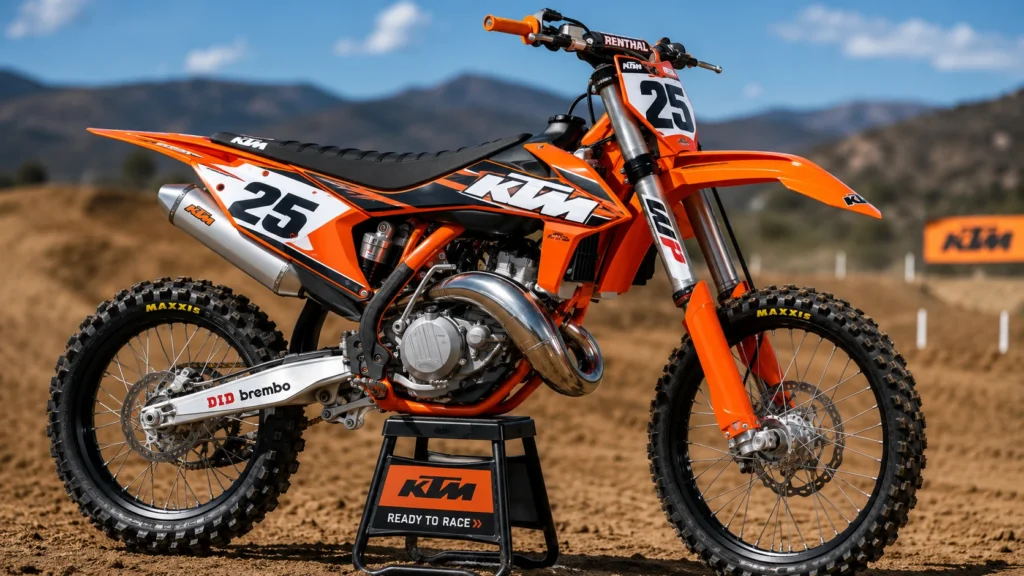
The motocross world is changing faster than many riders expected. A few years ago, electric dirt bikes were seen as experimental machines with limited range and questionable performance. Today, KTM has transformed that perception by pushing electric motocross technology into mainstream off-road riding.
The modern Electric KTM motocross bike is no longer just a quiet alternative to a gasoline dirt bike. It delivers explosive torque, smoother power delivery, lower maintenance, and surprisingly competitive lap times. Whether you ride technical forest trails in Europe, sandy desert tracks in the Middle East, tight motocross circuits in the USA, or crowded off-road zones in Asia, KTM’s electric lineup is becoming impossible to ignore.
What makes KTM particularly interesting is its balance between racing DNA and rider accessibility. Unlike many electric startups, KTM already understands suspension geometry, off-road ergonomics, durability, and real motocross rider expectations.
In this detailed guide, you’ll learn:
- How KTM electric motocross bikes actually perform
- Battery range and charging realities
- Suspension and handling behavior
- Long-term ownership costs
- Reliability insights
- How KTM compares against rivals like Stark VARG
- Whether an electric KTM dirt bike is worth buying in 2026
If you’re serious about motocross, trail riding, or future-proof off-road performance, this guide will help you make an informed decision.
KTM’s Electric Motocross Vision
How KTM Entered the Electric Off-Road Market
KTM has dominated motocross and enduro racing for decades. The company understood early that emissions regulations, urban restrictions, and changing rider preferences would eventually impact off-road motorcycling.
Instead of rushing into electric bikes with weak commuter models, KTM focused on preserving the aggressive riding character that riders expect from the brand.
The result was the development of bikes like the:
- KTM Freeride E-XC
- KTM SX-E series
- Future electric motocross prototypes
These machines target:
- Trail riders
- Beginner motocross riders
- Youth racers
- Urban off-road enthusiasts
- Eco-conscious riders
- Noise-restricted riding zones
KTM’s strategy differs from many competitors because it blends traditional motocross engineering with modern electric drivetrain technology.
What Is an Electric KTM Motocross Bike?
An electric KTM motocross bike uses:
- Electric motor instead of combustion engine
- Rechargeable lithium-ion battery pack
- Electronic power management system
- Regenerative braking technology
- Multi-mode riding controls
Unlike traditional dirt bikes, electric models produce:
- Instant torque
- Nearly silent operation
- Zero clutch operation
- Reduced vibration
- Lower maintenance requirements
The riding sensation feels completely different from a 250cc or 450cc motocross machine.
Instead of building RPM gradually, the power arrives instantly.
That creates:
- Faster corner exits
- Easier hill climbing
- Better beginner control
- Less rider fatigue
KTM Electric Motocross Bike Models in 2026
KTM Freeride E-XC
The Freeride E-XC remains KTM’s flagship electric off-road machine.
Key Specifications
| Feature | KTM Freeride E-XC |
| Motor Type | Permanent Magnet Synchronous Motor |
| Peak Power | Approx. 24 hp |
| Torque | Instant electric torque |
| Battery | Lithium-ion |
| Range | 1.5–3 hours depending on riding |
| Weight | Around 111 kg |
| Charging Time | Approx. 2 hours |
| Riding Modes | Multiple power modes |
| Suspension | WP XPLOR |
| Intended Use | Trail / Light MX / Enduro |
KTM SX-E Series
The SX-E lineup focuses mainly on youth motocross racing.
Popular models include:
- SX-E 5
- SX-E 3
These bikes are extremely popular in:
- USA youth motocross
- European junior competitions
- Training schools
- Beginner motocross academies
The SX-E platform introduces younger riders to motocross without:
- Loud exhaust noise
- Hot engine components
- Complex clutch systems
Performance Analysis: Real-World Riding Experience
Instant Torque Changes Everything
One of the biggest advantages of an electric KTM motocross bike is torque delivery.
Traditional motocross bikes need:
- RPM buildup
- Clutch balancing
- Gear management
Electric KTM bikes eliminate most of that complexity.
The power delivery feels:
- Smooth
- Immediate
- Predictable
- Linear
For technical trail riding, this creates massive advantages.
In rocky climbs or muddy terrain, instant torque helps maintain traction better than many combustion bikes.
City Riding Performance
Although designed for off-road riding, KTM electric dirt bikes surprisingly perform well in urban environments.
Advantages in Cities
- Silent operation
- Easy maneuverability
- No clutch fatigue
- Smooth acceleration
- Lower heat generation
This matters in:
- Asian mega cities
- European low-noise zones
- Residential suburban areas
However, range limitations still reduce practicality for long daily commuting.
Highway Performance
Electric KTM motocross bikes are not ideal highway machines.
Why?
- Wind resistance drains battery quickly
- Off-road gearing limits top speed
- Knobby tires reduce efficiency
- Lightweight chassis feels unstable at sustained high speed
For riders in the Middle East or North America who ride long highway distances between trails, transport vehicles may still be necessary.
Off-Road Performance
This is where KTM electric bikes truly shine.
In Tight Technical Terrain
The bikes feel:
- Extremely agile
- Lightweight
- Easy to control
- Less tiring
In Mud and Sand
Electric torque improves:
- Low-speed traction
- Controlled acceleration
- Precision throttle modulation
On Motocross Tracks
Performance depends heavily on rider skill.
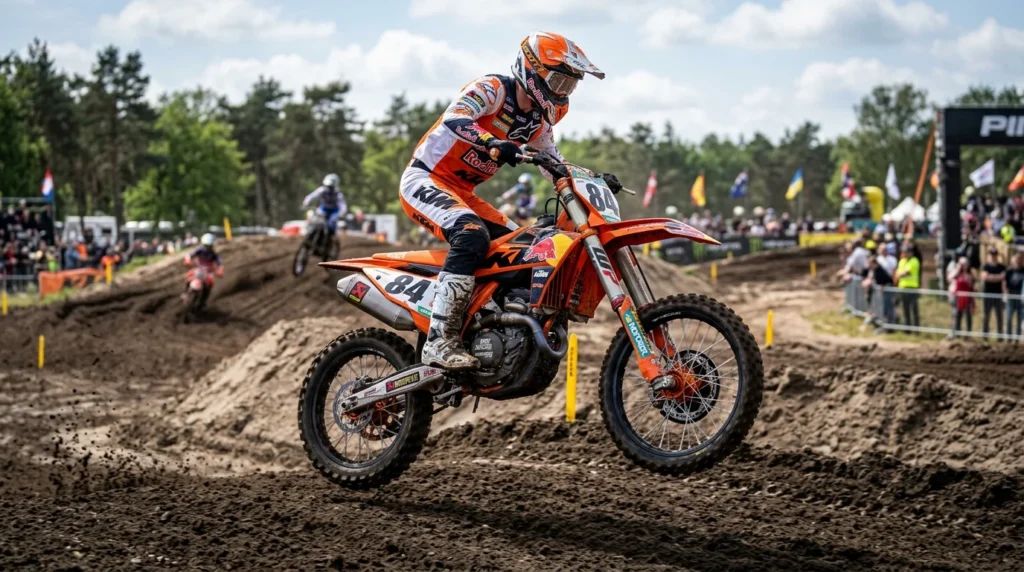
Advanced riders may still prefer gasoline 450cc bikes for:
- Long motos
- Sustained top-end power
- Race endurance
But electric KTM models are rapidly becoming competitive.
Battery Range and Charging Reality
Real-World Range Expectations
Range depends heavily on:
- Rider weight
- Terrain
- Riding aggression
- Temperature
- Tire setup
- Elevation
Average Riding Estimates
| Riding Style | Estimated Range |
| Casual trail riding | 2.5–3 hours |
| Aggressive enduro | 1.5–2 hours |
| Motocross track use | 45–90 minutes |
| Beginner riding | Up to 3 hours |
Cold Weather Performance
In Europe and North America, winter riding impacts battery efficiency.
Battery range may drop:
- 10–25% in cold conditions
Riders in Scandinavian countries or northern USA regions should account for this.
Hot Climate Performance
Middle Eastern and African riders face different challenges.
Extreme heat can:
- Increase battery thermal stress
- Reduce charging efficiency
- Accelerate long-term degradation
KTM’s thermal management systems help, but climate still matters.
Charging Infrastructure
Charging convenience varies globally.
Best Regions for EV Support
- Western Europe
- California
- UAE
- Japan
Developing Markets Challenges
In some African and Asian regions:
- Charging infrastructure remains limited
- Home charging stability may vary
That affects long-distance practicality.
Design and Build Quality
Aggressive KTM Styling
KTM successfully preserved its racing identity.
The electric lineup still looks:
- Sharp
- Purpose-built
- Lightweight
- Race-inspired
Orange bodywork and minimalist panels maintain KTM’s aggressive image.
Frame Construction
The chassis design balances:
- Battery protection
- Weight distribution
- Off-road durability
KTM’s motocross heritage clearly influences:
- Rider triangle
- Standing ergonomics
- Ground clearance
Build Quality Analysis
Compared with many startup electric brands, KTM offers:
- Better plastics quality
- Stronger suspension tuning
- More reliable assembly
- Better dealer support
That matters significantly for long-term ownership.
Suspension, Braking & Handling
WP Suspension Excellence
KTM’s use of WP suspension gives its electric bikes serious credibility.
Benefits
- Excellent bump absorption
- Predictable cornering
- Better rider confidence
- Adjustable damping
For technical terrain, the suspension setup feels refined and race-ready.
Handling Characteristics
Electric KTM motocross bikes feel:
- Lightweight
- Flickable
- Balanced
The lower center of gravity from battery placement improves:
- Corner stability
- Technical maneuvering
- Low-speed control
Braking Performance
Electric bikes also benefit from:
- Regenerative braking
- Reduced drivetrain drag
- Smooth deceleration
KTM combines this with quality hydraulic braking systems for excellent stopping power.
Technology and Smart Features
Ride Modes
Most electric KTM models include:
- Eco Mode
- Standard Mode
- Sport Mode
These modes adjust:
- Throttle response
- Torque delivery
- Battery consumption
Smartphone Connectivity
Modern riders increasingly expect digital integration.
Future KTM electric models are expected to include:
- App diagnostics
- GPS ride tracking
- Battery health monitoring
- OTA software updates
Safety Technology
Electric motocross bikes are introducing smarter safety systems.
Important Features
- Controlled power mapping
- Predictable throttle response
- Thermal monitoring
- Battery protection systems
These features especially help beginners.
Riding Comfort and Ergonomics
Beginner-Friendly Nature
One major strength of electric KTM bikes is accessibility.
New riders benefit from:
- No clutch management
- No stalling
- Smoother power delivery
- Reduced intimidation
That makes learning easier.
Expert Rider Perspective
Experienced motocross riders appreciate:
- Immediate acceleration
- Precision throttle control
- Lower fatigue
- Lightweight feel
However, some still miss:
- Engine sound
- Gear shifting
- Traditional mechanical feedback
Long Ride Comfort
Electric bikes reduce:
- Heat fatigue
- Vibration fatigue
- Noise exhaustion
That improves comfort during:
- Long trail sessions
- Technical enduro riding
- Adventure-style off-road exploration
Safety Features Breakdown
Why Electric Dirt Bikes Can Be Safer
Contrary to myths, electric motocross bikes may actually improve rider safety.
Key Reasons
- Predictable torque delivery
- No clutch mistakes
- Reduced engine heat
- Lower noise fatigue
- Better balance at low speed
Battery Safety Systems
Modern KTM systems include:
- Thermal protection
- Short-circuit prevention
- Waterproofing measures
- Impact-resistant battery housing
Safety engineering is now significantly more advanced than early-generation electric motorcycles.
Maintenance and Long-Term Reliability
Lower Maintenance Than Gas Bikes
One of the biggest ownership advantages is maintenance simplicity.
No Need For
- Oil changes
- Air-fuel tuning
- Valve adjustments
- Clutch replacement
- Exhaust maintenance
That dramatically reduces running costs.
Components That Still Require Maintenance
You still need to service:
- Suspension
- Chain
- Tires
- Brake pads
- Bearings
Off-road riding remains demanding on chassis components.
Battery Longevity
Modern lithium-ion systems can last:
- 5–8 years under proper care
Battery degradation depends on:
- Charging habits
- Climate
- Riding style
- Storage conditions
Reliability Score
| Category | Rating |
| Motor Reliability | 9/10 |
| Battery Durability | 8/10 |
| Suspension Quality | 9/10 |
| Electronics Reliability | 8/10 |
| Overall Ownership Confidence | 8.5/10 |
Common Problems and Fixes
1. Reduced Range Over Time
Cause
Battery aging and charging habits.
Solution
- Avoid full discharge frequently
- Store battery correctly
- Use official chargers
2. Overheating During Aggressive Riding
Cause
Sustained high-load motocross sessions.
Solution
- Use cooling intervals
- Avoid extreme ambient heat
- Monitor thermal warnings
3. Charging Infrastructure Issues
Cause
Remote trail areas lacking charging access.
Solution
- Portable generators
- Spare batteries
- Ride planning apps
Electric KTM Motocross Bike vs Gasoline Dirt Bikes
Comparison Table
| Feature | Electric KTM MX Bike | Traditional Gas MX Bike |
| Torque Delivery | Instant | RPM dependent |
| Noise | Extremely quiet | Loud |
| Maintenance | Low | High |
| Refueling/Charging | Slower | Fast |
| Riding Complexity | Beginner-friendly | Skill-intensive |
| Environmental Impact | Lower emissions | Higher emissions |
| Long-Distance Riding | Limited | Better |
| Heat Generation | Minimal | High |
| Vibration | Very low | Moderate to high |
| Ownership Cost | Lower long-term | Higher maintenance |
Best Riding Conditions for Electric KTM Bikes
Ideal Conditions
- Technical trails
- Forest riding
- Urban off-road areas
- Beginner motocross tracks
- Noise-sensitive zones
Less Ideal Conditions
- Multi-day adventure rides
- Long-distance highway travel
- Extreme desert racing
- Remote wilderness touring
Ownership Costs Analysis
Initial Purchase Cost
Electric KTM bikes are still expensive upfront.
Average Pricing
| Region | Approximate Price |
| USA | $11,000–$15,000 |
| Europe | €10,000–€14,000 |
| UK | £9,000–£13,000 |
| Asia | Higher due to import taxes |
| Middle East | Premium segment pricing |
Long-Term Savings
Owners save money through:
- Lower maintenance
- Reduced fuel costs
- Fewer moving parts
- Less frequent servicing
Over 5 years, ownership economics become surprisingly competitive.
Who Should Buy an Electric KTM Motocross Bike?
Best For
- Beginner riders
- Trail enthusiasts
- Urban off-road riders
- Eco-conscious riders
- Riders in noise-restricted regions
- Technical terrain explorers
Not Ideal For
- Hardcore desert racers
- Long-distance adventure riders
- Riders without charging access
- Traditionalists wanting engine sound and shifting
Pros and Cons
Pros
- Instant torque and acceleration
- Low maintenance costs
- Quiet operation
- Beginner-friendly power delivery
- Reduced rider fatigue
- Strong suspension quality
- Excellent technical trail capability
- Environmentally friendlier
Cons
- Limited range for aggressive riding
- Expensive initial price
- Charging downtime
- Less emotional engine character
- Battery degradation over years
- Limited highway practicality
People Also Ask
Is an electric KTM motocross bike good for beginners?
Yes. The smooth power delivery and lack of clutch operation make it much easier for beginners to learn throttle control and off-road balance. Many riding schools now prefer electric motocross bikes for training.
How long does the battery last on a KTM electric dirt bike?
Battery life depends heavily on riding style. Casual trail riding may deliver up to three hours, while aggressive motocross track sessions can reduce runtime to around one hour.
Can electric KTM bikes compete with gas motocross bikes?
In technical terrain and short-track riding, they are already highly competitive. For long professional motocross races, gasoline bikes still maintain some endurance advantages.
Are electric motocross bikes expensive to maintain?
No. Maintenance costs are generally much lower because there are fewer moving parts, no oil changes, and fewer engine-related service requirements.
Is KTM investing heavily in electric motocross technology?
Absolutely. KTM is one of the most serious traditional motorcycle manufacturers in the electric off-road segment and continues developing advanced electric motocross platforms for future racing and recreational markets.
Final Expert Verdict
The modern electric KTM motocross bike represents one of the biggest shifts the off-road motorcycle industry has seen in decades. KTM has managed to combine real motocross engineering with practical electric technology in a way that feels authentic rather than experimental.
These bikes are fast, lightweight, quiet, beginner-friendly, and surprisingly capable in technical terrain. They reduce maintenance headaches while delivering instant torque that many riders quickly fall in love with.
However, electric motocross still has limitations. Long-distance riding, charging downtime, and battery range remain important concerns, especially for aggressive racers and remote adventure riders.
For beginners, Trail Riders, urban off-road enthusiasts, and environmentally conscious motocross fans, KTM electric bikes are becoming an increasingly smart investment in 2026. Riders focused on endurance racing or traditional combustion-bike emotion may still prefer gasoline machines for now.
The future of motocross is clearly evolving toward electrification, and KTM is positioning itself as one of the brands leading that transformation.
