

Electric Balance Bike
Introduction
Electric balance bikes are rapidly transforming how children learn to ride. Traditionally, kids relied on pedal bikes with training wheels, but today’s parents are turning to smarter, safer, and more engaging alternatives. That’s where the electric balance bike comes in.
Designed specifically for young riders, these bikes combine the simplicity of a traditional balance bike with the assistance of a low-powered electric motor. The result? Faster learning, better coordination, and a huge boost in confidence.
- Are electric balance bikes safe?
- What age is appropriate?
- Are they better than regular balance bikes?
- Which brand should you trust?
This complete 2026 guide answers all these questions and more. Whether you’re a parent, a beginner rider, or a bike enthusiast, this article will give you everything you need to know before buying an electric balance bike.
What Is an Electric Balance Bike?
An electric balance bike is a pedal-free bike for kids that includes a small electric motor to assist movement, helping children develop balance, coordination, and throttle control.
Unlike traditional bikes, it features:
- No pedals
- Lightweight frame
- Low-speed electric motor
- Simple throttle system
Most electric balance bikes are designed for children aged 2 to 8 years, depending on the model.
In simple terms:
It’s a training bike + electric assistance, designed to make learning faster and more fun.
How Electric Balance Bikes Work
Electric balance bikes are engineered with simplicity and safety in mind. Instead of complex systems, they use a minimal but effective setup.
Core Components
- Motor (60W–250W): Provides gentle acceleration
- Battery (Lithium-ion): Powers the bike (30–60 min runtime)
- Throttle: Usually thumb-operated
- Controller: Manages speed and power delivery
How Kids Use It
- Child sits on the bike
- Pushes forward using feet
- Gradually uses throttle
- Learns to balance naturally
This combination creates a smooth learning curve, unlike pedal bikes which require coordination of pedaling + balance simultaneously.
Key Benefits of Electric Balance Bikes
Faster Skill Development
Electric assistance helps children focus on balance instead of pedaling.
- Improves coordination quickly
- Reduces learning time
- Easier transition to pedal bikes
Boosts Confidence
Kids feel more in control because:
- Speed is predictable
- No sudden jerks
- Less fear of falling
Early Motor Skill Development
Unlike regular bikes, electric balance bikes teach:
- Throttle control
- Reaction timing
- Speed awareness
More Fun = More Practice
Kids ride longer because it’s enjoyable.
More riding = faster learning.
Electric Balance Bike vs Regular Balance Bike
| Feature | Electric Balance Bike | Regular Balance Bike |
| Motor | Yes | No |
| Speed | 5–12 km/h (controlled) | Manual |
| Learning Curve | Faster | Slower |
| Skill Development | Balance + throttle | Balance only |
| Price | Higher | Budget-friendly |
| Fun Factor | High | Moderate |
Verdict:
- Electric = faster learning + more engagement
- Regular = simple + affordable
Is an Electric Balance Bike Safe?
Safety is the biggest concern for parents, and rightly so.
Key Safety Features to Look For
- Smooth throttle (no jerky acceleration)
- Speed limiter modes
- Responsive brakes
- Low center of gravity
- Lightweight frame
Real Safety Insight
Studies and practical testing show:
Predictable low-speed acceleration is safer than sudden manual movement
This is why high-quality electric balance bikes are designed with:
- Gradual power delivery
- Controlled speed curves
Essential Safety Tips
- Always use a helmet
- Supervise children under 5
- Start in low-speed mode
- Use open, safe riding areas
What Age Is Best for an Electric Balance Bike?
Choosing the right age is crucial.
| Age | Recommendation |
| 2–3 years | Only low-speed beginner bikes |
| 3–5 years | Ideal starting age |
| 5–8 years | Advanced models |
Your Child Should Be Able To:
- Walk confidently
- Balance independently
- Follow basic instructions
If not, start with a regular balance bike first.
Best Electric Balance Bike Brands
Here are the top-performing brands globally:
STACYC
- Industry leader
- Lightweight design
- Multiple speed modes
- Ideal for beginners
Voltaic
- Smooth throttle system
- Designed for safety
- Perfect for cautious kids
Mantis
- High performance
- Strong motors
- Best for experienced riders
Kawasaki Elektrode
- Premium build quality
- Durable frame
- Trusted motorcycle brand
Top Electric Balance Bikes Comparison
| Brand | Motor | Age Range | Speed | Weight | Best For |
| STACYC 12eDrive | 100W | 3–5 yrs | 8 km/h | Light | Beginners |
| Voltaic Kids Bike | 80W | 2–4 yrs | 6 km/h | Very Light | Safety-focused |
| Mantis Mini | 250W | 5–8 yrs | 12 km/h | Medium | Advanced kids |
| Kawasaki Elektrode | 250W | 3–8 yrs | 13 km/h | Heavy | Premium users |
How to Choose the Best Electric Balance Bike
Buying the right bike is critical. Here’s a professional breakdown:
Size & Fit (MOST IMPORTANT)
- Child’s feet must touch the ground fully
- Seat height matters more than age
Poor fit = unsafe riding
Weight
- Lighter bikes = easier control
- Ideal range: 8–12 lbs for toddlers
Speed Modes
Look for:
- Beginner mode (slow)
- Intermediate mode
- Advanced mode
Battery Life
- Average: 30–60 minutes
- Removable batteries are better
Tires
- Foam tires = maintenance-free
- Air tires = better outdoor grip
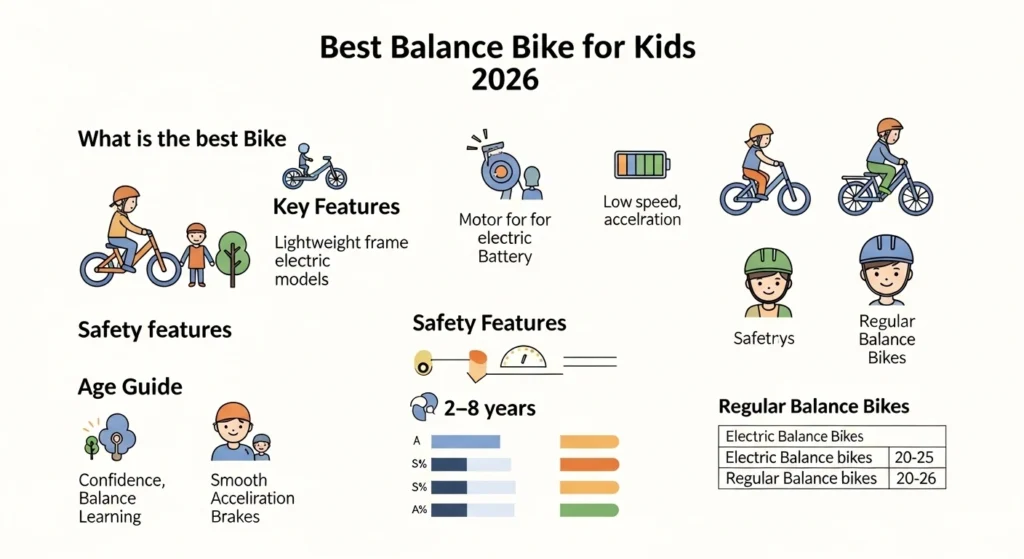
Electric Balance Bike Buying Checklist
| Factor | Ideal Choice |
| Age Suitability | Match child’s skill level |
| Weight | Lightweight |
| Speed Control | Multiple modes |
| Safety Features | High priority |
| Battery | Minimum 30 minutes |
Pros and Cons
Pros
- Faster learning curve
- Builds confidence early
- Fun and engaging
- Teaches motor control
- Better transition to real bikes
Cons
- Expensive compared to regular bikes
- Requires supervision
- Limited battery life
- Not ideal for very young toddlers
Who Should Buy an Electric Balance Bike?
Best For:
- Kids learning to ride
- Active families
- Outdoor environments
- Children aged 3–6
Not Ideal For:
- Kids under 2 years
- Complete beginners with no balance
- Indoor-only use
Real-World Use Cases
Case 1: 3-Year-Old Beginner
Use a low-speed model
Focus on balance first
Case 2: 5-Year-Old Active Kid
Mid-range model
Introduce throttle gradually
Case 3: 7-Year-Old Confident Rider
Advanced model
Higher speed settings allowed
Electric Balance Bike Maintenance Tips
- Charge battery after each use
- Check brakes regularly
- Clean dust and dirt
- Store indoors
- Inspect tires weekly
Proper maintenance = longer lifespan
Global Perspective
Electric balance bike usage varies worldwide:
- Europe: Strong focus on safety standards
- USA: Popular in outdoor recreation
- Asia: Growing market due to compact living
- Australia/UAE: Used in parks and open spaces
Always check local regulations before buying.
FAQs
A: Electric balance bikes are worth it because they significantly improve a child’s learning speed and confidence while riding.
A: A 3-year-old can use an electric balance bike if it has a low-speed mode and proper adult supervision.
A: They do not replace pedal bikes—they prepare children by teaching balance and control before transitioning.
A: Electric balance bikes typically reach speeds of 5–12 km/h, depending on the model and settings.
A: They are better than training wheels because they teach real balance instead of creating dependency.
Conclusion
Electric balance bikes have quickly become one of the most effective modern tools for helping children learn how to ride with confidence. By combining safety, fun, and essential skill development, they offer a more engaging and smoother learning experience compared to traditional balance bikes. Instead of struggling with pedals or relying on training wheels, kids can focus purely on balance and control, which accelerates their overall riding progress.
If your goal is to help your child learn faster while building confidence and enjoying outdoor activities, an electric balance bike is a smart and future-ready investment. However, choosing the right model with proper safety features and age suitability is key to ensuring the best experience.
