
Introduction
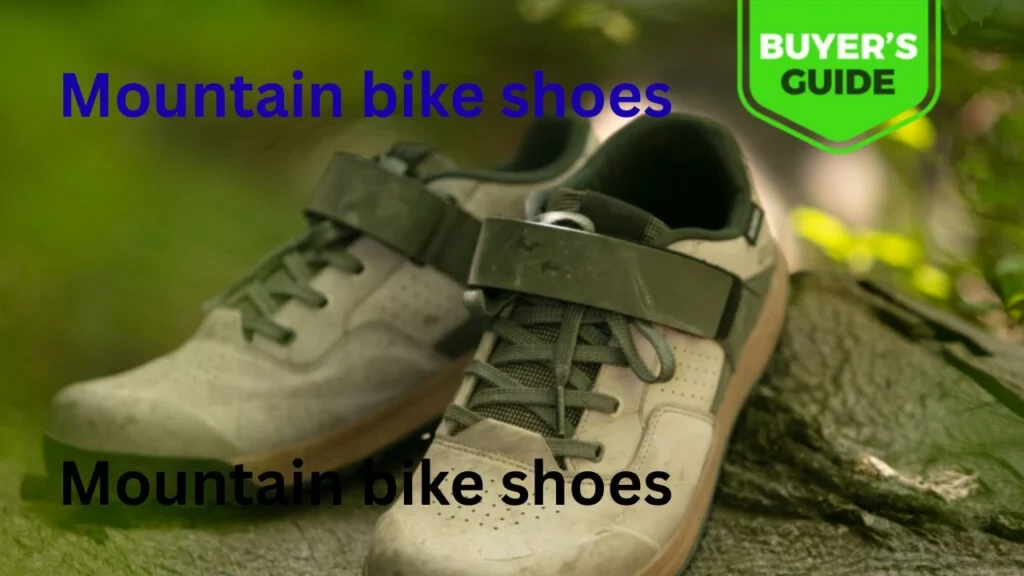
Mountain bike shoes, riding a mountain bike across wild landscapes. Through forests, up steep slopes, down jagged rocks, riders push forward into messy earth and roots. Yet even those who drop big money on high-end frames and fancy shocks tend to overlook what keeps them linked to the machine – footwear made for dirt rides. Think about it: everything transfers through your soles. Slippery contact means less strength, shaky footing, and wobbling mid-air moves. Without solid shoe-to-pedal touch, precision fades fast. Footwear built for mountain biking shifts the entire ride experience. When your soles grip the pedals firmly, power transfers better through each stroke. Stability improves when roots and loose gravel try to throw you off balance. Sturdy materials guard against sharp stones or sudden tumbles downhill. The right fit keeps discomfort far away during long climbs.
What Are Mountain Bike Shoes?
Footwear built for trail rides does a lot more than regular sneakers. Built tough, these boots stick to pedals so each push moves the bike faster. When rocks fly or roots snap back, thick material guards toes without slowing steps. Grip stays sharp even if mud cakes the sole mid-ride. Control comes easier when feet stay planted through sharp turns. Power flows straight from leg to crank thanks to stiff bases underfoot.
Key Design Features of MTB Shoes
Most mountain biking shoes include:
- Stiff soles that transfer pedaling power efficiently
- Sticky rubber outsoles that grip pedal pins
- Reinforced toe caps for impact protection
- Durable materials to survive mud and rocks
- Cleat compatibility for clipless pedal systems
When the trail tilts sharply upward or drops into rocky paths, these details really show their worth.
The Real Purpose of MTB Shoes
Biking up hills takes real effort from your body. All that pedaling, staying upright, squeezing the brakes – keeping things under control never lets up.
Mountain bike shoes improve rider control
- Stay firmly connected to the pedals
- Maintain efficient pedaling motion
- Improve bike control and stability
- Reduce foot fatigue on long rides
- Protect feet from rocks and trail debris
Footwear made for trails keeps power flowing to pedals. Slipping stops when sticky soles hold fast. Efficiency climbs once feet stay put on rough descents.
Why Mountain Bike Shoes Matter
Many beginner riders start with running shoes or casual sneakers. This works for short rides, but serious riders quickly realize the benefits of dedicated MTB cycling shoes.
1. Better Pedal Grip
One of the biggest benefits of mountain bike shoes is pedal grip.
Sticky rubber makes MTB shoes grip pedal pins tightly. What holds them firm is how the compound bites into small metal spikes. Footwear like this stays put because the sole sticks, not slips. Instead of sliding, it clings when pressure pushes down. Rubber built this way connects deeply with uneven surfaces. Pressure spreads evenly across contact points below. Traction comes alive once force meets texture underfoot.
Slipping is less likely when your feet stay put because of this
- steep climbs
- rocky descents
- technical trail sections
Folks who ride flat pedals get way more grip when their shoes have sticky rubber bottoms.
2. Improved Power Transfer
Another major advantage is power efficiency.
Regular shoes have soft soles that bend while pedaling. This wastes energy.
But MTB shoe soles are stiff, which means more power goes directly into the pedals.
This helps riders:
- climb hills faster
- ride longer distances
- pedal more efficiently
Cross-country racers especially rely on stiff MTB cycling shoes.
3. Foot Protection
Mountain biking trails are unpredictable.
You may hit:
- rocks
- roots
- branches
- pedal strikes
Most mountain biking shoes include protective features like:
- reinforced toe caps
- padded sidewalls
- impact-resistant materials
Footwear shields toes when danger shows up. A solid sole stands between sharp things and skin. Tough materials block heavy stuff falling down. Protection kicks in before harm arrives.
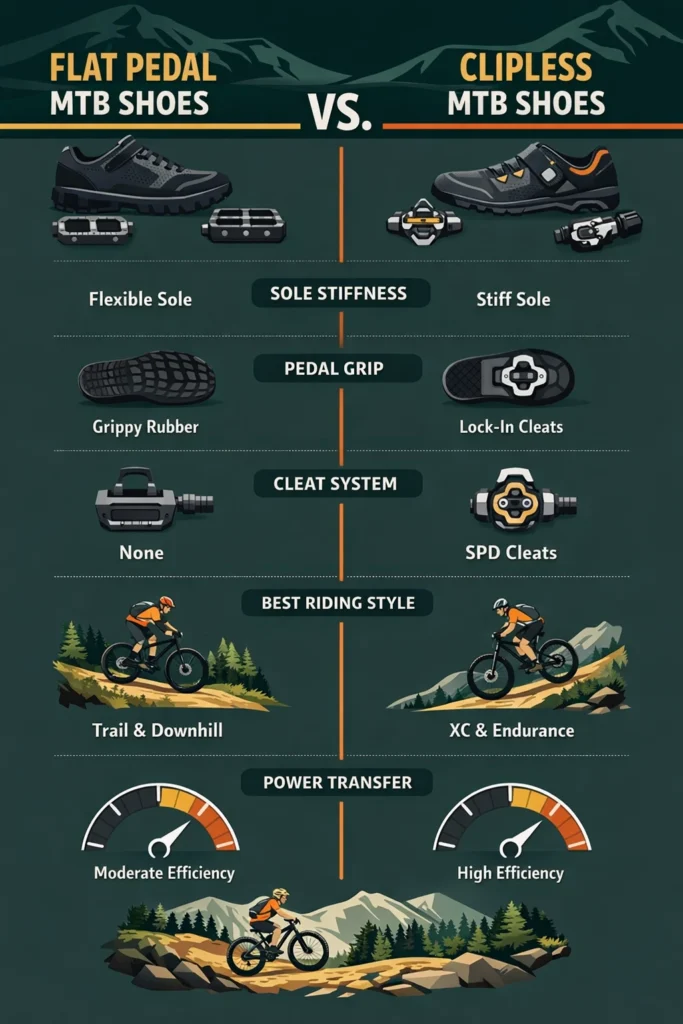
Flat Pedal MTB Shoes
Flat pedal shoes work with platform pedals that do not use cleats.
These shoes rely on sticky rubber and pedal pins for grip.
Key Features
- High-traction rubber soles
- Flexible construction
- Large pedal contact area
- Strong toe protection
Many riders prefer flat pedal MTB shoes because they feel more natural.
Best Riders for Flat Pedal Shoes
Flat pedal shoes are ideal for:
- beginners
- downhill riders
- trail riders
- bike park riders
They allow riders to quickly remove their feet from pedals, which improves confidence on technical terrain.
Clipless MTB Shoes
Clipless shoes attach directly to pedals using cleats and locking mechanisms.
Key Features
- Cleat mounting system
- Extremely stiff sole
- Maximum pedaling efficiency
- Secure foot connection
Clipless systems create a direct connection between rider and bike.
Best Riders for Clipless Shoes
Clipless MTB shoes are ideal for:
- cross-country racers
- endurance riders
- competitive cyclists
- long-distance trail riders
These riders benefit from better pedaling efficiency and control.
Mountain Bike Shoes vs Regular Shoes
Many riders ask:
“Do I really need mountain bike shoes?”
The difference is huge.
| Feature | Mountain Bike Shoes | Running Shoes |
| Pedal Grip | Excellent | Poor |
| Sole Stiffness | High | Soft |
| Durability | Trail Ready | Low |
| Power Transfer | Efficient | Weak |
| Foot Protection | Reinforced | Minimal |
Key Features to Look for in Mountain Bike Shoes
Before buying mountain biking shoes, you should understand the important features.
Stiffness Levels
| Stiffness | Best For |
| Soft | Casual riders |
| Medium | Trail riding |
| High | Racing and XC |
Cross-country riders usually choose high-stiffness MTB shoes.
Rubber Grip
Flat pedal riders need high-traction rubber compounds.
Popular rubber types include:
- Stealth Rubber
- Vibram rubber
- proprietary sticky rubber compounds
These materials prevent feet from sliding off pedals.
Closure Systems
Different MTB shoes use different closure systems.
Lace System
Traditional shoe laces provide:
- comfortable fit
- simple design
- strong reliability
Many trail riders prefer lace systems.
Velcro Straps
Velcro straps are common on XC racing shoes.
Benefits:
- lightweight
- quick adjustment
- easy tightening
BOA Dial System
The BOA system is used in premium MTB shoes.
Advantages:
- precise fit adjustment
- even pressure distribution
- easy micro adjustments while riding
Protection
Mountain biking involves harsh conditions.
Good MTB cycling shoes should include protection such as:
- reinforced toe guards
- impact-resistant sides
- abrasion-resistant uppers
Crash landings or sharp stones won’t reach the toes, thanks to built-in shields below. Feet stay safe when terrain turns rough – hidden reinforcements handle the hits without giving way.
Breathability
Long rides create heat and sweat.
Breathable mountain biking shoes include:
- mesh ventilation panels
- airflow channels
- moisture-wicking liners
These keep your feet cool and comfortable.
Best Mountain Bike Shoes
Below are some highly recommended mountain bike shoes used by riders worldwide.
| Model | Type | Best For | Price Range |
| Fizik Terra Ergolace X2 | Clipless | XC & Trail | $140–$170 |
| Specialized Recon 3.0 | Clipless | Racing | $200–$230 |
| Giro Sector | Clipless | Performance riding | $180–$220 |
| Ride Concepts Tallac Clip | Clipless | Enduro riding | $170–$200 |
| Five Ten Freerider | Flat Pedal | Trail riding | $100–$150 |
Key Highlights
Five Ten Freerider
- famous flat pedal grip
- durable construction
- ideal for trail riders
Specialized Recon 3.0
- lightweight racing shoe
- carbon-reinforced sole
- BOA dial system
Giro Sector
- Comfort sits well alongside performance when neither overshadows the other
- XC fans tend to favor it
One shape fits trail riders. Another suits those who race downhill. Some work best for city paths. Each version matches how you ride.
How to Choose the Right Mountain Bike Shoes
Choosing the best MTB cycling shoes depends on several factors.
Determine Your Riding Style
Different riding disciplines require different shoes.
| Riding Style | Recommended Shoe |
| Cross-Country | Clipless |
| Trail | Flat or Clipless |
| Enduro | Flat or Clipless |
| Downhill | Flat Pedal |
Choose Pedal Compatibility
Your pedal type determines which shoe you need.
- Flat pedals → flat MTB shoes
- Clipless pedals → cleat-compatible shoes
Always check compatibility before buying.
Check Sole Stiffness
Your riding goals determine the ideal stiffness.
Trail riders usually prefer medium stiffness, while racers need maximum stiffness.
Mountain Bike Shoes for Different Riding Styles
Different types of riding require different shoes.
Cross-Country
XC riders prioritize:
- lightweight shoes
- stiff soles
- clipless systems
These maximize pedaling efficiency.
Trail Riding
Trail riders need versatile shoes that offer:
- moderate stiffness
- comfortable walking ability
- durable construction
Downhill Riding
Downhill riders prefer flat pedal MTB shoes for maximum control.
Key features include:
- thick rubber soles
- strong toe protection
- shock absorption
MTB Shoe Sizing and Fit Guide
Correct sizing is essential for comfort and performance.
Tips for Proper Fit
- leave 5–10 mm toe space
- Wear cycling socks when testing shoes
- ensure the heel stays firmly in place
- Check shoe width compatibility
MTB Shoe Fit Table
| Fit Factor | Ideal Condition |
| Toe Space | Slight movement |
| Heel Fit | Firm hold |
| Arch Support | Comfortable |
| Width | No pressure points |
Pedal Compatibility Guide
Understanding pedal systems is important when choosing MTB cycling shoes.
| Pedal Type | Shoe Requirement | Use Case |
| Flat Pedals | Flat MTB shoes | Trail & Downhill |
| SPD Clipless | Cleat compatible | XC riding |
| Hybrid Pedals | Both compatible | Casual riding |
The SPD pedal system is the most common clipless system for mountain bikes.
Pros and Cons
Pros
- Excellent pedal grip
- Improved power transfer
- Better durability
- Foot protection
- Improved riding control
Cons
- Higher cost than regular shoes
- Clipless systems require practice
- Limited everyday use
FAQs
A: Mountain bike shoes improve pedal grip, stability, and pedaling efficiency on rough trails.
A: Running shoes can work temporarily but lack the grip, durability, and stiffness needed for mountain biking.
A: Stiff MTB shoes are best for racing, while moderate stiffness is more comfortable for casual trail riders.
A: Flat MTB shoes work with platform pedals, while clipless MTB shoes require cleat-compatible pedals.
A: Clipless shoes offer better pedaling efficiency, while flat shoes provide easier foot movement and control.
Final Thoughts
Good mountain bike shoes change how it feels to ride. They stick to pedals better, send more energy into each push, protect their feet harder, and handle bumps more smoothly. Flat pedals work well when trails twist sharply; clipless ones shine during long uphill races – pick what fits how you move. Riders everywhere need honest advice on bikes, tools, gear – that is why we built this place. Stronger footwear might be the smartest switch a cyclist ever makes.
