
Introduction
Best commuter bikes help more folks through cities on different continents. Fuel prices climb higher each year. Traffic jams fill streets with noise and delay. Finding a parking spot takes too long almost everywhere. Trains and buses pack tightly during rush hours. Still, many look for ways to feel stronger, spend less, and live quieter lives. Cleaner air matters more than before.
Now and then, a site pops up showing just the names of models. Hardly any bother to clarify what it all means
- Which bicycle suits your commute distance
- Which model performs better on hills
- Depending on how much money you have,
- Here is what might fit your spending limit
A choice between a hybrid or an electric commuter bike might suit what you’re looking for. One depends on how far you ride, the other on where you pedal most. Each handles roads differently – some favor speed, others comfort. Riding habits shape which model feels right over time
A fresh take on structure shapes this deep dive from BikesLover.com. Built for clear understanding, it walks beside you before any cash changes hands.
What Is a Commuter Bike?
A commuter bike is engineered for daily transportation. It is designed for:
- Traveling to the office
- Riding to school or university
- Running local errands
- Short recreational fitness rides
Unlike racing bicycles that focus on speed, or mountain bikes built for trails, commuter bikes prioritize:
- Comfort
- Reliability
- Low upkeep
- Practical usability
They are built for real-world city conditions — traffic lights, rough streets, unpredictable weather, and daily wear.
Key Features of the Best Commuter Bikes
The best commuter bikes normally include:
- Upright and relaxed riding posture
- Durable aluminum or reinforced steel frame
- Mounting points for racks, mudguards, and accessories
- Dependable disc braking systems
- Efficient multi-speed gearing
- Comfortable saddle and ergonomic grips
They usually fall into five primary categories:
- Hybrid commuter bikes
- Electric commuter bikes (e-bikes)
- Folding commuter bikes
- Urban city bicycles
- Cargo commuter bicycles
Each category serves a different type of rider. Choosing the correct type is more important than choosing the most expensive model.
How to Choose the Best Commuter Bikes
Many competitor articles ignore this structured approach. But selecting the right commuter bike starts with understanding your situation.
Step 1: Analyze Your Commute Distance
Distance is the most important factor.
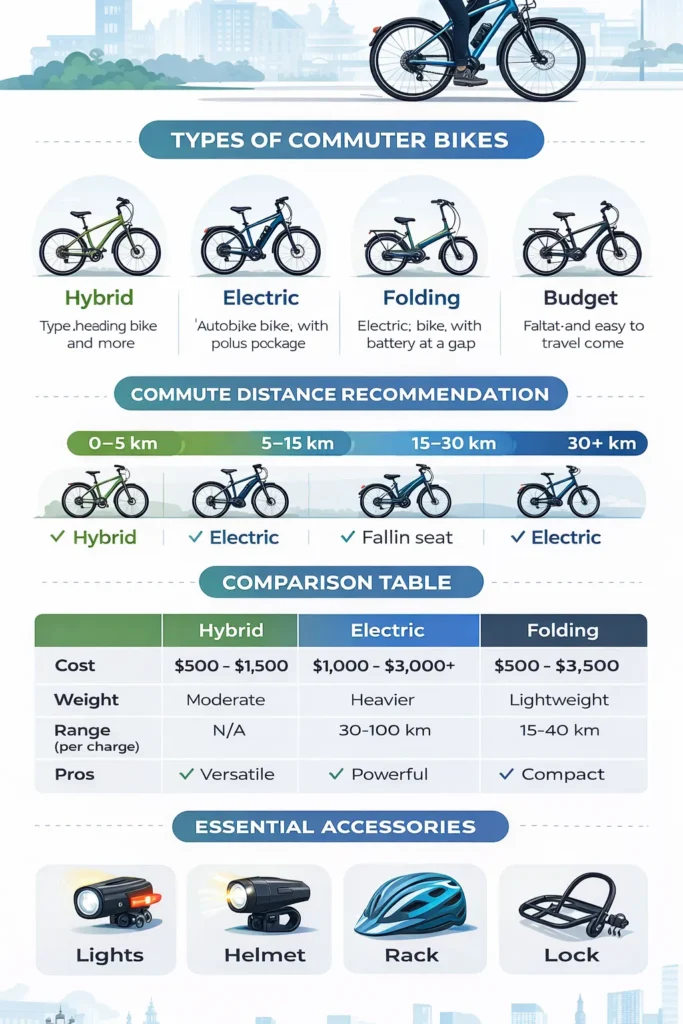
| Distance | Recommended Bike Type |
| 0–5 km | City bike / Single-speed |
| 5–15 km | Hybrid commuter bike |
| 15–30 km | Performance hybrid or Electric commuter |
| 30+ km | Electric commuter bike |
If your journey exceeds 15 kilometers and includes traffic stops or slopes, an electric commuter bike reduces physical strain and helps you arrive fresh.
Step 2: Evaluate Your Terrain
Flat Urban Roads
If you ride on smooth pavement:
- Lightweight hybrid frame
- 700c wheels
- Narrow slick tires
Hilly Cities
If your city has elevation changes:
- Wide gear ratio
- Hydraulic disc brakes
- Electric motor assistance recommended
Rough Roads & Potholes
If infrastructure is uneven:
- Wider tires (35–45mm)
- Reinforced rims
- Optional front suspension
Choosing a bike that matches your road conditions improves comfort and extends component life.
Step 3: Define Your Budget Clearly
Budget planning prevents overspending and disappointment.
| Budget Range | Ideal Choice |
| Under €600 / $700 | Entry-level hybrid |
| €700–€1200 | Mid-range quality hybrid |
| €1200–€2500 | Premium hybrid or beginner e-bike |
| €2500+ | Advanced electric commuter |
Spending slightly more often means better braking, smoother shifting, and longer durability.
Step 4: Consider Lifestyle & Daily Needs
Ask yourself:
- Do I carry a backpack or a laptop? → Choose a frame with rack mounts
- Do I combine train and bike travel? → Folding commuter bike
- Do I ride in heavy rain? → Install full-length fenders
- Is theft common in my area? → Invest in strong locking systems
These small decisions significantly improve the ownership experience.
Best Commuter Bikes in 2026
Below are globally respected commuter bikes based on reliability, comfort, value, and rider feedback.
Best Overall Hybrid – Specialized Sirrus X 2.0
The Specialized Sirrus X 2.0 stands out as one of the most versatile hybrid commuter bikes worldwide.
Key Specifications
- A1 premium aluminum frame
- 1x drivetrain system
- 42mm wide tires
- Hydraulic disc brakes
- Relaxed ergonomic geometry
Why Riders Prefer It
- Smooth performance on city roads
- Stable handling
- Excellent durability
Approximate Price
€750–€900 / $850–$1000
Advantages
- Comfortable long rides
- Minimal drivetrain complexity
- Reliable stopping power
Disadvantages
- No suspension fork
- Slightly heavier than road-focused hybrids
Recommended For: Urban commuters covering 5–20 km daily.
Best Folding Electric – Brompton Electric C Line
A premium folding e-bike popular across Europe.
Highlights
- Compact folding mechanism
- Electric pedal assistance
- Lightweight steel frame
Price
€3500–€4000
Strengths
- Ideal for train commuters
- Space-saving design
- Strong resale value
Weaknesses
- Expensive
- Smaller wheel size limits high-speed stability
Head-to-Head Comparison Table
| Model | Type | Weight | Range | Price | Ideal Use |
| Sirrus X 2.0 | Hybrid | 11.5 kg | N/A | €750+ | Urban daily |
| Trek FX 3 | Hybrid | 11 kg | N/A | €900+ | Fast commuting |
| Giant Explore E+ | Electric | 23 kg | 120 km | €2800+ | Long rides |
| Schwinn Network | Hybrid | 14 kg | N/A | $500+ | Beginners |
| Brompton Electric | Folding E-bike | 17 kg | 70 km | €3500+ | Multi-modal |
Electric vs Hybrid vs Traditional Commuter Bikes
Understanding the difference helps you avoid regret.
Hybrid Commuter Bikes
Advantages
- Lightweight construction
- Affordable pricing
- Simple maintenance
Drawbacks
- More effort on steep hills
Electric Commuter Bikes
Advantages
- Assisted pedaling
- Better for long distances
- Ideal for hot climates
Drawbacks
- Expensive initial investment
- Battery replacement cost
Traditional City Bikes
Advantages
- Mechanically simple
- Durable
- Classic upright design
Drawbacks
- Limited gear range
Essential Commuter Bike Accessories
Buying the bike is only part of the investment.
1. Front & Rear Lights
Visibility increases safety dramatically.
2. Rear Rack & Panniers
Eliminate backpack discomfort.
3. Mudguards
Protect clothing from the rain.
4. Certified Helmet
Strongly recommended for safety.
5. Anti-Theft Solutions
- Heavy-duty U-lock
- Secondary cable lock
- GPS tracking device
Global Market Trends & Availability
Europe
- Rapid e-bike adoption
- Government subsidies in Germany & Netherlands
United States
- Growing tax incentives for electric bikes
- Wide hybrid selection
United Kingdom
- Cycle to Work scheme popularity
- Folding bikes are in high demand
Asia
- Budget hybrid segment dominates
- Rapid electric bike expansion
Maintenance & Ownership Cost Overview
| Component | Average Replacement Interval |
| Chain | 2000–3000 km |
| Brake Pads | 1500–2500 km |
| Tires | 3000–5000 km |
| E-bike Battery | 3–5 years |
Regular servicing ensures long-term reliability.
Pros & Cons
Benefits
- Reduce fuel expenses
- Improve cardiovascular health
- Lower carbon footprint
- Avoid traffic congestion
Challenges
- Weather exposure
- Theft risk
- Upfront cost
Who Should Buy a Commuter Bike?
A commuter bike is suitable if:
- Your daily travel is under 30 km
- You want financial savings
- You prefer sustainable transport
- Your city supports cycling infrastructure
FAQs
A: The best commuter bike for beginners is usually a hybrid bike because it combines comfort, stability, and easy handling. It works well for city streets, bike lanes, and short daily rides.
A: Electric commuter bikes are worth it if you want less effort, faster travel, and easier hill climbing. They are especially helpful for longer commutes or riders who want to avoid arriving sweaty.
A: A good commuter bike typically costs $400 to $1,200, depending on quality, components, and features. Electric commuter bikes usually range from $1,000 to $3,000.
A: For most people, hybrid bikes are better for commuting because they offer a more comfortable upright riding position, wider tires, and better control in city traffic.
A: A well-maintained commuter bike can last 10–15 years or more. Regular maintenance, like cleaning, lubrication, and replacing worn parts, will extend its lifespan.
Final Expert
The best commuter bikes 2026 are determined by your personal needs — not marketing trends.
Choose:
- A hybrid commuter bike for balance and value.
- An electric commuter bike for distance and hills.
- A folding bike for public transport compatibility.
At BikesLover.com, our mission is to provide accurate, educational, and globally relevant motorcycle and bicycle knowledge so readers can make informed decisions with confidence.
A well-chosen commuter bicycle is not just transportation. It becomes part of your daily life, fitness routine, and financial strategy.
