
Introduction
By reading this guide, you will know how to pick a balance bike that’s right for your child. You will know what to look for, like the size of the bike and how fast your child can go. What kind of ground will they be riding on? You will also find out which bikes are best for kids who are just starting, for kids who like to play outside, and for families who do not want to spend a lot of money. Whether you are a parent or have been taking care of kids for a while, this guide will give you practical advice and tips on how to buy a balance bike.
In 2026, there are many balance bikes available. So it is very important to think about what’s most important: how well the bike fits your child, how much it weighs, what it is made of, the tires, and how safe it is. This article does not just review products; it also gives you tips to make sure your child has a good time learning to ride a bike. It wants to help you make sure your child is confident and safe when they are riding their balance bike.
What Is a Balance Bike?
A balance bike is a small bike designed without pedals to help toddlers and young children learn how to balance, steer, and maneuver a bike independently. Training wheels on bikes limit a child’s potential, but balance bikes allow children to glide, push, and control their speed, and help develop muscle memory, perception of balance, and coordination from scratch.
Balance bikes are mainly used by children between the ages of 18 months and 5 years, but however, this depends on inseam length and not age. They also differ in weight and fine-tuning. They affect the learning curve as well as the comfort and safety of children.
The balanced bike make sure that the children naturally exhibit the core balance skills, which could enable the children shift to pedal bikes faster with less hassle and less stress on their parents and their toddlers. However, it is faster, smoother, and less stressful for parents and toddlers to move to pedaling with a balance bike than with traditional bikes with training wheels depending on balance support.
Why Choose a Balance Bike Over Training Wheels?
Balance bikes have replaced training wheels as the predominant choice for young riders. There are several measurable advantages in skill development and safety that these present.
Faster Learning Curve
For most children, getting from their first wobbly attempt to the first confident glides along the street only takes a few hours or days, rather than the weeks or months required when relying on training wheels.
Lightweight and Highly Maneuverable
Balance bikes are also generally lighter than pedal bikes with training wheels, and this makes lifting, steering, and pushing to be easy for a toddler (ibid). The light weights also means that it is easy for the parent to carry or load the bikes on a vehicle.
How to Choose the Right Balance Bike
Choosing a balance bike is about more than brand or color. Key factors include size, weight, frame material, tire type, and safety features.
1. Balance Bike Size & Fit Guide (H3)
Proper size ensures your child can confidently sit with both feet on the ground while reaching handlebars comfortably. Use the inseam measurement as a guide:
| Age (Approx.) | Inseam (cm) | Recommended Wheel Size |
| 18–24 months | 28–34 cm | 10″ |
| 2–3 years | 33–39 cm | 12″ |
| 3–4 years | 38–45 cm | 14″ |
| 4–6 years | 44–52 cm | 16″ |
Pro Tip: Ensure your child can place their feet flat on the ground, which helps them balance and stop safely.
2. Weight Considerations (H3)
A bike that is too heavy can slow a child’s progress. As a guideline, aim for a bike that is less than 30% of the child’s body weight.
| Frame Type | Typical Weight |
| Aluminum | 3.5–5.5 kg |
| Steel | 5.5–7.5 kg |
| Wood/Composite | 4–6.5 kg |
Light bikes allow children to glide and lift easily, making riding more fun and less frustrating.
3. Frame Materials (H3)
Aluminum: Lightweight, corrosion-resistant, easy to maneuver.
Steel: Strong, durable, but heavier — ideal for rough use or budget-conscious options.
Wood: Stylish and eco-friendly, but heavier and less ideal in wet conditions.
4. Tires – Air, Foam, or EVA (H3)
- Air (Pneumatic) Tires: Smooth ride, better traction; requires occasional inflation.
- Foam Tires: Maintenance-free; rougher ride on uneven surfaces.
- EVA Tires: Lightweight and affordable; less cushioning on bumpy terrain.
5. Safety Features (H3)
Look for:
- Footrests for gliding
- Steering limiters to prevent tipping
- Handlebar padding
- Hand brakes (optional, for advanced riders)
Top Balance Bikes of 2026 – Comparison Table
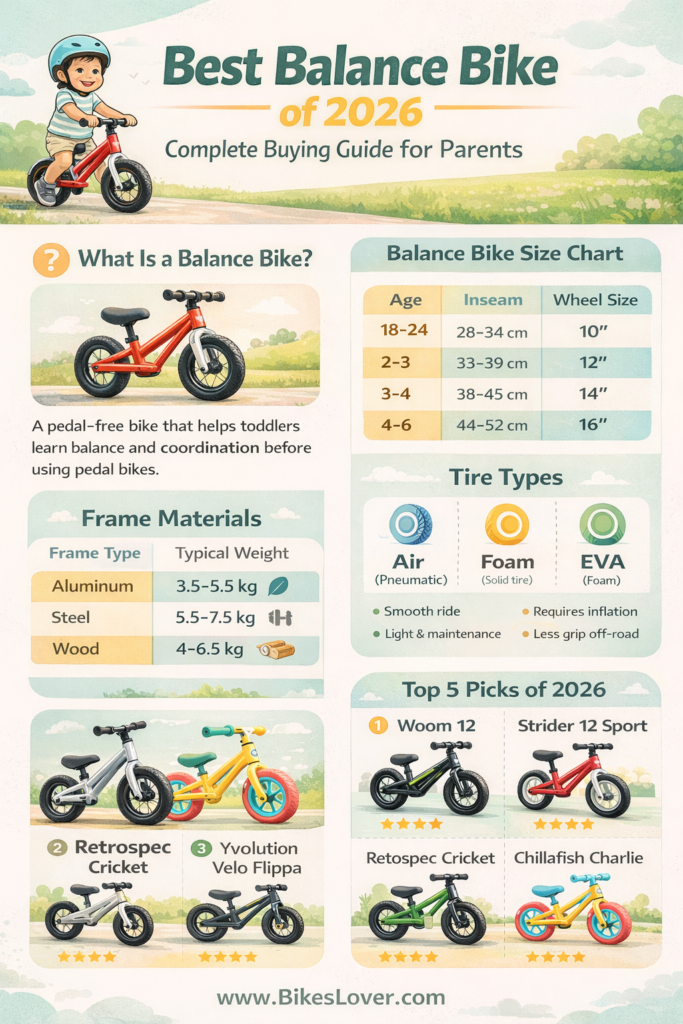
| Model | Best For | Weight | Special Feature | Price |
| Woom 12 Balance Bike | Best Overall | ~4.2 kg | Premium build | $$$ |
| Strider 12 Sport | Best Value | ~3.9 kg | Tool-free adjust | $$ |
| Retrospec Cricket | Beginners | ~5 kg | Low standover | $ |
| Yvolution Velo Flippa | Rough Terrain | ~5.2 kg | Stable build | $$ |
| Chillafish Charlie | Budget + Features | ~5.8 kg | Stylish & fun | $ |
FAQs
A: 18 months – 5 years; inseam is the main fit factor.
A: Optional; helpful for advanced riders.
A: Children grow differently; a proper fit ensures safety and confidence.
A: Yes, pneumatic tires are best outdoors.
A: Yes; they develop true balance and make pedal transition easier.
Final Verdict
The best balance bike is one that fits your child, is lightweight and safe, and provides confidence-building riding experiences. From premium options like Woom 12 to value-friendly Strider 12 Sport, 2026 offers choices for all budgets, terrains, and ages. Balance bikes offer children freedom, confidence, and motor skill development, creating a head start toward pedal bike independence. Using this guide, you can confidently choose the right bike to match your child’s needs.
