
Introduction:
The Electric Snow Bike signals a transformative shift in winter recreation and mobility. Across Europe, North America, Scandinavia, and alpine regions globally, adventurers and recreational riders are increasingly gravitating toward machines that are cleaner, quieter, and environmentally responsible. While traditional gas-powered snowmobiles continue to dominate deep-snow exploration, electric technology is rapidly redefining the landscape, offering a compelling alternative for enthusiasts seeking sustainable winter travel.
An electric snow bike combines the agility and lightness of a motorcycle or high-powered e-bike with the traction and flotation capabilities of a snowmobile, all powered by emission-free electricity. This hybridization provides riders with an innovative solution that merges speed, maneuverability, and eco-conscious performance.
- What an electric snow bike is
- How electric snow bike technology functions
- Leading models shaping the market
- Differences between electric snow bikes, snowmobiles, and fat-tire e-bikes
- Battery performance in cold conditions
- Pricing benchmarks and key purchase considerations
- Advantages and drawbacks
- Market trends and the future trajectory of electric snow mobility
What Is an Electric Snow Bike?
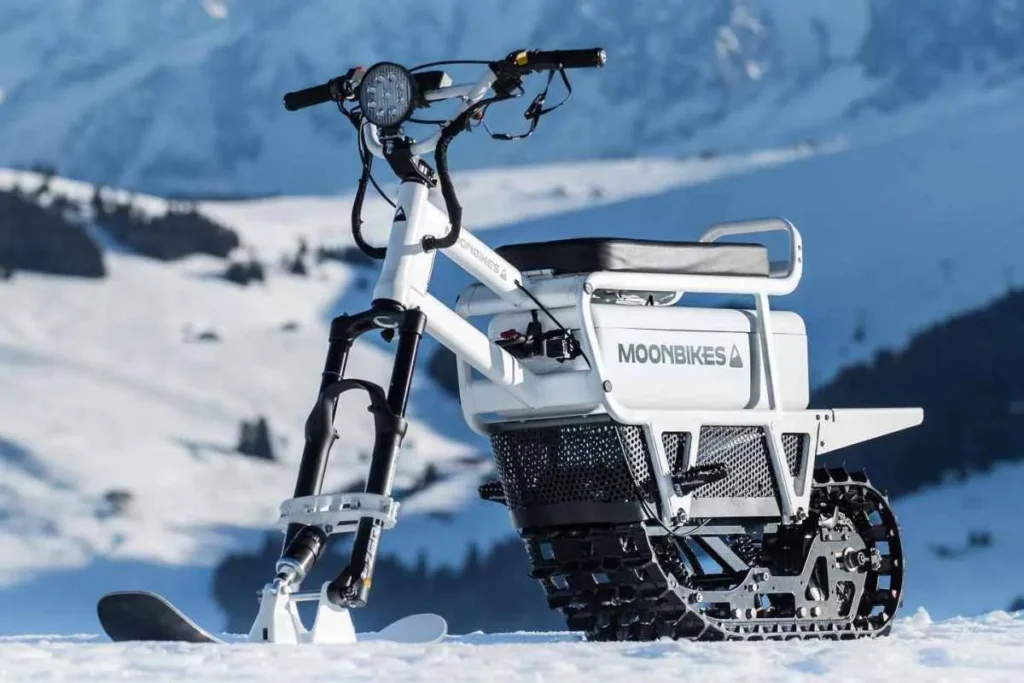
An electric snow bike is a battery-powered, off-road winter vehicle specifically engineered to navigate snow and icy terrains. Unlike conventional fat-tire e-bikes, which are primarily designed for snowy streets or frozen paths, an electric snow bike is built for true winter adventure, offering optimal traction, stability, and control in challenging snowy conditions.
Typically, an electric snow bike incorporates:
- A rear track system replaces the rear wheel, providing flotation and grip in deep snow
- A front ski or specialized traction tire, enhancing directional control
- A high-torque electric motor, designed for efficient hill climbs and snow traversal
- A cold-rated lithium-ion battery pack, optimized to maintain performance in sub-zero temperatures
These characteristics make electric snow bikes distinctly different from fat-tire e-bikes and offer riders a unique balance of mobility, versatility, and sustainability.
Brief Evolution of Snow Bikes
Winter riding has undergone a remarkable evolution:
- Dirt Bike Modifications: Early enthusiasts added track kits to dirt bikes, enabling winter riding in light snow.
- Gas-Powered Snowmobiles: Traditional snowmobiles dominated the mid-20th century with raw power but high emissions and noise levels.
- Electric Snowmobiles: Recent innovations introduced fully electric snowmobiles, offering quiet operation and lower maintenance.
- Purpose-Built Electric Snow Bikes: The latest category bridges the gap between snowmobiles and e-bikes, with manufacturers like MoonBikes and ENVO Drive Systems leading the charge.
These pioneers emphasize lightweight frames, modularity, and silent electric performance, creating vehicles suitable for recreational exploration, eco-tourism, and modern winter adventures.
How Electric Snow Bikes Work
Understanding the underlying technology is crucial to selecting the right electric snow bike. Modern machines integrate several core systems:
1. Electric Motor
Most electric snow bikes employ mid-drive high-torque motors, ranging from 3 kW to 8 kW. Unlike pavement cycling, snow introduces substantial rolling resistance, so torque is often more critical than top speed.
High torque ensures:
- Efficient climbing on snowy slopes
- Smooth traversal through powder
- Enhanced stability and control during technical maneuvers
2. Battery System
Electric snow bikes are powered by cold-rated lithium-ion batteries. Important specifications include:
- Capacity: 1.5 kWh to 4+ kWh
- Voltage: 48V to 72V
- Battery type: Removable or integrated
- Thermal management systems for temperature regulation
Cold temperatures can significantly diminish battery efficiency, so understanding range and charging strategies is essential for winter riding.
3. Rear Track System
Instead of a rear wheel, snow bikes utilize a rubber track system with a wide surface area, improving flotation and preventing the bike from sinking into deep snow.
4. Front Ski or Traction Tire
Depending on design, the front setup may include:
- A single ski, reminiscent of a snowmobile, for precise handling on packed snow
- A studded fat tire, offering flexibility on mixed terrain
- Rarely, a dual ski configuration
This combination improves steering, safety, and adaptability across various snow conditions.
5. Controller & Power Management
Modern electric snow bikes incorporate sophisticated power management systems, including:
- Regenerative braking
- Multiple riding modes (eco, sport, snow)
- LCD or TFT displays
- Cold optimization software
These features maximize efficiency, performance, and battery longevity during cold-weather operation.
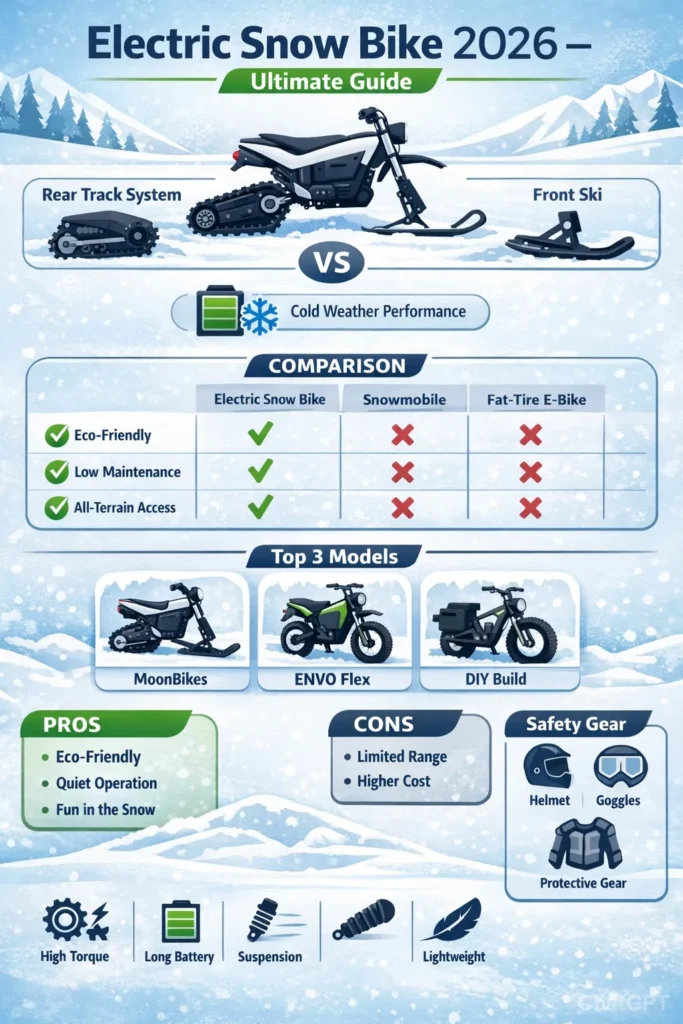
Electric Snow Bike vs Snow mobile vsBike
Confusion often arises between these three categories. Here’s a clear comparison:
| Feature | Electric Snow Bike | Snowmobile | Fat-Tire E-Bike |
| Power Source | Electric | Gasoline (mostly) | Electric |
| Emissions | Zero | High | Zero |
| Noise Level | Very Low | Loud | Quiet |
| Weight | 70–120 kg | 200–300+ kg | 25–35 kg |
| Deep Snow Capability | Good | Excellent | Limited |
| Portability | High | Low | High |
| Cost | Mid–High | High | Mid |
| Maintenance | Low | High | Low |
Pros and Cons Summary
Electric Snow Bike – Advantages
- Quiet, low-noise operation
- Environmentally Friendly
- Lightweight and portable
- Lower long-term operating costs
Electric Snow Bike – Limitations
- Less capable in extreme deep snow
- Battery performance is affected by cold
- Higher initial investment than fat e-bikes
Snowmobile – Advantages
- Exceptional deep snow performance
- High top speed
- Can tow or haul heavy loads
Snowmobile – Limitations
- Expensive to purchase and operate
- Noisy and high environmental impact
Fat-Tire E-Bike – Advantages
- Affordable
- Multi-season usage
- Lightweight and versatile
Fat-Tire E-Bike – Limitations
- Struggles in deep powder
- Lower traction and climbing capability
Top Electric Snow Bike Models to Watch
The market is still expanding, but several models have emerged as leading contenders:
1. MoonBikes Electric Snow Bike
- Motor: 3 kW
- Top Speed: 40–45 km/h
- Range: Up to 1.5 hours
- Frame: Lightweight aluminum
- Best For: Recreational trail riding and beginners
2. ENVO Flex SnowBike
- Design: Modular, pedal-assist + throttle
- Battery: Removable, supports multi-season use
- Track Conversion Kit: Optional for snow or off-road
- Best For: Riders seeking versatility and year-round functionality
3. DIY Electric Snow Bike Builds
- Base Vehicle: High-torque eMTBs or electric dirt bikes
- Custom Systems: Mid-drive motors, track conversion kits
- Best For: Hobbyists, tinkerers, and technical enthusiasts
Electric Snow Bike Pricing
| Model Type | Estimated Price (EUR) | Estimated Price (USD) |
| Entry-Level Conversion | €4,000 – €6,000 | $4,500 – $6,500 |
| Mid-Range Purpose-Built | €7,000 – €9,000 | $8,000 – $10,000 |
| Premium Performance | €10,000+ | $11,000+ |
Pricing is influenced by battery capacity, brand positioning, track quality, and import fees.
Key Features to Look for Before Buying
- Motor Power & Torque: Essential for snow traction
- Battery Capacity: A higher kWh ensures a longer range
- Cold Weather Rating: Must support sub-zero operation
- Weight: Lighter bikes improve maneuverability
- Suspension: Adequate travel is critical for rough winter terrain
- Warranty & Support: Particularly important for EU buyers
Battery, Range & Performance in Cold Conditions
Why Range Drops in Winter
- Lithium chemistry slows at low temperatures
- Snow increases rolling resistance
- Higher torque demand
- Wind chill reduces efficiency
Realistic Winter Range
Expect 30–60 km at -5°C, or 30–45 km at -15°C, even if the advertised range is higher.
Cold Weather Tips
- Pre-warm battery indoors before riding
- Avoid full discharge cycles
- Carry a spare battery
- Maintain proper storage conditions
Safety Tips for Riding an Electric Snow Bike
Essential Gear
- Full-face helmet
- Insulated gloves
- Waterproof boots
- Thermal clothing layers
Smart Riding Tips
- Avoid frozen lakes unless verified safe
- Stick to marked trails
- Maintain a steady throttle in powder
- Reduce speed on ice surfaces
Maintenance & Ownership Experience
Electric snow bikes require less upkeep than gas-powered snowmobiles.
Maintenance Checklist:
| Component | Check Frequency |
| Track tension | Every ride |
| Battery health | Monthly |
| Brake pads | Every 300–500 km |
| Suspension seals | Seasonal |
Ownership Advantages:
- No oil changes
- No carburetor maintenance
- Lower service costs
- Simple drivetrai
Market Trends & Future Outlook
The electric snow mobility market is expanding due to:
- EU emission restrictions
- Noise regulations
- Eco-tourism growth
- Improved battery technology
Leading adoption regions: Northern Europe (Norway, Sweden, Finland) and Alpine regions. Future developments may include:
- Solid-state batteries
- Swappable packs
- Smart GPS trail integration
- Carbon fiber frames
Pros & Cons
Pros: Zero emissions, quiet operation, lightweight, lower operating cost, modern design
Cons: High initial investment, reduced winter range, unsuitable for heavy towing
Who Should Buy an Electric Snow Bike?
Ideal Riders:
- Eco-conscious individuals
- Winter trail explorers
- Snowy property owners
- Adventure enthusiasts seeking quiet alternatives
Not Recommended For:
- Heavy towing or hauling
- Professional rescue operations
- Extreme mountain racing
FAQs
A: Not entirely; snowmobiles excel in deep powder and hauling tasks.
A: Typically 30–80 km depending on battery and temperature.
A: Regulations vary by country; always check local laws.
A: Most reach 35–50 km/h.
A: Smooth power delivery makes them easier to handle than gas snowmobiles.
Final Expert
The electric snow bike represents the convergence of sustainability and innovation. While it may not fully replace traditional snowmobiles, it delivers:
- Cleaner Winter mobility
- Silent, low-noise operation
- Lower maintenance costs
- Modern electric performance
As battery technology advances, riders can expect longer winter range, higher motor power, improved affordability, and broader adoption worldwide. For enthusiasts seeking eco-friendly winter adventure, electric snow bikes are not just a passing trend—they are the future of quiet, sustainable snow mobility.
