
Introduction
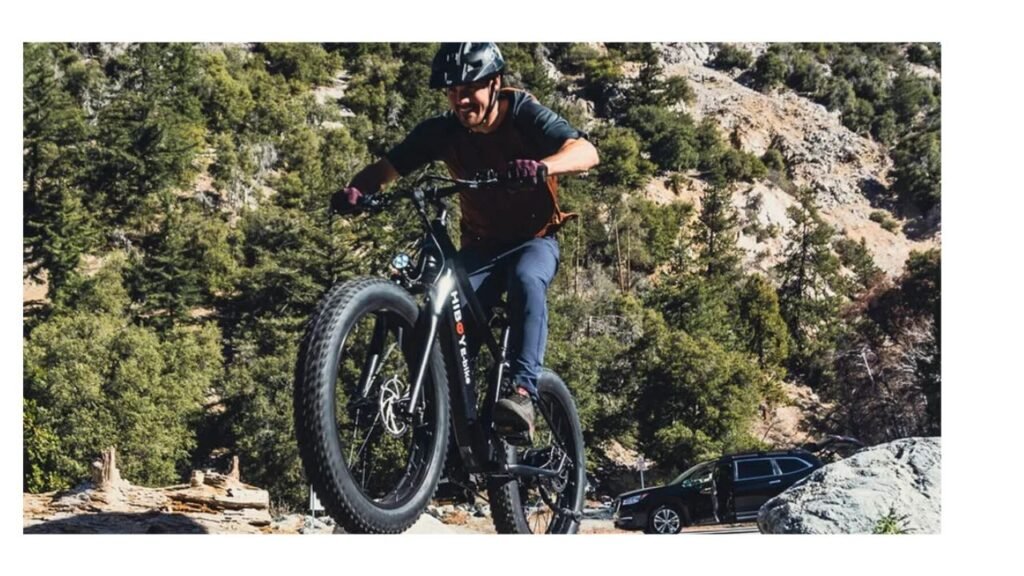
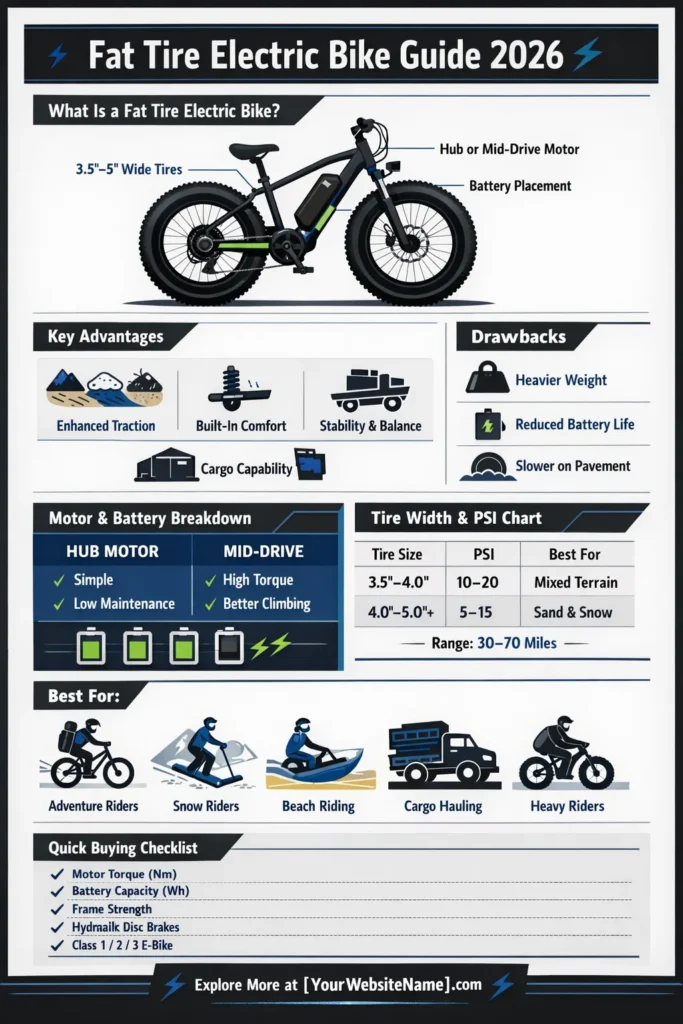
A fat tire electric bike (or fat tire e-bike) is an electric Bicycle with extra-wide tires, usually 3.5″ to 5″ or more. Combined with a motor and battery, these bikes can ride smooth streets, soft sand, snowy paths, or rough forest trails.
Fat tire e-bikes in 2026, they are among the most sought-after electric bicycles for adventure and daily use.
- All-terrain performance
- Comfortable rides
- Electric-assisted pedaling
- Exciting outdoor adventure
- Utility for carrying cargo
Winter trails, city streets, or forests, a fat tire e-bike can handle it.
What Makes Fat Tire Ebikes Different?
| Feature | Fat Tire E-bike Benefit |
| Wide Tires (3.5″+) | Extra grip and float on sand, snow, mud |
| Low Tire Pressure | Better traction, smoother ride |
| Electric Assist Motor | Pedal less, go further |
| Large Battery | Longer rides and adventures |
| Strong Frame | Can carry heavy loads, rough terrain |
| Disc Brakes | Strong stopping power in all conditions |
Fat Tire Ebike Advantages
Let’s break down the benefits of fat tire electric bikes in easy-to-understand language.
Enhanced Traction & Grip
Wide tires touch more surface area, giving:
- Better grip on sand, snow, mud, and gravel
- Reduced slipping on soft surfaces
- Safer cornering and starts
Fat tires work well with low air pressure (10–25 PSI), making your bike stick to surfaces like oversized shoes on slippery ice.
Stability & Confidence for All Riders
- Riders feel more in control
- The bike is less wobbly at slow speeds
- Turns feel safer and smoother
Even beginners or heavier riders will feel a planted, confident ride
Built-In Comfort
Air-filled tires act like natural shock absorbers:
- Smooth out bumps and potholes
- Reduce arm and back fatigue
- Often eliminates the need for a suspension fork
Your ride feels soft even on rough terrain.
Versatility Across Terrains
Fat tire electric bikes can be ridden:
- Snow-covered paths
- Beaches and dunes
- Forest trails
- Gravel paths
- City streets
They are one-bike solutions for almost every condition.
Load & Utility Strength
Most fat tire e-bikes are strong enough for:
- Cargo racks
- Grocery baskets
- Panniers and luggage
- Heavier riders
This makes them perfect for errands, commuting, or adventure trips.
Fat Tire Ebike Drawbacks
No product is perfect. Here are the downsides of fat tire e-bikes:
Heavier & Harder to Carry
Lifting them onto racks or stairs can be challenging.
Trade-Off in Road Handling
On smooth roads:
- Fat tire bikes feel slower
- They require more pedaling effort
- They are less aerodynamic
Higher Maintenance & Tire Cost
Fat bike tires are wider and unique, making them more expensive to replace. Not all bike shops carry spare parts.
Fat Tire Electric Bike Anatomy
Motors & Torque
Fat tire e-bikes usually have two main motor types:
Hub Motor
- Located in the wheel hub
- Simple, reliable, and cheaper
- Works well on flat terrain
Mid-Drive Motor
- Located near the pedals
- Provides higher torque for hills
- Better balance for off-road adventures
Tip: Torque (measured in Nm) is key for heavy riders and steep hills. More Nm = easier climbs.
Battery & Range
Battery size is measured in watt-hours (Wh):
- 360–500 Wh → short daily rides
- 500–800+ Wh → long rides, hills, and cargo
Range depends on:
- Terrain type
- Rider weight
- Pedal assist level
- Tire pressure
- Temperature (cold reduces battery performance)
More Wh usually means a longer distance.
Frame, Suspension & Brakes
Frame
- Aluminum → lightweight and strong
- Carbon fiber → premium, light, and strong
Suspension
- Some have front forks
- Many rely on tire cushioning alone
Brakes
- Hydraulic disc brakes provide strong stopping power
- Essential for off-road or wet conditions
How to Choose the Best Fat Tire E-Bike
To pick the right bike, ask yourself:
Where Will You Ride Most?
- Beach → Wide tires (4.0″–5.0″)
- Snow → Low PSI + torque motor
- City → Balance comfort + battery range
- Hills → Mid-drive motor
- Heavy loads → Big battery + strong frame
Ideal Tire Width & Air Pressure
| Riding Type | Tire Width | PSI Suggestion |
| Mixed Terrain | 3.5″–4.0″ | 10–18 PSI |
| Sand & Snow | 4.0″–5.0″+ | 10–15 PSI |
| Trail Riding | 3.8″–4.5″ | 10–20 PSI |
| Road & Urban | 3.5″ | 20–30 PSI |
Tip: Lower PSI = more grip; higher PSI = faster speed
Motor Class & Power
E-bike classes in many regions:
| Class | Description |
| Class 1 | Pedal-assist up to 20 mph (no throttle) |
| Class 2 | Throttle + pedal-assist up to 20 mph |
| Class 3 | Pedal-assist up to 28 mph |
Battery Tips
- 500 Wh+ → comfortable daily use
- 750 Wh+ → long rides and cargo
- Removable battery → easy charging
Weight, Size & Fit
Check:
- Bike size chart for your height
- Reach and handlebar comfort
- Frame weight limit
- Space for carriers or panniers
Comfort is crucial for long trips.
Budget Guide
| Budget Tier | What You Get |
| Entry Level | Basic motor & battery — reliable for casual use |
| Mid Range | Stronger motor + better battery — more range & features |
| Premium | Top performance, long battery, luxury parts, off-road ready |
Best Fat Tire Electric Bikes
Note: Availability varies by region. Specs may vary.
- Why: Perfect balance of power, range, and comfort
- For: Riders who want one bike for everything
- Specs: Mid-drive motor, 700 Wh+ battery, hydraulic disc brakes, strong frame
Budget Fat Tire Electric Bike
- Why: Good performance without high cost
- For: Beginners or budget-conscious buyers
- Specs: Hub motor, 30–50 mi range, solid basic brakes
For Sand & Snow Riding
- Why: Focused on soft surfaces
- For: Beach towns, winter riders, dunes
- Specs: 5″+ tires, strong torque motor, durable brakes
Cargo & Utility Fat Tire Ebike
- Why: Hauls gear, kids, groceries
- For: Families, cargo Riders
- Specs: Reinforced frame, ≥800 Wh battery, racks & accessories
Best for Heavy Riders
- Why: Stronger build & torque for 220+ lb riders
- For: Heavier riders, gear haulers
- Specs: High torque mid-drive, large battery, reinforced frame
Fat Tire Ebike Comparison
| Model Category | Motor Type | Battery | Best For | Approx Range (miles) |
| Best Overall | Mid-Drive | 700 Wh | All-purpose riding | 40–60+ |
| Best Budget | Hub | 500 Wh | Daily commuting | 30–50 |
| Sand & Snow | High Torque | 750 Wh | Loose terrain | 35–55 |
| Cargo Utility | Mid-Drive | 800 Wh | Load carrying | 40–70 |
| Heavy Riders | High Torque | 850 Wh | High load + hills | 35–60 |
FAQs
A1:They are stable, comfortable, and versatile. For pure road speed, narrow-tire bikes are faster.
A2:30–60+ miles depending on battery, terrain, rider weight, and assist level.
A3:wide tires + high torque motors provide excellent grip.
A4:Sand & snow → 4.0″–5.0″+; mixed terrain → 3.5″–4.0″.
A5:Tire replacements cost more, and occasional tuning is required.
Final Verdict
Fat tire electric bikes combine:
- Traction
- Comfort
- All-terrain versatility
They are perfect for:
- Riders exploring beyond paved roads
- Commuters who value comfort
- Adventurers who love snow, sand, or trails
- Heavy riders or cargo haulers
