
Introduction
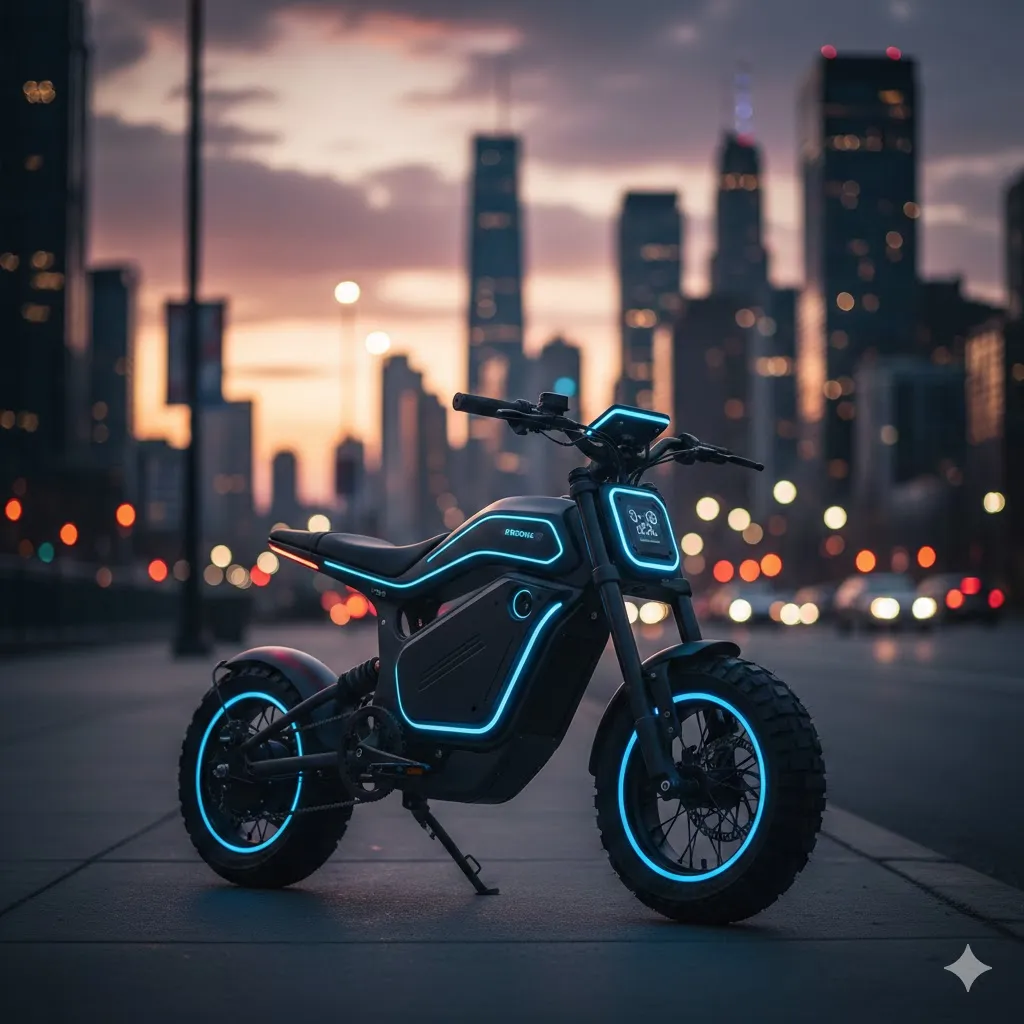
Mini Bikes are no longer just a fun thing to ride around the yard. Mini bikes are actually a very popular way for people to get around these days. By the year 2026, electric mini bikes have become a part of how people get around, and they will be a mix between bicycles, Motorcycles, and scooters. Mini bikes are becoming more popular every day.
- * getting around easily
- * having fun
- * getting to places that are hard to get to with regular bikes
Electric mini bikes are very popular these days because they are easy to use and people like them. Mini bikes are also good because they are good for the environment. People are using mini bikes for a lot of different things.
- Daily Urban Commuters
- Off-road recreational vehicles
- Farm and property transport tools
- Beginner-friendly electric cycles
- Environment-friendly options to petrol-powered cycles
People who ride bikes these days do not want bicycles or motorbikes. They want a bike that’s easy to ride.
What Is an Electric Mini Bike?
An electric mini bike is a bike that uses a battery for power. The electric mini bike resembles a motorcycle. The electric mini bike uses a battery for power. This makes it produce less noise compared to bikes that use gasoline. The electric mini bike produces little noise because it uses power to move.
Mini electric bikes differ from bicycles in that you do not have to pedal them. You control mini electric bikes using a throttle system. This means that you only have to turn or press the throttle to make the mini electric bike move faster. This is similar to riding a motorbike or a scooter. Mini electric bikes are easy to operate because of the throttle system. You only have to turn the throttle and the mini electric bike will move.
Core Characteristics of Electric Mini Bikes
Most electric mini bikes share the following features:
- Compact frame design
- Small wheel sizes (typically 10–14 inches)
- Lightweight chassis
- Low seat height for easy mounting
- Minimalist controls
- Electric hub or mid-drive motor
- Rechargeable lithium-based battery
They occupy a unique space between several vehicle categories, offering:
- More stability and torque than electric scooters
- Easier handling and lower intimidation than motorcycles
- More excitement and speed than traditional bicycles
Electric Mini Bike vs Electric Bicycle
This is one of the most common areas of confusion for beginners. While both use electric motors, they are fundamentally different machines.
Key Differences Explained Clearly
| Feature | Electric Mini Bike | Electric Bicycle |
| Power Delivery | Throttle-controlled motor | Pedal assist + optional throttle |
| Riding Position | Motorcycle-style | Bicycle-style |
| Typical Speed | 15–30+ MPH | 15–28 MPH |
| Pedals | None | Yes |
| Licensing | Sometimes required | Rarely required |
If your goal is pure electric riding without pedaling, an electric mini bike is the better choice.
Where Electric Mini Bikes Are Most Popular
Electric mini bikes are used worldwide, but their popularity and legality differ significantly by region.
- United States & Canada – Urban commuting, college campuses, recreational riding
- Europe – Mostly private land or limited road use due to regulations
- United Kingdom – Predominantly off-road and closed-property use
- Australia – Farms, trails, and private land transport
- Asia – Compact personal mobility in dense urban environments
Understanding local laws is just as important as understanding specifications.
Key Electric Mini Bike Features Explained
Numbers alone do not tell the full story. What matters is how those numbers translate into real-world riding experience.
Electric Motor Power
Motor wattage determines how quickly the bike accelerates, how well it climbs hills, and how much weight it can comfortably support.
Common Motor Power Levels
| Motor Output | Ideal Use Case |
| 250–500W | Entry-level riders, teens, flat terrain |
| 500–750W | Adult riders, urban commuting |
| 1000–1500W | Heavy riders, steep hills, light off-road |
| 2000W+ | Performance riding, trails, aggressive use |
Expert Insight:
If you weigh more than 80 kg (176 lbs), a motor under 750W will struggle on inclines and feel underpowered.
Battery Type, Capacity & Real-World Range
The Battery is the heart of an electric mini bike — and also its most expensive component.
Battery Types Explained
| Battery Type | Advantages | Disadvantages |
| Lead-Acid | Low upfront cost | Heavy, short lifespan |
| Lithium-Ion (Li-ion) | Lightweight, efficient | Higher price |
| Lithium Iron Phosphate (LiFePO4) | Extremely safe, long cycle life | Slightly heavier |
In 2026, lithium batteries are non-negotiable. Avoid lead-acid entirely.
Battery Capacity Explained
Battery capacity is measured in Watt-hours (Wh) or calculated using:
Voltage (V) × Amp-hours (Ah)
Real-World Range Estimates
| Battery Size | Practical Range |
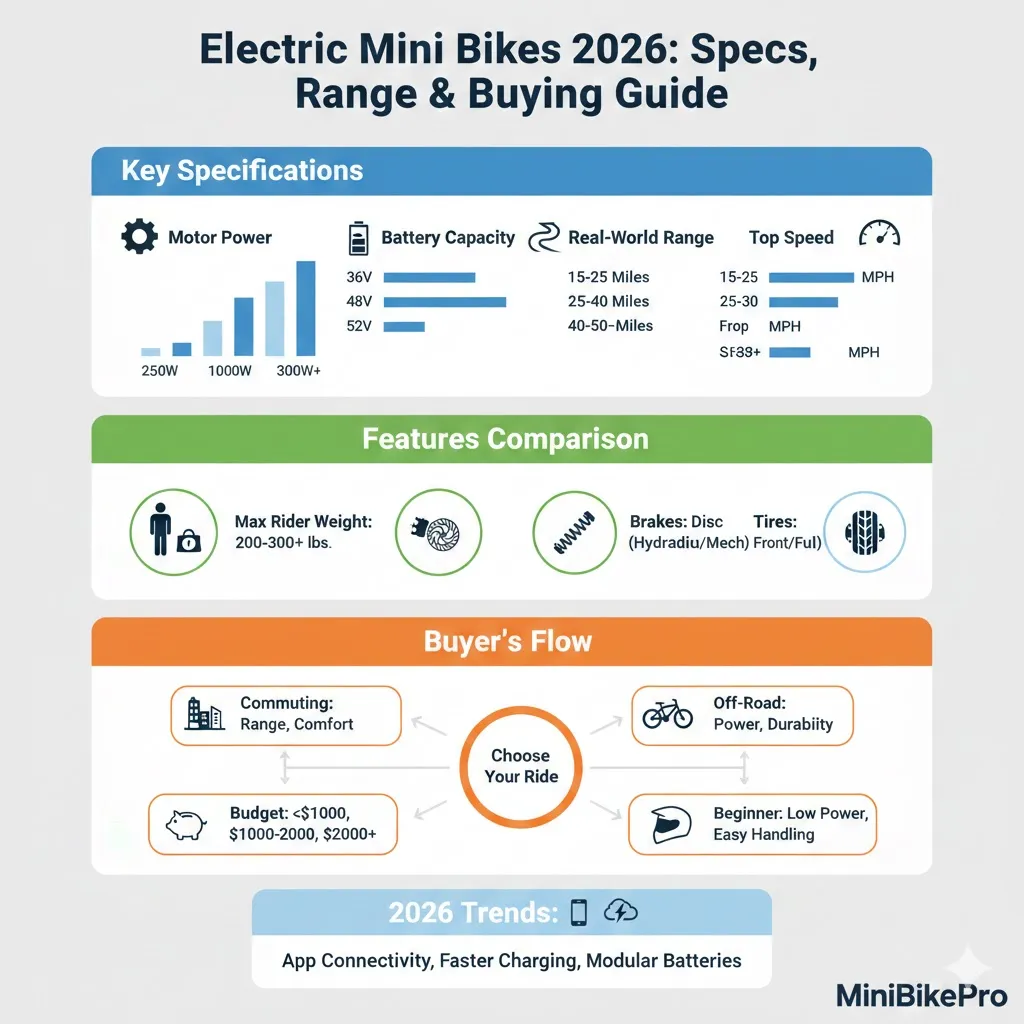
| 36V 10Ah | 15–20 miles |
| 48V 12Ah | 20–30 miles |
| 52V 20Ah | 35–50 miles |
Actual range depends heavily on:
- Rider body weight
- Average riding speed
- Terrain elevation
- Tire pressure
- Ambient temperature
Top Speed & Weight Capacity
Most electric mini bikes operate between 15 and 30+ MPH.
Speed Recommendations by Rider Type
| Rider Type | Recommended Speed |
| Beginners | 15–20 MPH |
| Daily commuters | 20–28 MPH |
| Off-road riders | 25–35 MPH |
Weight limits usually fall between 200 and 330 lbs (90–150 kg).
Exceeding manufacturer weight ratings reduces safety, damages components, and shortens battery life.
Brakes, Suspension & Tires
These components have a direct impact on control, comfort, and safety.
Braking Systems
- Mechanical disc brakes – Acceptable for lower speeds
- Hydraulic disc brakes – Strongly recommended for adults and high-speed riding
Suspension Systems
- Front suspension – Improved comfort on rough pavement
- Dual suspension – Essential for trails and off-road use
Tire Types
- Street tires – Quiet, efficient, low rolling resistance
- Knobby tires – Maximum grip on dirt and uneven terrain
How to Choose the Right Electric Mini Bike
Buying without a plan leads to disappointment. Use this structured approach.
Step-by-Step Buyer Checklist
- Define your primary riding purpose
- Match motor power to your body weight
- Choose battery capacity based on daily distance
- Verify braking system quality
- Check local laws and classification
- Confirm warranty and spare part availability
Best Electric Mini Bikes In-Depth Comparison
Specifications may vary depending on region.
Top Electric Mini Bikes Comparison Table
| Model | Motor | Battery | Range | Top Speed | Best For |
| EGO POWER+ MB1005-2 | 1000W | 56V Li-ion | ~30 miles | 28 MPH | Performance riders |
| MotoTec 48V Pro | 1000W | 48V 12Ah | ~20 miles | 20 MPH | Off-road use |
| Razor Pocket Rocket | 250W | 24V | ~30 min | 15 MPH | Beginners |
| Burromax TT750R | 750W | 36V | ~18 miles | 18 MPH | Teens & adults |
| Kuberg Freerider | 3000W | Li-ion | ~40 miles | 34 MPH | Serious trail riding |
Pros & Cons of Electric Mini Bikes
Advantages
- Zero tailpipe emissions
- Extremely low operating cost
- Quiet and vibration-free
- Minimal maintenance requirements
- Beginner-friendly controls
- Compact storage footprint
Disadvantages
- Limited range compared to motorcycles
- Battery replacement expense
- Legal restrictions in some regions
- Not suitable for highways
Electric Mini Bikes for Different Riders
Best Electric Mini Bikes for Adults & Commuters
Ideal Specifications
- 750–1000W motor
- 48V lithium battery
- Disc braking system
- Road-focused tires
Best Use Cases
- City commuting
- Short errands
- Campus transportation
Off-Road Electric Mini Bikes
Essential Features
- Aggressive knobby tires
- Dual suspension setup
- 1000W or higher motor
Best Use Cases
- Dirt trails
- Farms and ranches
- Private land riding
Budget Electric Mini Bikes Under $1000
What to Expect
- 500–750W motors
- Reduced Range
- Basic suspension components
Best For
- Beginners
- Casual weekend riders
- Supervised teen use
Electric Mini Bike vs Traditional Bike
| Feature | Electric Mini Bike | Traditional Bike |
| Power Source | Electric motor | Human-powered |
| Speed Potential | Up to 30+ MPH | Rider-dependent |
| Maintenance | Very low | Moderate |
| Comfort | Higher | Moderate |
Cost to Own & Maintain an Electric Mini Bike
Estimated Annual Ownership Costs
| Expense | Approximate Cost |
| Charging | $20–40/year |
| Brake pads | $30–60 |
| Tires | $50–100 |
| Battery (3–5 years) | $300–700 |
Even with battery replacement, ownership costs remain far lower than petrol motorcycles.
Safety & Legal Considerations
Regulations vary dramatically.
- USA: Often classified as mopeds or e-bikes
- UK: Mostly restricted to private property
- EU: Power and speed limitations apply
- Australia: State-level regulations
- Asia: Mixed enforcement depending on country
Always wear:
- Certified helmet
- Protective gloves
- Knee and elbow guards
FAQs
Q1:Most models offer 15–40 miles, depending on battery size and riding habits.
Q2:Typically, 3–6 hours using a standard charger.
Q3:Legality depends entirely on local laws and classification.
A4:especially for short-distance urban travel.
A5:Most lithium batteries last 3–5 years with proper care.
Final Verdict:
Electric mini bikes have evolved into legitimate transportation, not just Gimmicks.
They are an excellent choice if you value:
- Affordable mobility
- Enjoyable riding experience
- Environmentally responsible transport
If freedom, efficiency, and fun are important to you, then an electric mini bike is one of the smartest two-wheeled investments you can make in 2026.
