
Introduction
Family transportation is changing rapidly across Europe and many other parts of the world. Rising fuel costs, traffic congestion, environmental concerns, and the growing popularity of electric mobility have encouraged thousands of parents to replace short car trips with Electric bikes.
An electric bike with a kid seat offers a practical, affordable, and eco-friendly way to transport children while enjoying the benefits of cycling. Whether you’re taking your child to school, running errands, commuting to work, or enjoying weekend adventures, a properly equipped e-bike can transform everyday travel into an enjoyable experience.
However, carrying a child on an electric bike requires more than simply attaching a seat and riding away. Parents must understand safety requirements, child seat types, weight limitations, bike compatibility, installation procedures, and legal considerations.
This comprehensive guide covers everything you need to know about electric bikes with kid seats. By the end of this article, you’ll understand how to choose the right setup, keep your child safe, and select the best family-friendly electric bike for your needs.
What Is an Electric Bike With a Kid Seat?
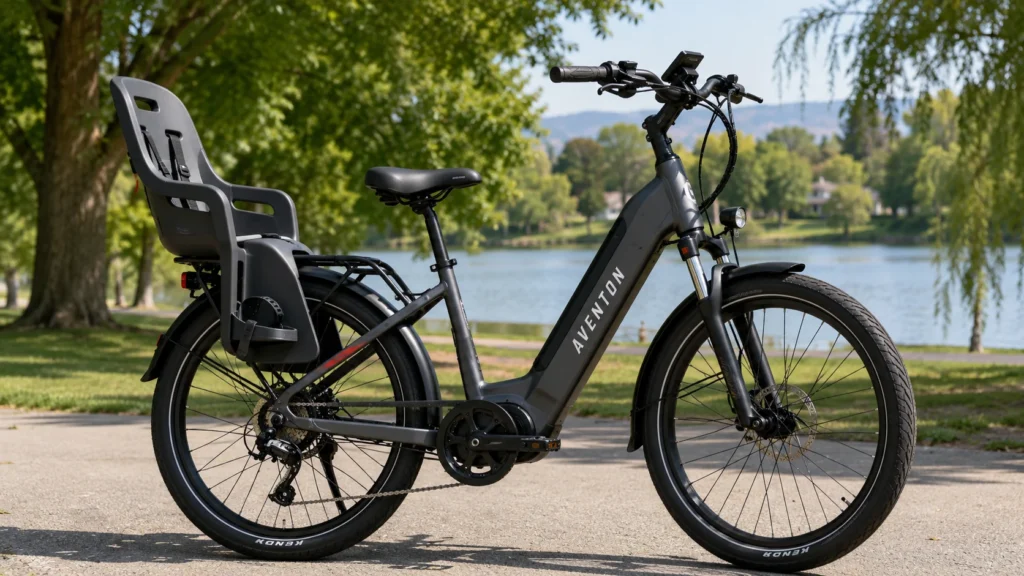
An electric bike with a kid seat is an e-bike that has been fitted with a specially designed child carrier seat. These seats allow parents or guardians to transport children safely while benefiting from electric pedal assistance.
Unlike conventional bicycles, electric bikes use a battery-powered motor that helps riders pedal more efficiently. This extra assistance makes it easier to carry additional weight, including children, groceries, backpacks, and other cargo.
Common uses include:
- School drop-offs and pickups
- Daily commuting
- Family outings
- Shopping trips
- Recreational cycling
- Weekend adventures
Many families find that an electric bike can replace a second car, significantly reducing transportation expenses.
Why Families Are Choosing Electric Bikes Over Cars
Modern families increasingly view electric bikes as a practical transportation solution.
Financial Savings
Operating an e-bike costs significantly less than maintaining a car. Expenses such as fuel, parking fees, insurance, and vehicle maintenance can be dramatically reduced.
Environmental Benefits
Electric bikes produce substantially fewer emissions than traditional vehicles, helping families reduce their environmental footprint.
Improved Physical Health
Although electric bikes provide assistance, riders still pedal and remain physically active.
Reduced Traffic Stress
Urban commuters can often reach destinations faster using bike lanes and dedicated cycling infrastructure.
Family Bonding
Children often enjoy riding on an e-bike, making daily travel more engaging and enjoyable.
Is It Safe to Carry a Child on an Electric Bike?
Yes, carrying a child on an electric bike can be very safe when proper precautions are followed.
The key factors include:
- Using a certified child seat
- Following weight limits
- Wearing approved helmets
- Maintaining moderate speeds
- Performing regular safety checks
- Choosing suitable riding routes
Parents should remember that adding a child changes the bike’s balance and handling characteristics.
New riders should practice handling the bike without a child first before attempting family rides.
Types of Kid Seats for Electric Bikes
Choosing the right child seat is one of the most important decisions.
Front-Mounted Child Seats
Front-mounted seats position the child between the handlebars and the rider.
Advantages
- Better interaction with the child
- Improved visibility
- Child enjoys a better view
Disadvantages
- Limited weight capacity
- Less space for rider movement
- Not ideal for older children
Recommended Age
Typically suitable for children aged 9 months to 3 years.
Rear-Mounted Child Seats
Rear-mounted seats attach to the bike frame or rear rack.
Advantages
- Higher weight capacity
- Greater comfort
- Better stability
Disadvantages
- Less interaction with the child
- Child’s visibility is reduced
Recommended Age
Typically suitable for children aged 1 to 6 years.
Mid-Mounted Child Seats
Mid-mounted systems position the child between the rider and handlebars.
Advantages
- Excellent balance
- Better rider control
- Child remains visible
Disadvantages
- Limited age range
- Compatibility restrictions
Child Bike Trailers
Trailers connect behind the bike and carry one or two children.
Advantages
- Maximum stability
- Additional storage
- Weather protection options
Disadvantages
- Larger footprint
- Reduced maneuverability
- Higher cost
Can Any Electric Bike Use a Child Seat?
No.
Not every electric bike is designed to accommodate a child seat safely.
Before installation, verify:
- Frame compatibility
- Rear rack strength
- Manufacturer approval
- Battery placement
- Suspension design
Some electric bikes have batteries integrated into locations that interfere with child seat mounting systems.
Best Electric Bike Types for Carrying Children
Different e-bike categories offer varying levels of comfort and practicality.
Cargo Electric Bikes
Cargo e-bikes are specifically designed to carry extra weight.
Best For
- Multiple children
- Daily commuting
- Grocery shopping
- Family transportation
Longtail Electric Bikes
Longtail models feature an extended rear frame.
Benefits
- Extra passenger space
- High carrying capacity
- Excellent family utility
Step-Through Electric Bikes
These bikes provide easier mounting and dismounting.
Benefits
- Beginner friendly
- Better accessibility
- Improved comfort
Commuter Electric Bikes
Perfect for urban environments.
Benefits
- Efficient transportation
- Lightweight design
- Comfortable riding position
Folding Electric Bikes
Suitable for families with limited storage.
Benefits
- Compact storage
- Public transport compatibility
- Easy transportation
How to Choose the Best Electric Bike With Kid Seat
Selecting the right e-bike requires evaluating several important factors.
Weight Capacity
Always verify the combined weight limit.
Consider:
- Rider weight
- Child weight
- Accessories
- Cargo
A higher capacity generally improves safety.
Motor Power
Most family riders benefit from:
- 250W motors (Europe)
- 500W motors (various global markets)
- Mid-drive motor systems
More power helps when climbing hills with a child onboard.
Battery Range
Choose a battery capable of supporting daily travel requirements.
Typical Ranges
| Battery Size | Average Range |
| 400Wh | 25–50 km |
| 500Wh | 40–70 km |
| 625Wh | 60–100 km |
| 750Wh | 80–130 km |
Actual results vary based on terrain, rider weight, weather, and assist level.
Braking Performance
Powerful brakes are essential when carrying children.
Look for:
- Hydraulic disc brakes
- Large rotors
- Reliable stopping power
Frame Design
Strong frames provide:
- Better stability
- Improved durability
- Enhanced safety
Step-through frames are particularly popular among parents.
Child Seat Weight Limits and Age Recommendations
Parents should always follow manufacturer guidelines.
| Child Age | Recommended Setup |
| Under 9 months | Not recommended |
| 9 months–3 years | Front seat |
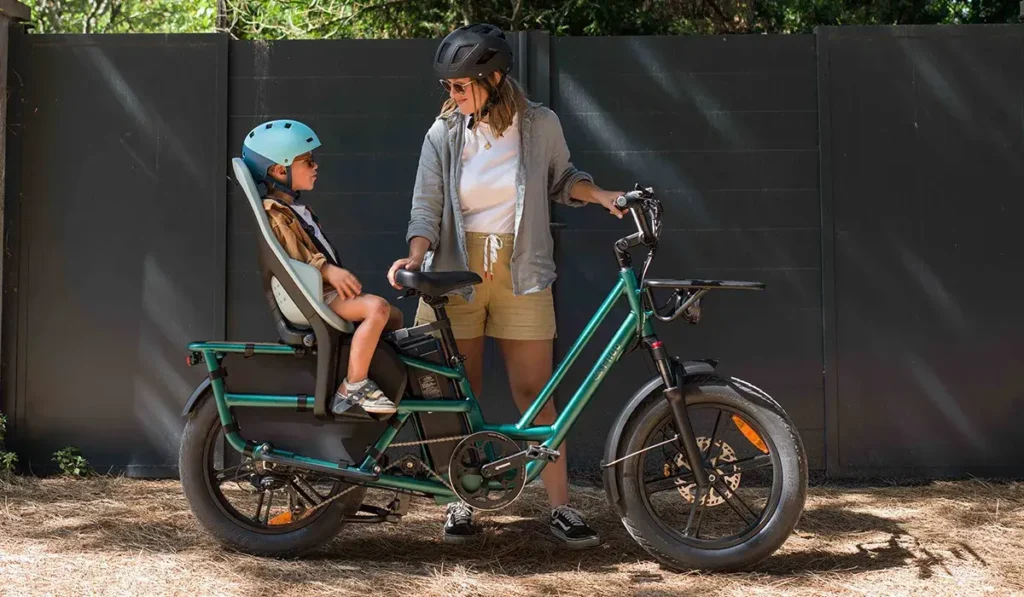
| 1–6 years | Rear seat |
| 5+ years | Rear seat or cargo bike |
Always verify the maximum weight rating before purchasing.
Front vs Rear Child Seat Comparison
Choosing between front and rear seats depends on your family’s needs.
| Feature | Front Seat | Rear Seat |
| Visibility | Excellent | Moderate |
| Child Interaction | High | Limited |
| Weight Capacity | Lower | Higher |
| Stability | Good | Very Good |
| Comfort | Good | Excellent |
| Age Range | Younger Children | Wider Range |
Front Seat Pros
- Better child engagement
- Easier communication
- Enjoyable experience
Front Seat Cons
- Limited space
- Lower capacity
Rear Seat Pros
- Higher weight limits
- Better comfort
- Greater versatility
Rear Seat Cons
- Less visibility
- Less interaction
How to Install a Child Seat on an Electric Bike
Proper installation is essential for safety.
Step 1: Verify Compatibility
Check:
- Frame type
- Rack capacity
- Manufacturer recommendations
Step 2: Read Instructions Carefully
Never skip installation guidelines.
Step 3: Secure Mounting Hardware
Tighten all fasteners according to specifications.
Step 4: Perform Safety Inspection
Check:
- Stability
- Fastener tightness
- Harness operation
Step 5: Conduct a Test Ride
Ride without a child first.
Practice:
- Turning
- Braking
- Acceleration
Essential Safety Gear for Parents and Children
Safety equipment should never be optional.
Child Helmet
Choose:
- Certified helmet
- Proper fit
- Comfortable padding
Parent Helmet
A quality cycling helmet remains critical.
High-Visibility Clothing
Reflective gear improves visibility.
Bike Lights
Use front and rear lights even during daytime.
Mirrors
Mirrors increase awareness of surrounding traffic.
Rain Protection
Weather covers can improve comfort during wet conditions.
Common Mistakes Parents Make
Avoiding these mistakes can significantly improve safety.
Ignoring Weight Limits
Overloading affects stability and braking.
Riding Too Fast
Children increase stopping distance.
Improper Installation
Loose fittings create serious hazards.
Skipping Maintenance
Mechanical failures become more dangerous when carrying children.
Poor Route Planning
Busy roads may not be suitable for family cycling.
Electric Bike With Kid Seat vs Cargo Bike
Many parents eventually compare traditional child seats with cargo e-bikes.
| Feature | Child Seat Setup | Cargo E-Bike |
| Cost | Lower | Higher |
| Capacity | One Child | Multiple Children |
| Stability | Good | Excellent |
| Storage | Limited | Outstanding |
| Flexibility | High | Moderate |
| Family Use | Good | Excellent |
Choose a Child Seat Setup If
- You have one child
- Budget is limited
- Storage space is restricted
Choose a Cargo E-Bike If
- You have multiple children
- Frequent family transportation is required
- Long-term family use is expected
Maintenance Tips for Family Electric Bikes
Proper maintenance protects both rider and child.
Check Tire Pressure Weekly
Correct tire pressure improves:
- Stability
- Efficiency
- Comfort
Inspect Brakes Frequently
Brake performance is crucial when carrying extra weight.
Examine Child Seat Mounts
Regularly inspect:
- Bolts
- Brackets
- Mounting systems
Maintain Battery Health
Best practices include:
- Avoiding extreme temperatures
- Using approved chargers
- Maintaining proper charge levels
Clean the Bike Regularly
Dirt and debris accelerate wear.
Routine cleaning extends component life.
Pros and Cons of an Electric Bike With Kid Seat
Pros
- Cost-effective transportation
- Eco-friendly travel
- Easier hill climbing
- Reduced car dependence
- Great family experience
- Convenient for daily errands
- Improved physical activity
Cons
- Higher initial investment than a standard bicycle
- Requires careful installation
- Added weight affects handling
- Weather limitations
- Battery charging required
Who Should Buy an Electric Bike With a Kid Seat?
An electric bike with a child seat is ideal for:
- Parents commuting with young children
- Families seeking eco-friendly transportation
- Urban residents
- School-run cyclists
- Weekend adventurers
- Car-light households
However, families with multiple children may benefit more from a dedicated cargo e-bike.
FAQs
Can a child ride on an electric bike safely?
Yes. When a certified child seat, helmet, and proper safety practices are used, electric bikes can safely transport children.
What age can a child ride in a bike seat?
Most manufacturers recommend waiting until the child can support their head independently, usually around 9–12 months.
Can I install a child seat on any electric bike?
No. Compatibility depends on frame design, rack strength, battery placement, and manufacturer recommendations.
Do children need helmets?
Yes. A properly fitted, certified helmet is essential.
Are cargo e-bikes safer than child seats?
Cargo bikes generally offer better stability and greater carrying capacity, especially for multiple children.
Final Verdict
An electric bike with a kid seat is one of the smartest transportation solutions available to modern families. It combines convenience, affordability, sustainability, and fun while making daily travel easier and more enjoyable.
The key to success lies in choosing a compatible electric bike, selecting the right child seat, following safety recommendations, and maintaining your equipment properly. Parents who invest in a high-quality setup often discover that school runs, shopping trips, and family adventures become faster, cheaper, and far more enjoyable than traditional car journeys.
Whether you’re a first-time parent exploring family cycling or an experienced rider looking to upgrade your transportation options, a properly equipped electric bike with a kid seat can transform the way your family travels while creating memorable experiences along the way.
