

Introduction
Electric mobility is transforming the way people travel, commute, and transport cargo. While standard electric bicycles have become increasingly popular worldwide, a growing number of riders are now exploring a more practical and unique solution: the Electric bike with sidecar.
Whether you want to carry children safely, transport pets, deliver goods for your business, or simply enjoy a distinctive riding experience, an e-bike with a sidecar offers capabilities that conventional bicycles cannot match.
In recent years, urban commuters across Europe, North America, Australia, and Asia have started embracing sidecar-equipped electric bikes as an environmentally friendly alternative to cars for short-distance transportation. With rising fuel prices, increasing traffic congestion, and greater awareness of sustainability, these versatile vehicles have become a practical solution for modern transportation needs.
This comprehensive guide covers everything you need to know about electric bikes with sidecars, including how they work, their advantages and disadvantages, safety considerations, costs, maintenance requirements, legal regulations, and how to choose the right setup for your needs.
By the end of this guide, you’ll have all the information necessary to determine whether an electric bike with sidecar is the right investment for your lifestyle.
What Is an Electric Bike With Sidecar?
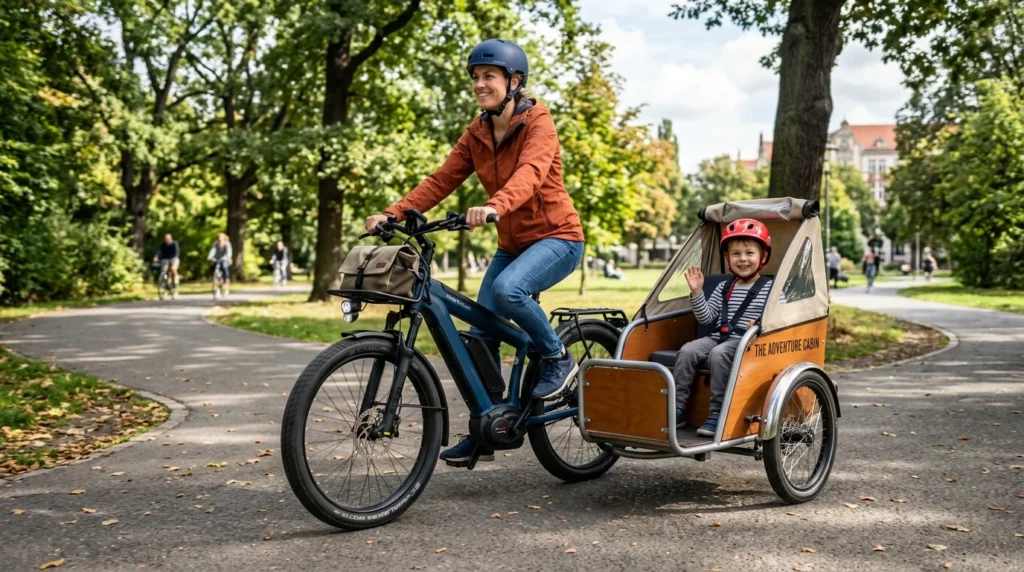
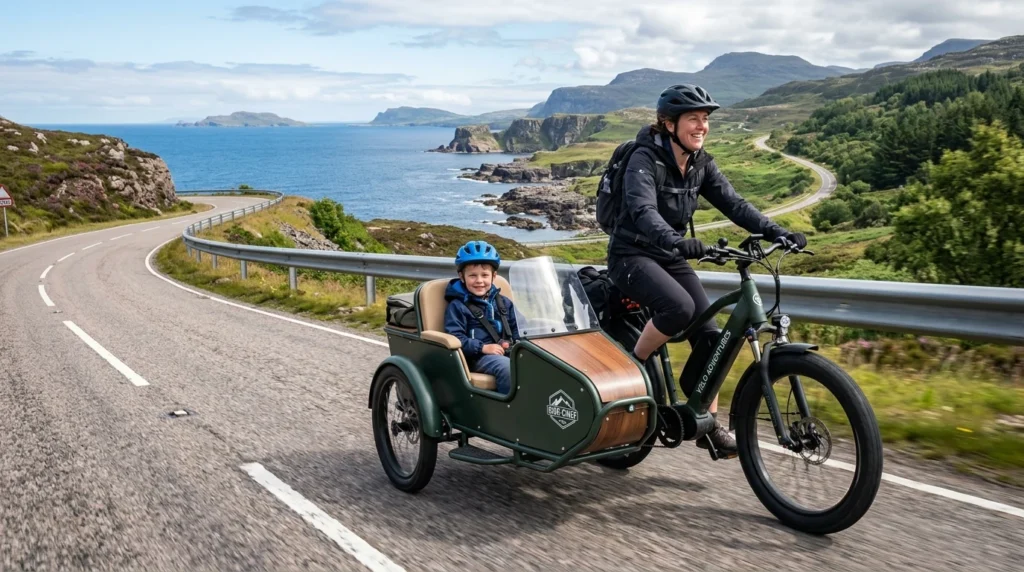
An electric bike with sidecar is a standard e-bike that has an additional passenger or cargo compartment attached to one side of the bicycle through a specially designed mounting system.
Unlike traditional bicycles, the sidecar creates a three-wheel configuration that significantly increases carrying capacity while maintaining many of the advantages of electric cycling.
The sidecar can be used for:
- Carrying passengers
- Transporting pets
- Grocery shopping
- Commercial deliveries
- Recreational touring
- Small business operations
- Family transportation
Modern sidecars are available in various designs and can either be factory-built or installed using aftermarket conversion kits.
How Does an Electric Bike Sidecar Work?
A sidecar attaches to the frame of an electric bike using reinforced brackets and mounting points.
The setup consists of:
- Main electric bicycle
- Sidecar frame
- Sidecar wheel
- Mounting hardware
- Passenger or cargo compartment
The electric motor helps compensate for the additional weight created by the sidecar, making acceleration and climbing hills much easier than on a standard bicycle.
Most electric sidecar setups utilize:
- Hub motors
- Mid-drive motors
- High-capacity batteries
- Reinforced frames
- Hydraulic braking systems
The result is a versatile transportation solution capable of carrying significantly more weight than a regular e-bike.
Types of Electric Bikes With Sidecars
Passenger Sidecar E-Bikes
Passenger sidecars are designed to carry:
- Adults
- Children
- Elderly family members
These models typically feature:
- Comfortable seating
- Safety belts
- Weather protection
- Enhanced suspension
They are particularly popular among families who want an alternative to short car trips.
Cargo Sidecar E-Bikes
Cargo sidecars focus on hauling goods rather than passengers.
Common uses include:
- Grocery shopping
- Farmers market transportation
- Business deliveries
- Equipment hauling
Cargo sidecars often provide payload capacities between 50 kg and 150 kg.
Pet Sidecar Electric Bikes
Pet-friendly sidecars are increasingly popular among dog owners.
Features often include:
- Safety harnesses
- Ventilation panels
- Soft flooring
- Weather-resistant covers
These sidecars allow pets to enjoy outdoor adventures while remaining secure.
Commercial Delivery Sidecars
Businesses use electric sidecars for:
- Food delivery
- Parcel transportation
- Mobile vending
- Urban logistics
These setups can dramatically reduce fuel expenses compared to cars or motorcycles.
Why Electric Bikes With Sidecars Are Becoming Popular
Several factors contribute to the growing popularity of sidecar e-bikes.
Rising Fuel Costs
Many households seek affordable alternatives to car ownership.
Electric bikes cost only a fraction of traditional vehicle operating expenses.
Urban Congestion
Cities worldwide are experiencing increased traffic congestion.
Electric bikes can navigate urban environments more efficiently.
Sustainability
Consumers are becoming more environmentally conscious.
Electric bicycles produce significantly lower emissions than cars.
Family Convenience
Parents can transport children safely without needing a car for every short trip.
Benefits of an Electric Bike With Sidecar
1. Increased Carrying Capacity
One of the biggest advantages is the ability to transport more weight.
A standard electric bike may support:
- Rider
- Backpack
- Small cargo
A sidecar setup can carry:
- Additional passenger
- Multiple bags
- Business equipment
- Pets
2. Enhanced Practicality
Sidecars transform an e-bike into a multi-purpose transportation solution.
Owners can use them for:
- School runs
- Shopping trips
- Weekend adventures
- Delivery work
3. Eco-Friendly Transportation
Replacing short car trips with an electric bike can significantly reduce carbon emissions.
This makes sidecar e-bikes attractive for environmentally conscious riders.
4. Cost Savings
Compared to a car, ownership costs are substantially lower.
Savings include:
- Fuel
- Insurance
- Parking fees
- Maintenance
5. Unique Riding Experience
Many enthusiasts enjoy the distinctive appearance and handling characteristics of sidecar-equipped bikes.
Potential Drawbacks of Electric Bikes With Sidecars
No transportation solution is perfect.
Understanding the limitations is important before purchasing.
Reduced Maneuverability
A sidecar increases vehicle width.
This can make:
- Tight turns
- Narrow bike paths
- Crowded streets
more challenging
Heavier Weight
Additional weight affects:
- Acceleration
- Range
- Handling
A more powerful motor is often required.
Higher Cost
Sidecars add considerable expense to the overall setup.
Premium configurations can cost thousands of dollars.
Storage Challenges
The wider footprint requires more storage space than a conventional bicycle.
Electric Bike With Sidecar vs Cargo Bike
Many buyers compare sidecar e-bikes with cargo bikes.
| Feature | Electric Bike With Sidecar | Cargo Bike |
| Passenger Comfort | Excellent | Good |
| Cargo Capacity | High | High |
| Stability at Low Speed | Good | Excellent |
| Maneuverability | Moderate | Better |
| Parking Convenience | Moderate | Good |
| Cost | Higher | Moderate |
| Unique Design | Excellent | Standard |
| Pet Transportation | Excellent | Good |
Which Is Better?
Choose a sidecar e-bike if:
- You need passenger seating.
- You transport pets frequently.
- You want a unique riding experience.
Choose a cargo bike if:
- Maximum maneuverability is important.
- You ride primarily in urban areas.
- Cargo transportation is your main goal.
Electric Bike With Sidecar vs Electric Tricycle
| Feature | Sidecar E-Bike | Electric Trike |
| Learning Curve | Moderate | Easy |
| Turning Dynamics | Unique | Stable |
| Passenger Capacity | High | Moderate |
| Cargo Capacity | High | High |
| Riding Fun | Higher | Moderate |
| Storage | Larger | Larger |
Both options have advantages depending on intended use.
Can You Add a Sidecar to an Existing Electric Bike?
Yes, many electric bikes can be converted using aftermarket sidecar kits.
However, compatibility depends on:
- Frame strength
- Wheel size
- Motor power
- Weight capacity
- Brake performance
Important Requirements
A suitable electric bike should have:
- Strong frame construction
- At least 500W motor
- Hydraulic disc brakes
- High payload capacity
Common Conversion Mistakes
Avoid:
- Overloading the sidecar
- Using weak mounting systems
- Ignoring weight distribution
- Choosing undersized motors
Safety Considerations for Sidecar E-Bikes
Safety should always be a top priority.
Weight Distribution
Proper balance is essential.
Uneven loading can affect:
- Steering
- Braking
- Cornering
Cornering Technique
Sidecars handle differently than regular bicycles.
Riders should practice:
- Slow-speed maneuvering
- Controlled cornering
- Emergency stops
Braking Distance
The additional mass increases stopping distance.
Upgraded brakes are strongly recommended.
Passenger Safety
If carrying children or adults:
- Use secure seating
- Install seat belts where applicable
- Avoid sudden movements
Pet Safety
Pet sidecars should include:
- Safety harnesses
- Ventilation
- Weather protection
How Much Does an Electric Bike With Sidecar Cost?
Pricing varies considerably.
Estimated Cost Breakdown
| Category | Typical Price Range |
| Sidecar Conversion Kit | $500–$2,000 |
| Budget E-Bike Setup | $1,500–$2,500 |
| Mid-Range Setup | $2,500–$4,500 |
| Premium Setup | $4,500–$8,000+ |
| Commercial Delivery Setup | $5,000–$10,000+ |
Prices vary by region and manufacturer.
Best Uses for an Electric Bike With Sidecar
Family Transportation
Parents can transport children safely while reducing car dependency.
Pet Adventures
Dog owners especially appreciate sidecar configurations.
Grocery Shopping
Large cargo capacity simplifies shopping trips.
Business Deliveries
Many urban businesses utilize sidecar e-bikes for:
- Food delivery
- Courier services
- Retail deliveries
Recreational Touring
Sidecar e-bikes offer a unique touring experience with additional storage space.
Maintenance Guide
Proper maintenance ensures reliability and longevity.
Battery Maintenance
- Avoid complete discharge.
- Store in moderate temperatures.
- Follow manufacturer charging guidelines.
Tire Care
Check:
- Tire pressure
- Tread wear
- Sidewall condition
regularly.
Brake Maintenance
Inspect:
- Brake pads
- Rotors
- Hydraulic fluid
especially if carrying heavy loads.
Sidecar Inspection
Regularly examine:
- Mounting bolts
- Attachment brackets
- Suspension components
How to Choose the Best Electric Bike With Sidecar
Motor Power
Recommended:
- Minimum: 500W
- Ideal: 750W–1000W
Higher power improves hill climbing and acceleration.
Battery Capacity
Look for:
- 600Wh–1000Wh batteries
- Long-range capability
- Reliable battery management systems
Payload Capacity
Always verify total weight limits.
Consider:
- Rider weight
- Passenger weight
- Cargo weight
Braking System
Hydraulic disc brakes are highly recommended.
Build Quality
Choose reputable manufacturers with proven reliability.
Pros and Cons of Electric Bikes With Sidecars
Pros
- Excellent cargo capacity
- Passenger-friendly
- Great for pets
- Eco-friendly transportation
- Lower operating costs than cars
- Ideal for urban delivery businesses
- Unique and enjoyable riding experience
Cons
- Higher purchase cost
- Reduced maneuverability
- Increased storage requirements
- Additional maintenance
- Steeper learning curve
Future of Electric Sidecar Bikes
The future looks promising.
Emerging trends include:
- Smart connectivity
- GPS integration
- Improved battery technology
- Lightweight composite sidecars
- Commercial delivery innovations
- Enhanced safety systems
As cities continue investing in cycling infrastructure, electric sidecar bikes may become increasingly common.
FAQs
Are electric bikes with sidecars legal?
Regulations vary by country and region. Always check local transportation laws before riding.
Can a sidecar carry an adult?
Yes, many sidecars are specifically designed to transport adults safely.
Can I carry my dog in a sidecar?
Absolutely. Pet-specific sidecars are among the most popular options available today.
Do sidecars reduce battery range?
Yes. Additional weight and aerodynamic drag generally reduce range.
How fast can an electric bike with sidecar go?
Speed depends on local regulations, motor power, and vehicle design. Most operate within standard e-bike speed limits.
Final Expert Verdict
An electric bike with sidecar is one of the most versatile forms of personal transportation available today. It combines the efficiency of an electric bicycle with the practicality of a compact utility vehicle, making it suitable for families, pet owners, small businesses, and everyday commuters.
While it requires a larger investment and a brief learning period compared to a standard e-bike, the added carrying capacity, lower operating costs, and unique functionality make it a compelling alternative to short-distance car travel.
For riders seeking a sustainable, practical, and enjoyable transportation solution, an electric bike with sidecar is a smart investment that can significantly expand what an e-bike is capable of achieving.
As electric mobility continues to evolve, sidecar-equipped e-bikes are likely to play an increasingly important role in urban transportation around the world.
