
Introduction
The electric mobility revolution is no longer limited to premium factory-built e-bikes. In 2026, riders across the USA, Europe, Asia, the Middle East, and Africa are increasingly turning to the Electric bike motor kit market to transform ordinary bicycles into powerful, efficient, and cost-effective electric machines.
For many riders, buying a complete e-bike can feel expensive and limiting. A high-quality conversion kit changes that equation entirely. Whether you ride through crowded Asian cities, climb steep European hills, commute across American suburbs, or cruise long Middle Eastern highways, a well-designed electric bike motor kit can completely redefine your riding experience.
But not all kits deliver the same performance.
Some prioritize torque for mountain riding. Others focus on speed, efficiency, or long-distance touring. Battery quality, motor placement, controller tuning, and sensor technology all dramatically affect how the bike behaves in the real world.
This comprehensive guide explains everything riders need to know before buying an electric bike motor kit in 2026. From engineering fundamentals to global riding conditions, long-term reliability, installation complexity, and real-world usability, this is the complete expert breakdown for serious riders and beginners alike.
What Is an Electric Bike Motor Kit?
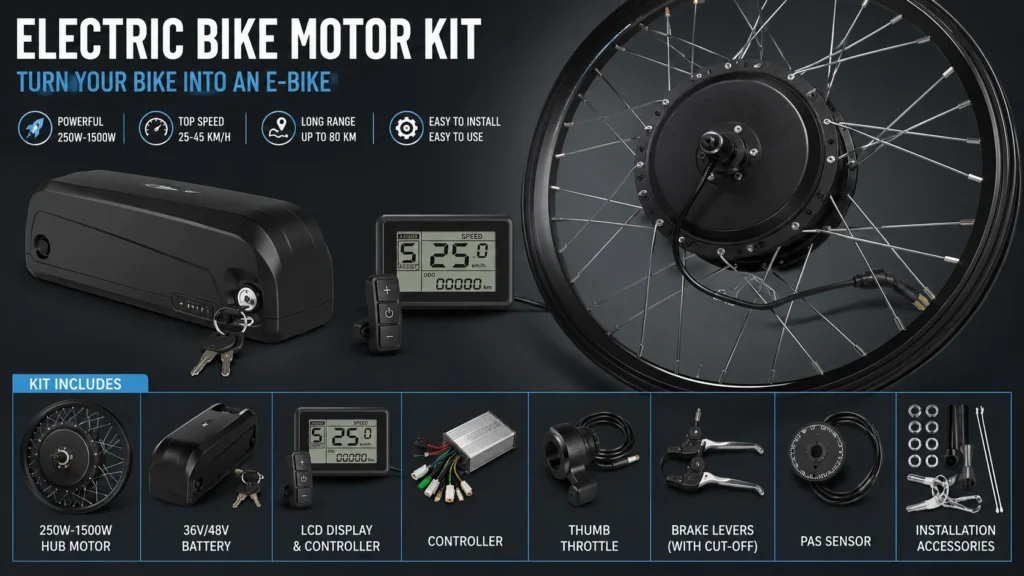
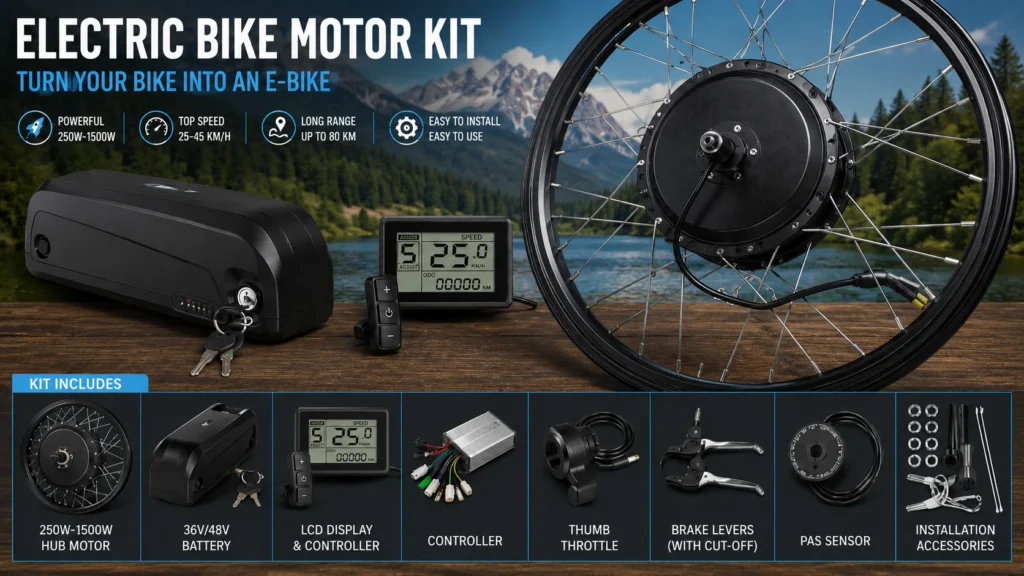
An electric bike motor kit is a conversion system that transforms a traditional bicycle into an electrically assisted bike using a motor, battery, controller, and pedal-assist electronics.
Instead of buying a factory-built e-bike, riders install the kit onto their existing bicycle.
A typical conversion kit includes:
| Component | Purpose |
| Electric Motor | Provides propulsion |
| Battery Pack | Supplies electrical energy |
| Controller | Manages power delivery |
| Display Unit | Shows speed, battery, assist level |
| Pedal Assist Sensor | Detects pedaling input |
| Throttle (optional) | Allows motor-only riding |
| Wiring Harness | Connects all components |
The popularity of electric bike motor kits exploded because riders can:
- Save money
- Customize performance
- Retain favorite bicycles
- Upgrade older bikes
- Build specialized riding setups
For many enthusiasts, DIY conversion also adds a rewarding mechanical experience.
Why Electric Bike Motor Kits Are Booming in 2026
Several global trends are driving massive growth in the e-bike conversion market.
Rising Fuel Prices
In Europe and parts of Asia, urban transportation costs continue to increase. Riders are seeking efficient alternatives to motorcycles and cars.
Urban Traffic Congestion
Cities like London, New York, Jakarta, Dubai, and Bangkok face worsening traffic. Electric bicycles dramatically reduce commuting time.
Environmental Regulations
Governments worldwide are promoting zero-emission transportation through incentives and restrictions on combustion engines.
Affordable EV Technology
Battery prices have dropped significantly while energy density improved. Modern lithium-ion packs now deliver:
- Longer range
- Faster charging
- Lower weight
- Better reliability
DIY Culture and Customization
Many riders prefer building a personalized machine rather than purchasing a generic e-bike.
Types of Electric Bike Motor Kits
Choosing the correct motor type is the single most important decision.
Hub Motor Kits
Hub motors are mounted directly inside the wheel hub.
Front Hub Motors
The motor sits in the front wheel.
Advantages
- Easy installation
- Affordable pricing
- Good for urban commuting
- Minimal drivetrain wear
Disadvantages
- Reduced traction on wet roads
- Front-heavy steering feel
- Less climbing power
Rear Hub Motors
Mounted in the rear wheel.
Advantages
- Better traction
- More natural riding feel
- Strong acceleration
- Ideal for performance builds
Disadvantages
- Slightly harder installation
- More wheel maintenance complexity
Best Use Cases
- City commuting
- Casual riding
- Flat terrain
- Budget conversions
Mid-Drive Motor Kits
Mid-drive systems mount near the crankset and drive the bicycle chain directly.
Why Mid-Drive Systems Feel Superior
From an engineering perspective, mid-drive motors leverage the bicycle’s gearing system. That dramatically improves:
- Hill climbing
- Torque efficiency
- Battery optimization
- Weight distribution
Advantages
- Excellent climbing power
- Better handling balance
- High torque output
- Efficient power delivery
- Ideal for mountain riding
Disadvantages
- Higher cost
- More drivetrain wear
- Complex installation
- Increased maintenance
Best Use Cases
- Mountain biking
- Touring
- Cargo bikes
- Performance riding
Hub Motor vs Mid-Drive: Expert Comparison
| Feature | Hub Motor | Mid-Drive Motor |
| Installation | Easy | Moderate to difficult |
| Cost | Lower | Higher |
| Hill Climbing | Moderate | Excellent |
| Efficiency | Good | Excellent |
| Weight Distribution | Uneven | Balanced |
| Maintenance | Lower | Higher |
| Off-Road Performance | Limited | Outstanding |
| Urban Commuting | Excellent | Very good |
| High-Speed Riding | Good | Excellent |
| Drivetrain Wear | Minimal | Higher |
Expert Verdict
For beginners and city riders, hub motors remain the best value.
For enthusiasts, touring riders, and mountain bikers, mid-drive systems deliver a much more refined and motorcycle-like riding experience.
Understanding Motor Power and Torque
One of the biggest mistakes buyers make is focusing only on wattage.
In reality, torque matters just as much.
Wattage Explained
Motor wattage determines sustained power output.
Common ratings include:
- 250W
- 500W
- 750W
- 1000W
- 2000W+
Global Legal Considerations
| Region | Typical Legal Limit |
| Europe | 250W |
| UK | 250W |
| USA | 750W |
| Canada | 500W |
| Australia | 250W |
| Middle East | Varies |
| Asia | Country dependent |
Higher wattage improves:
- Speed
- Acceleration
- Cargo carrying
- Hill climbing
However, it also increases:
- Battery consumption
- Heat generation
- Drivetrain stress
Torque Explained
Torque affects:
- Initial acceleration
- Hill climbing
- Off-road capability
A 750W motor with high torque often outperforms a cheap 1000W motor in real-world riding.
Recommended Torque Levels
| Riding Type | Recommended Torque |
| City commuting | 40–60 Nm |
| Touring | 60–85 Nm |
| Mountain riding | 85–120 Nm |
| Cargo hauling | 90–160 Nm |
Battery Technology and Range Analysis
The battery is the heart of any electric bike motor kit.
Lithium-Ion Dominance
Modern kits primarily use lithium-ion batteries because they offer:
- High energy density
- Lower weight
- Longer lifespan
- Fast charging
Battery Voltage Explained
| Voltage | Riding Character |
| 36V | Smooth commuting |
| 48V | Balanced performance |
| 52V | High-performance riding |
| 72V | Extreme builds |
Higher voltage improves:
- Acceleration
- Top speed
- Motor efficiency
Real-World Range Expectations
Range depends heavily on:
- Rider weight
- Terrain
- Wind resistance
- Temperature
- Tire pressure
- Riding style
Average Range Estimates
| Battery Size | Typical Range |
| 10Ah | 25–40 km |
| 15Ah | 45–70 km |
| 20Ah | 70–120 km |
Climate Impact
Cold European winters can reduce battery efficiency by 20–30%.
Extreme Middle Eastern heat may accelerate battery degradation if thermal management is poor.
Real-World Riding Performance
City Riding
Electric bike motor kits excel in urban conditions.
Benefits
- Instant acceleration at traffic lights
- Reduced commuting fatigue
- Easier navigation in traffic
- Lower transport costs
In Asian megacities, lightweight hub motor kits dominate due to dense traffic and limited parking.
Highway and Open-Road Riding
Higher-powered systems perform impressively on open roads.
Mid-drive kits especially provide:
- Stable cruising
- Better efficiency
- Improved climbing
- Smoother power delivery
However, aerodynamic drag becomes a major factor above 45 km/h.
Off-Road and Trail Riding
Mountain riders strongly prefer mid-drive systems because:
- Torque delivery feels natural
- Weight remains centered
- Technical climbing improves dramatically
Cheap hub motors often overheat during aggressive off-road riding.
Best Electric Bike Motor Kit Types by Rider Category
Best for Beginners
250W–500W Front Hub Kits
Ideal because:
- Affordable
- Easy installation
- Low maintenance
- Simple operation
Best for Commuters
500W Rear Hub Kits
Balanced for:
- Urban speed
- Reliability
- Comfort
- Efficiency
Best for Mountain Riders
Mid-Drive Torque Systems
Perfect for:
- Steep trails
- Technical terrain
- Long-distance climbs
Best for Cargo and Delivery Riders
High-Torque Mid-Drive Systems
Popular among delivery riders in:
- USA
- India
- UAE
- Indonesia
Installation Complexity: What Riders Must Know
DIY Installation Difficulty
| Kit Type | Difficulty Level |
| Front Hub | Easy |
| Rear Hub | Moderate |
| Mid-Drive | Advanced |
Common Installation Challenges
- Bottom bracket compatibility
- Brake clearance
- Battery mounting
- Cable routing
- Chain alignment
Professional Installation vs DIY
DIY Benefits
- Lower cost
- Learning experience
- Full customization
Professional Installation Benefits
- Better reliability
- Proper tuning
- Warranty protection
- Safety assurance
For expensive mid-drive builds, professional installation is strongly recommended.
Safety Features Breakdown
Modern electric bike motor kits now include advanced safety systems.
Essential Safety Features
Battery Management System (BMS)
Protects against:
- Overcharging
- Overheating
- Short circuits
Thermal Protection
Prevents motor overheating during:
- Hill climbing
- Heavy cargo loads
- Hot weather riding
Torque Sensors
Deliver smoother and safer acceleration compared to basic cadence sensors.
Hydraulic Brake Sensors
Automatically cut motor power during braking.
Riding Comfort and Ergonomics
Electric conversions change bicycle dynamics significantly.
Weight Distribution Matters
Poor battery placement can create:
- Unstable steering
- Cornering issues
- Rider fatigue
Best Setup
- Mid-frame battery mounting
- Centralized motor weight
- Balanced front/rear load
Long-Distance Touring Comfort
For touring riders:
- Suspension seatposts improve comfort
- Wider tires absorb vibration
- Upright ergonomics reduce fatigue
European touring riders especially value comfort-oriented mid-drive systems.
Maintenance and Long-Term Reliability
Maintenance Requirements
Electric bike motor kits require less maintenance than motorcycles but still need regular inspection.
Key Maintenance Areas
- Chain lubrication
- Battery health monitoring
- Electrical connector cleaning
- Brake inspection
- Spoke tension checks
Battery Lifespan
Most quality lithium-ion batteries last:
- 700–1200 charge cycles
Typical lifespan:
- 3–6 years
Tips to Extend Battery Life
- Avoid full discharge
- Store at moderate temperature
- Use proper chargers
- Avoid prolonged heat exposure
Motor Reliability
Brushless motors are generally highly reliable.
Premium systems from reputable brands often exceed:
- 20,000–40,000 km
Cheap controllers usually fail before motors themselves.
Common Problems and Fixes
Overheating
Causes
- Heavy loads
- High ambient temperature
- Continuous hill climbing
Fixes
- Lower assist level
- Improve cooling
- Upgrade controller
Battery Range Loss
Causes
- Aging cells
- Cold weather
- Poor charging habits
Fixes
- Replace weak cells
- Store indoors
- Upgrade battery quality
Chain Wear (Mid-Drive Systems)
Causes
- High torque
- Aggressive shifting
Fixes
- Use reinforced chains
- Shift carefully
- Maintain lubrication
Global Market Perspective
USA Market
American riders increasingly favor:
- 750W systems
- Fat-tire conversions
- Long-range touring setups
Popular riding environments:
- Suburban commuting
- Adventure riding
- Recreational trails
European Market
Europe prioritizes:
- Legal compliance
- Efficient commuting
- Lightweight systems
250W mid-drive kits dominate because of strict regulations.
Asian Market
Asian riders emphasize:
- Fuel savings
- Compact urban mobility
- Reliability in traffic
Budget hub kits remain extremely popular.
Middle East Market
Middle Eastern riders need:
- Heat-resistant batteries
- High-speed capability
- Long-distance range
Battery cooling quality becomes critical in desert climates.
African Market
African riders often prioritize:
- Durability
- Repair simplicity
- Cargo carrying
Rugged rear hub systems are particularly popular.
Best Riding Conditions for Electric Bike Motor Kits
| Riding Condition | Ideal Motor Type |
| Flat urban roads | Front hub |
| Steep mountain terrain | Mid-drive |
| Heavy cargo hauling | High-torque mid-drive |
| Wet weather commuting | Rear hub |
| Sand and loose terrain | Fat tire mid-drive |
| Long-distance touring | Mid-drive |
Cost Analysis: Budget vs Premium Kits
Budget Kits ($300–$700)
Strengths
- Affordable
- Good for beginners
- Easy installation
Weaknesses
- Lower efficiency
- Basic electronics
- Reduced durability
Mid-Range Kits ($700–$1500)
Best balance for most riders.
Offer:
- Better controllers
- Improved batteries
- Higher efficiency
- Better reliability
Premium Kits ($1500–$4000+)
Targeted at:
- Enthusiasts
- Adventure riders
- Cargo applications
Feature:
- Advanced torque sensors
- Smart connectivity
- Superior thermal control
- High-end battery systems
Use-Case Breakdown
City Commuting
Best Setup:
- 250W–500W hub motor
- Lightweight battery
- Upright geometry
Highway and Fast Commuting
Best Setup:
- 750W rear hub
- Aerodynamic riding position
- Large battery capacity
Touring and Adventure Riding
Best Setup:
- Mid-drive motor
- Dual battery option
- High-torque gearing
Off-Road and Trail Riding
Best Setup:
- Mid-drive system
- Torque sensor
- Full suspension frame
Pros and Cons of Electric Bike Motor Kits
Pros
- More affordable than full e-bikes
- Highly customizable
- Eco-friendly transportation
- Excellent urban mobility
- Lower fuel and maintenance costs
- Fun riding experience
- Reduced commuting stress
Cons
- Installation complexity
- Legal restrictions in some countries
- Battery replacement cost
- Cheap kits can be unreliable
- Increased bicycle weight
- Mid-drive systems wear drivetrains faster
Expert Buying Tips Before Choosing an Electric Bike Motor Kit
Prioritize Battery Quality
A premium battery matters more than extreme motor wattage.
Match Power to Real Use
Many riders buy oversized motors they never fully use.
Choose based on:
- Terrain
- Rider weight
- Commute distance
- Legal regulations
Check Bicycle Compatibility
Not all frames support:
- Mid-drive mounting
- Disc brakes
- Large batteries
Avoid Extremely Cheap Kits
Ultra-budget kits often suffer from:
- Poor waterproofing
- Weak controllers
- Unsafe battery cells
Beginner vs Expert Insights
Beginners Should Focus On
- Simplicity
- Reliability
- Legal compliance
- Comfortable ergonomics
Best Choice
500W rear hub kits.
Experts Often Prioritize
- Torque delivery
- Thermal efficiency
- Battery tuning
- Advanced controllers
Best Choice
Mid-drive performance systems.
People Also Ask
Is an electric bike motor kit worth buying instead of a complete e-bike?
For many riders, yes. A quality conversion kit can deliver similar performance at a significantly lower cost. It also allows riders to keep a bicycle they already love while customizing the power and range to their needs.
Which is better: hub motor or mid-drive motor?
Hub motors are easier to install and cheaper, making them ideal for city commuting. Mid-drive motors offer better climbing power, handling, and efficiency, especially for mountain or touring riders.
How fast can an electric bike motor kit go?
Speed depends on motor wattage, voltage, rider weight, terrain, and local regulations. Most commuter kits reach 25–45 km/h, while high-performance systems can exceed 60 km/h where legally permitted.
How long do electric bike batteries usually last?
Most quality lithium-ion batteries last between 700 and 1200 charge cycles. With proper care, riders can expect around 3–6 years of dependable use before noticeable capacity loss appears.
Can electric bike motor kits handle rain and bad weather?
Most reputable kits are water-resistant, but not fully waterproof. Riders in rainy regions like the UK or Northern Europe should prioritize high IP-rated systems and regularly inspect connectors and seals.
Final Expert
The modern electric bike motor kit market has evolved far beyond simple DIY experimentation. In 2026, these systems represent one of the smartest mobility upgrades available for commuters, adventure riders, delivery workers, and cycling enthusiasts worldwide.
For urban riders, hub motor kits provide affordable, reliable transportation with minimal maintenance. For serious enthusiasts, mid-drive systems deliver exceptional torque, climbing ability, and refined riding dynamics that rival premium factory-built e-bikes.
The key to long-term satisfaction is choosing the correct combination of motor type, battery quality, and intended riding purpose. Riders who prioritize quality components, proper installation, and realistic performance expectations will enjoy years of efficient and enjoyable electric Riding.
Not every rider needs extreme wattage or expensive premium systems. The best electric bike motor kit is the one that matches your terrain, climate, commuting distance, and riding style.
