
Royal Enfield Hunter 350 Review (2026): Is It Still the King of Urban Roadsters?
The Royal Enfield Hunter 350 has carved a unique niche for itself since its global debut. While the brand is traditionally known for heavy, thumping cruisers like the Classic and Bullet, the Hunter was a radical departure—a “Royal Enfield for everyone.” As we move through 2026, the landscape of entry-level retro-roadsters has shifted. With newer, faster competitors entering the fray, many riders are asking: Does the Hunter 350 still hold its crown as the ultimate city tool?
In this comprehensive review for BikesLover.com, we dive deep into the 2026 ownership experience. We aren’t just looking at the brochure specs; we’re analyzing long-term reliability, the notorious “stiff suspension” fix, and how this machine compares to the latest offerings from Triumph and Hero. Whether you are a beginner looking for your first “big” bike or a seasoned rider wanting a flickable city commuter, this guide covers everything you need to know.
The Core Appeal: Why the Hunter 350 Rules the City
The Hunter 350 wasn’t built to cross continents or break land-speed records. It was built to dominate the “Stop-and-Go” world. In 2026, urban congestion is at an all-time high globally, making the Hunter’s design philosophy more relevant than ever.
J-Series Engine: Performance and “Thump” Factor
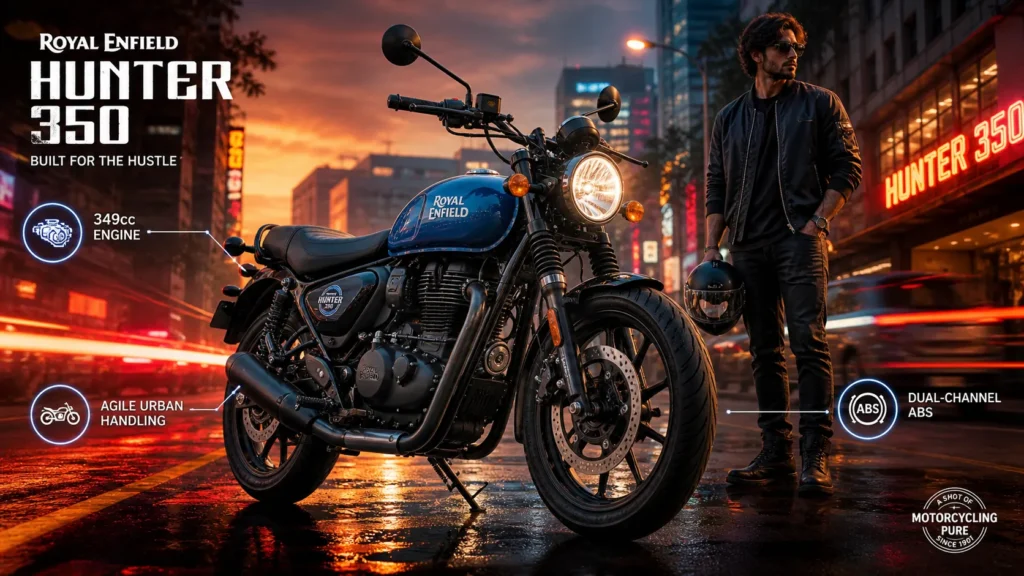
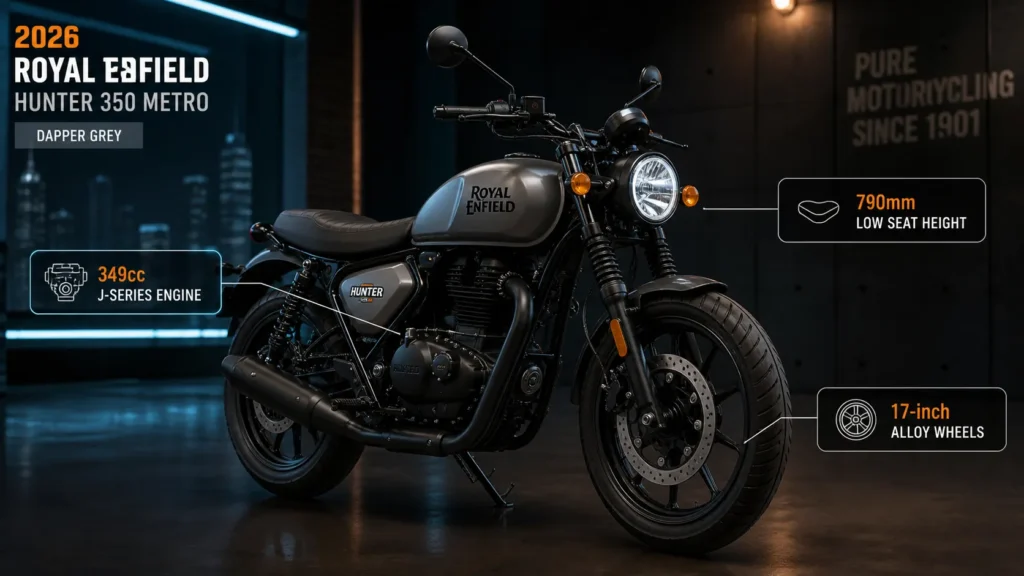
At the heart of the Hunter lies the 349cc J-Series engine. Unlike the older UCE engines that were famous for rattling your teeth out at high speeds, the J-Series uses a primary balancer shaft. This means you get that iconic Royal Enfield character and low-end torque without the punishing vibrations. In 2026, this engine has proven to be one of the most reliable small-capacity mills on the market, requiring minimal maintenance even after 30,000+ kilometers.
Agile Handling: The 17-inch Wheel Advantage
The Hunter is the first Royal Enfield to utilize 17-inch wheels both front and rear. This technical choice is the secret sauce behind its agility. While the Classic 350 feels like a majestic ship, the Hunter feels like a specialized urban scalpel. It tips into corners effortlessly and allows for quick direction changes that are essential for navigating through tight traffic.
Royal Enfield Hunter 350 Specifications: Beyond the Brochure
To truly understand a bike, you have to look at how the numbers translate to the tarmac. Below is the technical breakdown of the 2026 model.
Detailed Technical Specifications Table
| Feature | Specification | User Benefit |
| Engine Type | 349cc, Single Cylinder, Air-Oil Cooled | Reliable, easy-to-maintain power. |
| Max Power | 20.2 bhp @ 6100 rpm | Sufficient for quick city sprints. |
| Max Torque | 27 Nm @ 4000 rpm | Strong “pull” from red lights. |
| Weight (Kerb) | 181 kg | Lightest RE; easy for beginners to handle. |
| Seat Height | 790 mm | Highly accessible for shorter riders. |
| Fuel Efficiency | 36.2 kmpl (Real World) | Economical for daily commuting. |
| Top Speed | 114 – 120 kmph | Comfortable cruising at 80-90 kmph. |
| Braking | Dual Channel ABS (Metro Variant) | Superior safety in wet conditions. |
The “Honest” Section: 3 Things No One Tells You Before Buying
Most reviews gloss over the flaws to keep manufacturers happy. At BikesLover.com, we believe in transparency. If you’re planning to put your hard-earned money down for a Hunter 350 in 2026, you need to know these three things:
The Stiff Suspension Reality (And How to Soften It)
The rear suspension is arguably the Hunter’s biggest “weakness.” To make the bike handle sharply, Royal Enfield tuned the rear shocks to be quite stiff. On smooth European tarmac, it’s fine. On the broken roads of Asia or pothole-ridden city streets, it can be jarring for your spine.
The Fix: Many 2026 owners are now opting for “suspension swaps.” Replacing the stock rear shocks with those from the Royal Enfield Classic 350 or even the Himalayan (with slight modification) significantly plushens the ride. At the very least, ensure you adjust the preload to the softest setting if you ride solo.
Highway Performance: The 100kmph Ceiling
While the bike can hit 115 kmph, it doesn’t like staying there. If your daily commute involves long stretches of open motorway where traffic flows at 120 kmph+, the Hunter will feel stressed. It is a “sweet spot” motorcycle—it shines between 60 kmph and 90 kmph. Above that, the lack of wind protection and engine strain becomes apparent.
Build Quality: Metro vs. Retro
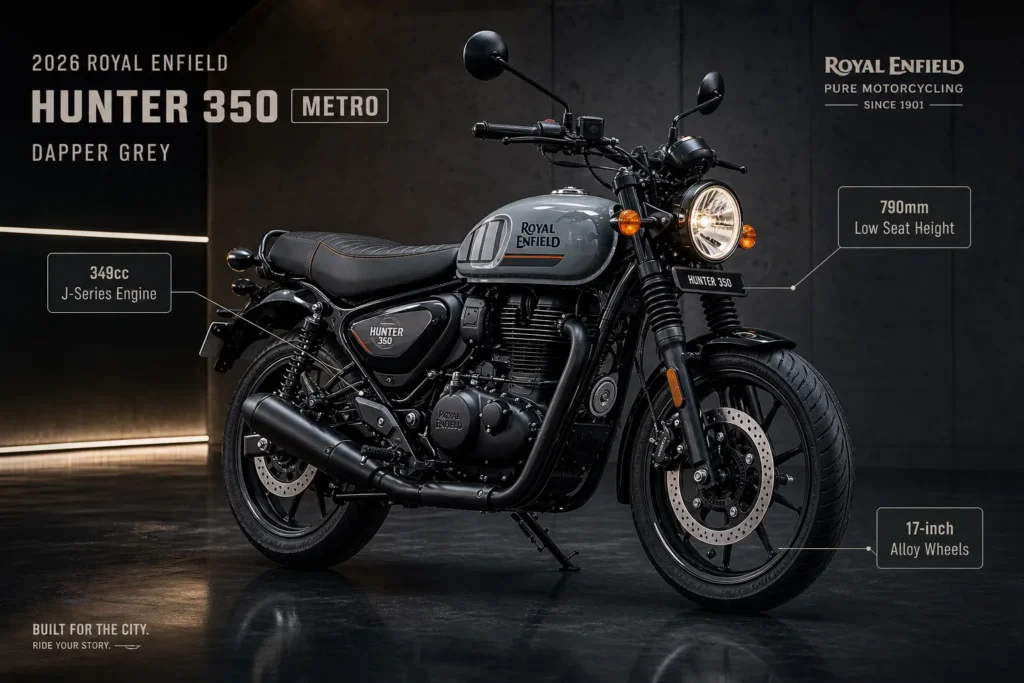
There is a significant difference in the “feel” of the two variants. The Retro variant uses spoke wheels and a rear drum brake, giving it a very old-school vibe. However, the Metro variant, with its alloy wheels and dual-channel ABS, feels like a significantly more modern and safer machine. In 2026, we strongly recommend the Metro for the tubeless tyre convenience alone.
Hunter 350 Metro vs. Retro: Which Variant is Worth Your Money?
| Feature | Hunter 350 Retro | Hunter 350 Metro |
| Wheels | Wire Spoke | Alloy Wheels |
| Tyres | Tube-type | Tubeless (Easier to repair) |
| Braking | Single Channel ABS | Dual Channel ABS |
| Rear Brake | Drum | Disc |
| Instrument Cluster | Basic Analog | Digital-Analog with Tripper Nav option |
| Target Rider | Purists / Budget Conscious | Modern Commuters / Safety First |
Head-to-Head: Hunter 350 vs. The 2026 Competition
The market has changed. In 2026, the Hunter is no longer the only “affordable” roadster. Here is how it stacks up against its two biggest rivals.
Hunter 350 vs. Triumph Speed 400
The Speed 400 is faster, more premium, and has better suspension. However, it is also more expensive to buy and significantly costlier to maintain. The Hunter wins on character and low-end torque delivery, which makes it “feel” faster in heavy city traffic even if it isn’t on paper.
Hunter 350 vs. Hero Mavrick 440
The Mavrick 440 offers a bigger engine and more “big bike” feel. But the Hunter 350 is nearly 10kg lighter, making it much easier to park and flick through gaps. For a pure beginner, the Hunter remains the less intimidating choice.
Maintenance & Ownership: The Budget Rider’s Dream
One reason the Hunter 350 remains a top seller on BikesLover.com is the cost of ownership.
- Service Interval: 10,000 km (after the first service).
- Spare Parts: Since it shares the J-Series platform with the Classic and Meteor, parts are available in almost every country, from the UK to Pakistan.
- DIY Friendly: Unlike high-tech European bikes, the Hunter is relatively simple to work on. Basic oil changes and chain tensioning can be done in your garage.
Pros & Cons
Pros:
- Extremely Accessible: The low seat height is a godsend for riders under 5’6″.
- Torque-Rich Engine: No need to constantly shift gears in traffic.
- Timeless Aesthetics: It looks modern yet retains the Royal Enfield soul.
- Global Community: Massive aftermarket support for seats, exhausts, and luggage.
Cons:
- Stiff Rear Shocks: Can be uncomfortable on rough roads.
- Limited Top End: Not a high-speed touring machine.
- Heavy Clutch: While lighter than old Enfields, it can still tire your hand in 2-hour traffic jams.
FAQs
A: Yes. While it is marketed for shorter riders, the footpeg-to-seat ratio is surprisingly roomy. Riders up to 6’0″ find it comfortable, though they may look a bit large on the bike’s compact frame.
A: Expect around 35–37 kmpl in the city and up to 40 kmpl on steady highway runs at 80 kmph.
A: Yes, but with caveats. You will need an aftermarket windscreen and perhaps a seat cushion. Stick to backroads and scenic routes rather than high-speed interstates.
A: Compared to the older 350cc Enfields, no. It is very smooth up to 90 kmph. You will feel some “buzz” in the footpegs once you cross 100 kmph.
A: It is arguably the best first “full-sized” motorcycle. It is forgiving, easy to balance, and holds its resale value incredibly well.
Final Expert Verdict
In 2026, the Royal Enfield Hunter 350 remains the “Smart Choice.” It isn’t the fastest bike in its class, nor the most tech-loaded. However, it offers a balance of style, soul, and affordability that is hard to beat.
Buy it if: You spend 90% of your time in the city, you love the retro-modern aesthetic, and you want a bike that is cheap to run and easy to customise.
Skip it if: You do a lot of pillion riding (the seat and suspension aren’t great for passengers) or if your main goal is high-speed highway cruising.
For more deep-dive reviews and technical guides on the latest motorcycles, stay tuned to BikesLover.com—your global hub for everything on two wheels.
