
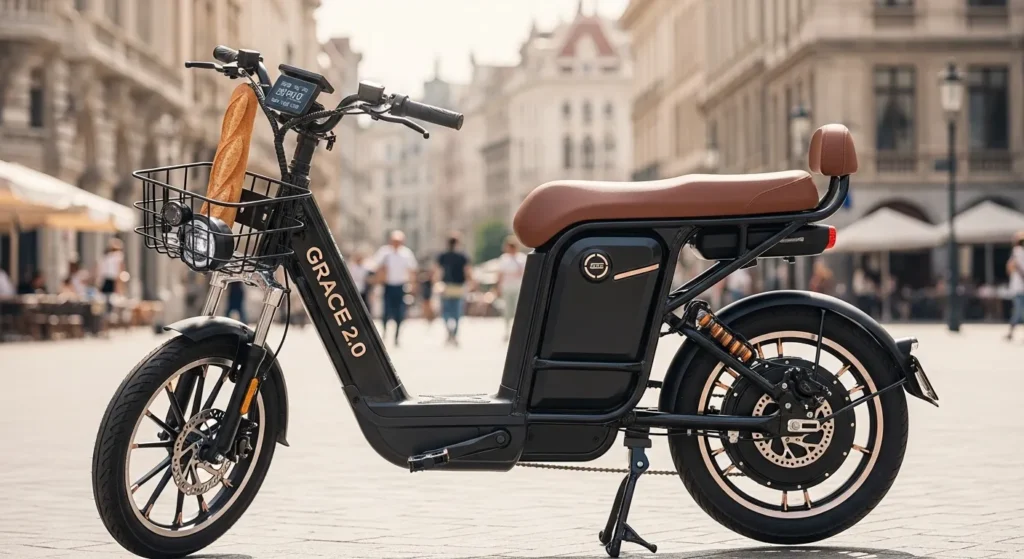
Velowave Grace 2.0 Step-Thru Review: The Ultimate Long-Range Fat Tire E-Bike?
The electric bike market is currently flooded with “template” bikes—models that look identical, share the same cheap components, and offer a jerky, unrefined riding experience. However, every so often, a model emerges that disrupts the status quo. The Velowave Grace 2.0 Step-Thru is that disruptor.
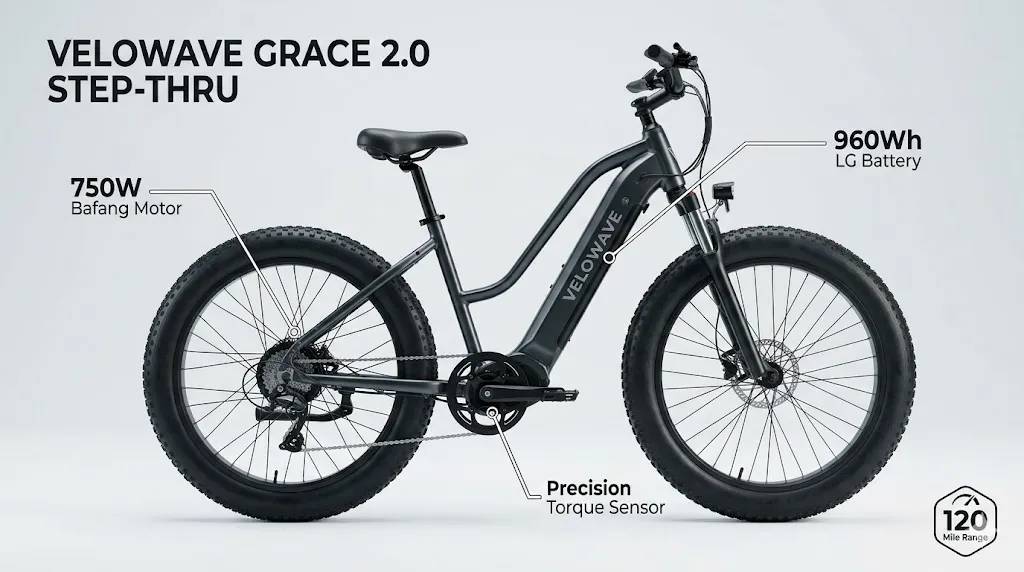
At first glance, it appears to be a standard fat-tire e-bike designed for comfort. But beneath the 6061 aluminum frame lies a sophisticated combination of a 750W Bafang motor, a massive 960Wh LG battery, and—most importantly—a precision torque sensor. On BikesLover.com, we don’t just look at spec sheets; we look at how those specs translate to the pavement, dirt, and snow. In this definitive guide, we dive deep into the mechanics, performance, and “cracks” in the competition to see if the Grace 2.0 truly lives up to its long-range promises.
Brand Heritage: Who is Velowave?
Before dissecting the bike, it is essential to understand the manufacturer. Velowave has rapidly carved out a niche in the North American and European markets by focusing on high-capacity batteries and reliable Bafang motors. While many budget brands cut costs on battery cells (often using generic “no-name” brands), Velowave has maintained a partnership with LG, ensuring that their flagship models like the Grace 2.0 provide longevity and safety.
The Grace series was originally designed for urban cruising, but the “2.0” version represents a significant evolution into the “all-terrain” category. It bridges the gap between a rugged mountain e-bike and a comfortable step-thru commuter.
Power & Performance: The 750W Bafang Motor Explained
The heart of the Grace 2.0 is its 750W Geared Hub Motor, manufactured by Bafang—one of the most trusted names in e-bike propulsion.
Peak Power vs. Nominal Power
While the motor is rated at 750W (Nominal), it actually peaks at 1000W. This is crucial for two reasons:
- Hill Climbing: With 80Nm of torque, this bike can tackle 20-degree inclines without the “bogging down” sensation common in 500W motors.
- Payload Handling: The Grace 2.0 is rated for a 330 lb capacity. The extra peak wattage ensures that even with a heavy rider or rear-rack cargo, the bike maintains its acceleration.
Speed Classes
Out of the box, the Grace 2.0 typically arrives as a Class 2 e-bike (20 mph limit). However, it can be unlocked via the display settings to reach Class 3 speeds of 28 mph on pedal assist. This makes it a viable replacement for a car on suburban commutes.
The Torque Sensor Difference: Why Grace 2.0 Feels Like a “Natural” Ride
Most competitors in the $1,500–$2,000 price bracket use a Cadence Sensor. A cadence sensor acts like an on/off switch; if the pedals are moving, the motor kicks in at a preset power level. This often results in a “surging” feeling that can be dangerous in tight turns or crowded areas.
The Velowave Grace 2.0 utilizes a Torque Sensor.
- How it works: It measures the actual pressure (force) you apply to the pedals.
- The Benefit: If you pedal lightly, the motor gives a gentle nudge. If you push hard to get up a hill, the motor responds instantly with maximum power.
- Efficiency: Because the motor isn’t always “flooring it,” the torque sensor significantly increases battery range—often by 15-20% compared to cadence-based systems.
Range Reality Check: Can You Really Get 120 Miles?
Velowave advertises a 120-mile maximum range. While this number is technically possible under perfect conditions (Level 1 assist, flat ground, 150 lb rider), we prefer to look at “Real-World Utility.”
The Battery: 48V 20Ah (960Wh)
This is a massive battery for a step-thru bike. Using LG 21700 cells, the pack is denser and more stable than the older 18650-style cells.
| Riding Style | Estimated Range (Miles) | Estimated Range (KM) |
| Throttle Only (No Pedaling) | 40 – 50 Miles | 64 – 80 KM |
| High Assist (PAS 4-5) | 55 – 70 Miles | 88 – 112 KM |
| Eco Mode (PAS 1-2) | 90 – 120 Miles | 145 – 193 KM |
Pro Tip: To maximize the lifespan of this LG battery, avoid letting it drop below 20% charge frequently, and store it in a cool, dry place during the winter months.
Design & Ergonomics: The Low-Step Utility
The Grace 2.0 features a 14.7-inch standover height. This is more than just a “style” choice; it is a mechanical advantage for specific demographics.
- Seniors: The ability to mount the bike without swinging a leg over a high top tube prevents hip strain.
- Delivery Professionals: If you are stopping and starting 50 times a day for Uber Eats or DoorDash, a step-thru frame is significantly less fatiguing.
- Riders with Limited Mobility: Those recovering from knee injuries find the low-step geometry makes cycling accessible again.
Suspension and Tires
The bike uses 26″ x 4.0″ Kenda Fat Tires. These act as a secondary suspension system. By running them at lower pressures (around 15-20 PSI), the tires absorb “road chatter” and vibrations. Combined with the adjustable front hydraulic suspension fork, the Grace 2.0 feels like it’s floating over gravel and potholes.
Technical Specifications Table
| Feature | Specification |
| Motor | 750W Bafang (1000W Peak) Geared Hub |
| Torque | 80 Nm |
| Battery | 48V 20Ah LG Cells (960Wh) |
| Top Speed | 28 MPH (Class 3) |
| Sensor Type | Precision Torque Sensor |
| Brakes | Hydraulic Disc Brakes (180mm Rotors) |
| Tires | 26″ x 4.0″ Kenda Fat Tires |
| Weight | 82 lbs (37 kg) |
| Payload Capacity | 330 lbs (150 kg) |
| Frame Material | 6061 Aluminum Alloy |
| Transmission | Shimano 7-Speed |
Grace 2.0 vs. The Competition
To understand the value of the Grace 2.0, we must compare it to the industry giants: the Aventon Aventure 2 and the Rad Power RadRover 6 Plus.
Velowave vs. Aventon Aventure. 2
The Adventure. 2 also uses a torque sensor and is highly refined. However, the Velowave Grace 2.0 typically wins on battery capacity. The Aventon uses a 720Wh battery, whereas the Velowave offers 960Wh. If you are a “range-anxiety” rider, those extra 240 watt-hours are a massive deal-breaker.
Velowave vs. Rad Power RadRover 6 Plus
Rad Power is the king of the market, but they still utilize a cadence sensor on the RadRover 6 Plus. This makes the Velowave Grace 2.0 feel like a more “premium” and natural bike to ride. Furthermore, the Rad Power battery is smaller (589Wh), meaning the Grace 2.0 effectively doubles the range of the Rad Power equivalent.
Pros and Cons
Pros
- Intuitive Power: The torque sensor provides a smooth, “bionic leg” feel.
- Premium Battery: LG cells are safer and last for more charge cycles.
- Hydraulic Brakes: Essential for a heavy e-bike; these provide one-finger stopping power.
- Massive Range: One of the highest battery capacities in the step-thru category.
- Versatile: Equally at home on beach sand as it is on city asphalt.
Cons
- Weight: At 82 lbs, it is difficult to lift onto a standard car rack (requires a heavy-duty e-bike rack).
- Size: The 26-inch fat tires make the bike very large; it may be bulky for apartment dwellers.
- Display: While functional, the LCD can be hard to read in direct, high-noon sunlight.
Maintenance and Ownership Experience
Owning a Grace 2.0 is relatively straightforward, but because it is a “heavier” vehicle, maintenance is key:
- Brake Pads: Check your hydraulic pads every 500 miles. Stopping an 80 lb bike plus a rider wears down pads faster than a standard bicycle.
- Drivetrain: Keep the Shimano 7-speed chain lubed. The torque sensor puts a lot of force through the chain, so high-quality ceramic lube is recommended.
- Spoke Tension: Fat tire wheels carry a lot of weight. Check for loose spokes after your first 100 miles of riding.
FAQs
A: It is IPX4 water-resistant. This means it can handle light rain and splashes. However, you should never pressure wash the bike or submerge the motor/battery in deep puddles.
A: Using the included 3A charger, a full charge from 0% to 100% takes approximately 6–8 hours.
A: But it is not recommended for long distances. Because the bike weighs 82 lbs and has wide, fat tires, pedaling without motor assistance is a significant workout.
A: The bike arrives about 85% assembled. You will need to attach the front wheel, handlebars, pedals, and front light. Velowave includes the necessary tools in the box.
A: The step-thru frame is quite versatile, accommodating riders from 5’4″ to 6’4″.
Final Expert
The Velowave Grace 2.0 Step-Thru is not just a “budget” bike; it is a mid-range powerhouse disguised as a commuter.
Buy this bike if:
- You have a long commute and cannot charge your bike at work.
- You want a natural riding experience that feels like a traditional bike, only faster.
- You need the accessibility of a step-thru frame without sacrificing off-road power.
Skip this bike if:
- You live in a 3rd-floor walk-up apartment (it’s too heavy).
- You are a “minimalist” who prefers a light, stealthy e-bike that looks like a regular bicycle.
On BikesLover.com, we rate the Velowave Grace 2.0 as one of the best value-for-money long-range ebikes of 2026. Its commitment to high-quality LG cells and torque-sensing technology puts it leagues ahead of generic competitors.
