
Small electric bike
Urban mobility is rapidly evolving, and the Small electric bike has become one of the most practical transportation solutions in 2026. With rising fuel costs, traffic congestion, and limited parking space in cities worldwide—from London to Dubai and Tokyo—compact e-bikes are reshaping how people commute.
Unlike traditional bicycles or bulky electric bikes, small e-bikes are designed with portability, convenience, and efficiency in mind. Whether you’re climbing stairs to your apartment, squeezing into a subway, or storing your bike in a small office, these bikes solve real-world problems.
This guide will help you understand:
- What makes a small electric bike unique
- The different types available
- How to choose the best one
- Top models in 2026
- Real-world use cases
By the end, you’ll know exactly which small electric bike fits your lifestyle.
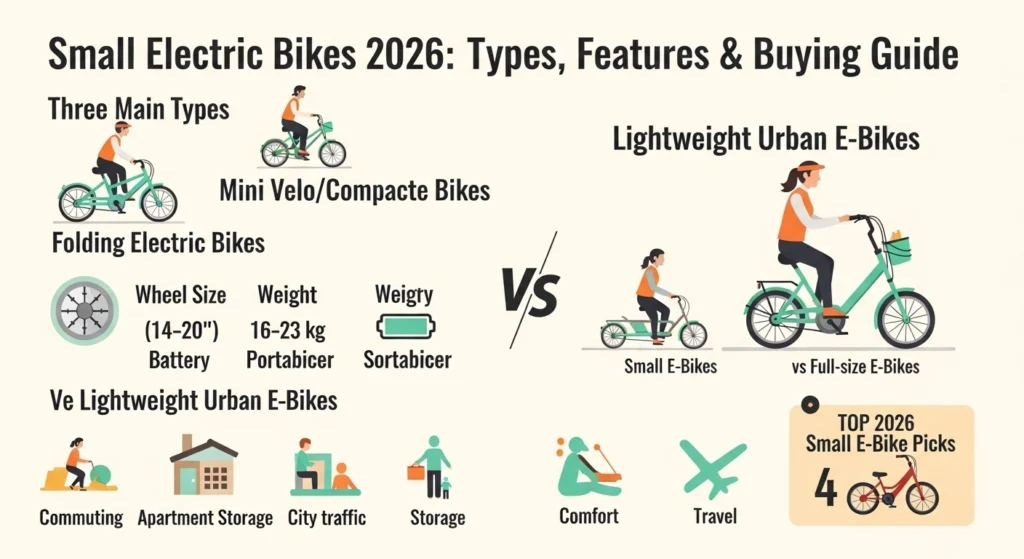
Types of Small Electric Bikes
Understanding the different types is essential before buying.
Folding Electric Bikes
The most popular category in 2026.
Key Features:
- Foldable frame design
- Easy to store in tight spaces
- Fits in car trunks or under desks
Best For:
- Apartment dwellers
- Commuters using trains/buses
- Travelers & RV users
Why it dominates: unmatched portability + convenience
Mini Velo / Compact Bikes
Small in size but non-foldable.
Key Features:
- Better structural rigidity
- More stable ride
- Stylish urban design
Best For:
- Daily commuters
- Riders prioritizing ride quality
Lightweight Urban E-Bikes
Minimalist and sleek.
Key Features:
- Lightweight frames
- Hidden batteries
- Clean aesthetics
Best For:
- Professionals
- Short-distance city rides
How to Choose the Best Small Electric Bike
Choosing the right bike is where most buyers make mistakes. Follow this expert framework:
Motor Power
| Power | Use Case |
| 250W | City commuting |
| 350W | Balanced performance |
| 500W | Hills + faster acceleration |
Recommendation: Minimum 250W for daily use
Battery Range
| Range | Ideal For |
| 20–40 km | Short trips |
| 40–70 km | Daily commuting |
| 70–100 km | Long urban rides |
Look for removable batteries for convenience
Wheel Size
- 14-inch → Ultra compact but less stable
- 16-inch → Best portability
- 20-inch → Best balance of comfort + stability
Weight
| Weight | Recommendation |
| Under 18 kg | Excellent |
| 18–20 kg | Ideal |
| 20–23 kg | Acceptable |
If you live upstairs, go under 20 kg
Foldability
Essential if you:
- Use public transport
- Live in apartments
- Travel frequently
Frame Design
- Step-through frame → Easy mounting
- Adjustable stem → Better ergonomics
Small vs Full-Size Electric Bike
| Feature | Small Electric Bike | Full-Size E-Bike |
| Portability | ⭐⭐⭐⭐⭐ | ⭐ |
| Speed | ⭐⭐⭐ | ⭐⭐⭐⭐ |
| Comfort | ⭐⭐⭐ | ⭐⭐⭐⭐⭐ |
| Storage | ⭐⭐⭐⭐⭐ | ⭐ |
| Range | Medium | High |
Conclusion: Small e-bikes win in portability, full-size bikes win in comfort
Best Small Electric Bikes
Here are the latest and most relevant models dominating the market:
Lectric XP Series
Highlights:
- Folding design
- Powerful motor
- 50–75 mile range
Best For:
All-round performance
Budget + power combo
ENGWE P20
Highlights:
- Lightweight frame
- Torque sensor
- Belt drive (low maintenance)
Best For:
Smooth urban riding
Low maintenance users
U1 Folding Electric Bike
Highlights:
- Affordable price
- 500W motor
- Solid battery range
Best For:
Budget buyers
Velotric Fold 1 Plus
Highlights:
- Premium build
- Balanced performance
- Comfortable ride
Best For:
Daily commuting
Comparison Table
| Model | Motor | Range | Weight | Best For |
| Lectric XP | 500W | 70+ miles | ~22 kg | All-round |
| ENGWE P20 | 250W | 60 miles | ~18 kg | Lightweight |
| U1 Folding | 500W | 40 miles | ~21 kg | Budget |
| Velotric Fold 1 | 500W | 55 miles | ~23 kg | Comfort |
Real-Life Use Cases (Highly Practical)
Apartment Living
- Easy to carry upstairs
- Fits in small spaces
- No need for parking
Folding bikes dominate here
City Commuting
- Maneuver through traffic
- Faster than cars in urban areas
- Easy parking
Travel & RV Use
- Fits inside vehicles
- Ideal for road trips
- Great for exploring cities
Public Transport Users
- Carry on trains/buses
- No extra parking cost
Pros & Cons of Small Electric Bikes
Pros
- Highly portable
- Easy storage
- Perfect for cities
- Cost-effective transportation
- Eco-friendly
Cons
- Less comfortable on long rides
- Smaller wheels reduce stability
- Limited speed compared to full-size e-bikes
- Lower battery capacity
Global Perspective
Small electric bikes are booming globally:
🇪🇺 Europe:
- Strict urban regulations
- Popular in Paris and Amsterdam
🇯🇵 Japan:
- Compact living spaces
- High demand for mini bikes
🇦🇪 UAE:
- Ideal for short city rides
🇵🇰 Pakistan:
- Growing adoption due to fuel prices
Maintenance & Ownership Tips
To maximize your e-bike lifespan:
Battery Care
- Avoid full discharge
- Store in a moderate temperature
Regular Maintenance
- Check brakes weekly
- Lubricate chain
Tyre Care
- Maintain correct pressure
- Inspect for wear
Price Range of Small Electric Bikes
| Category | Price Range |
| Budget | $500 – $900 |
| Mid-Range | $900 – $1500 |
| Premium | $1500 – $3000 |
Budget models are improving rapidly in 2026
FAQs
A: especially for urban commuting, portability, and storage convenience.
A: Typically, 14–20 inch wheels with compact or foldable frames.
A: Most weigh between 16 and 23 kg.
A: If portability and storage are your top priorities.
A: But choose 350W–500W motors for better performance.
Conclusion
Small electric bikes perfectly balance convenience, efficiency, and modern urban living. As cities become more crowded and transportation evolves, these compact machines offer a practical, eco-friendly alternative to cars and traditional bikes.
By understanding:
- Types
- Features
- Use cases
- Real-world performance
You can confidently choose the best small electric bike for your needs in 2026.
