
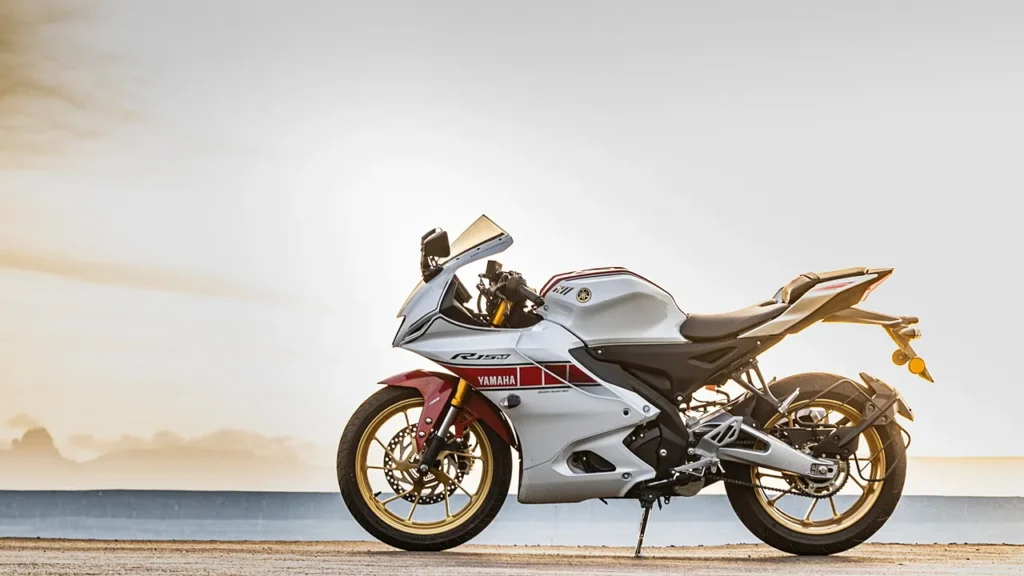
Yamaha R15 V4: The Ultimate 2026 Guide – Specs, Performance, Ownership, Comparisons & Buying Advice
The Yamaha YZF-R15 V4 continues to dominate the entry-level supersport segment in 2026, especially in high-demand markets like India. This 155cc machine blends aggressive R-series styling, advanced electronics, and Yamaha’s renowned reliability into a package perfect for beginners, track enthusiasts, and style-conscious daily riders.
Whether upgrading from a commuter or stepping into your first sports bike, the R15 V4 delivers thrills without overwhelming complexity. Its Variable Valve Actuation (VVA) engine, USD forks, traction control, and optional quickshifter make it a benchmark. This comprehensive guide covers everything from technical specifications to real-world ownership insights, helping you decide if it’s the right choice in 2026.
Brand Background and Evolution of the R15 Lineup
Yamaha Motor Company, founded in Japan, has a rich motorsport heritage. The R15 series, launched in India in 2008, brought supersport DNA to accessible prices. The V4 iteration refines the V3 with sharper styling inspired by the R7 and R1, improved build quality, and modern rider aids.
Primarily manufactured and tailored for markets like India, with exports to Southeast Asia and other regions, the R15 V4 adapts to local conditions while maintaining global Yamaha standards. In 2026, it remains BS6 Phase 2 compliant (E20 ready) and focuses on refinement rather than radical redesign.
Key Specifications at a Glance
Engine & Performance
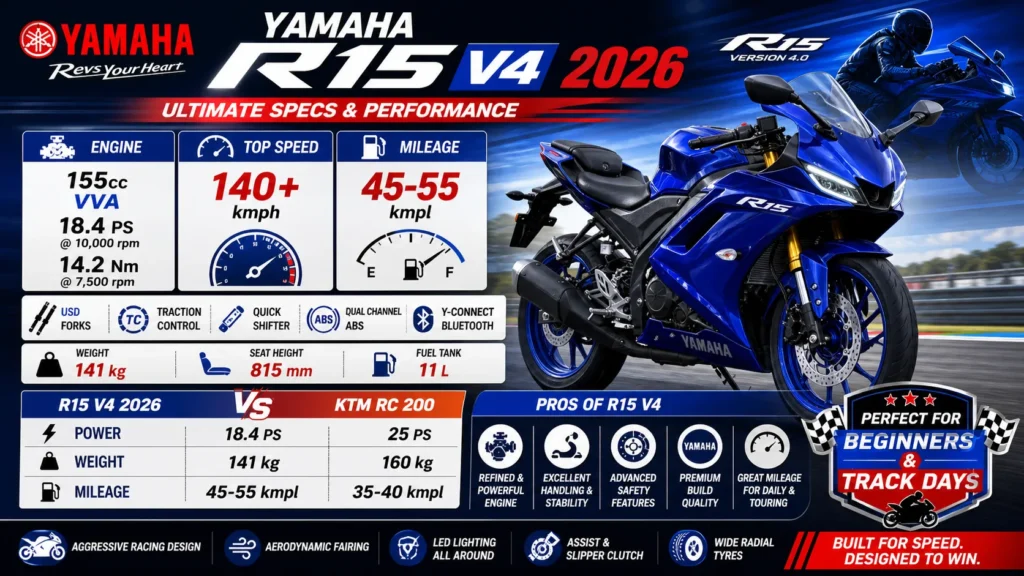
- Type: 155cc liquid-cooled, single-cylinder, SOHC, 4-valve with VVA
- Power: 18.4 PS (13.5 kW) @ 10,000 rpm
- Torque: 14.2 Nm @ 7,500 rpm
- Transmission: 6-speed constant mesh with slip & assist clutch; quickshifter (upshift, standard or accessory on higher variants)
- Top Speed: ~140–146 kmph (tested)
- 0-100 kmph: Approximately 13–14 seconds (real-world)
Chassis & Dimensions
- Frame: Deltabox steel frame
- Suspension: USD forks (front), linked monoshock (rear)
- Brakes: 282mm front disc, 220mm rear disc with dual-channel ABS
- Tyres: 100/80-17 (front), 140/70-17 (rear) – tubeless
- Kerb Weight: 141–142 kg
- Fuel Tank: 11 litres
- Seat Height: 815 mm
- Claimed Mileage: 45–55 kmpl (ARAI); real-world 40–50+ kmpl
Variants & Pricing (Ex-Showroom, India, approx. 2026)
Base models start around ₹1.66–1.69 lakh (Metallic Black/Red). Premium variants like R15M (Carbon Fibre, MotoGP editions) reach ₹1.92 lakh. On-road prices add 15–25% depending on state (RTO, insurance). Global pricing varies; check local Yamaha dealers for equivalents.
Colors include Racing Blue, Metallic Black, Dark Knight, Intensity White, Matte options, and limited MotoGP editions.
Design & Build Quality: Mini R1 Aesthetics
The R15 V4 features sharp, aerodynamic fairings, twin LED DRLs, a central projector LED headlamp, and aggressive R-series lines. Build quality improved over the V3 with better panel gaps, premium switchgear, and durable finishes. M variants add carbon accents, blue fork caps, and embroidered seats.
Strengths: Head-turning presence, good highway wind protection, and premium feel.
Areas for Improvement: Night-time headlamp throw can be average for some riders; indicators feel somewhat fragile; pillion seat is compact.
The committed supersport ergonomics (clip-ons, rearsets) suit enthusiastic riding but may fatigue taller riders on very long journeys.
Engine & Performance: Rev-Happy with VVA Magic
The liquid-cooled single with VVA switches cam profiles around 7,000 rpm, delivering strong mid-range and exciting top-end. It feels responsive above 5,000–6,000 rpm, making it ideal for twisty roads and track days. The 6-speed gearbox is smooth, and the clutch is light.
Real-World Feel: Tractable in city traffic when ridden in higher gears, though low-RPM grunt is limited (characteristic of high-revving singles). Vibrations appear near redline (~11,000+ rpm). Fuel efficiency remains strong—rarely dipping below 42 kmpl even when pushed.
Owners report excellent acceleration for the class, with predictable power delivery that builds rider confidence.
Handling, Ride Quality & Braking: Track-Ready Yet Forgiving
The Deltabox frame and USD forks provide razor-sharp handling and high cornering clearance. It changes direction quickly yet remains stable and forgiving for novices. Suspension offers a sporty yet usable balance for daily commuting.
Braking: Powerful with good ABS intervention. Some long-term reviews note minor fade under repeated hard use. Stock tyres perform adequately but benefit from upgrades (e.g., Michelin or Pirelli) for aggressive riding.
Features & Technology
- Bluetooth-enabled LCD console with notifications, Yamaha app connectivity, and lap timer.
- Switchable Traction Control.
- Riding modes (Street/Track).
- Shift lights, trip meters, fuel info.
- Full LED lighting and hazard lights.
Gaps include no built-in turn-by-turn navigation (app-dependent) and occasional connectivity quirks reported by early owners.
Real-World Ownership: Mileage, Reliability & Service
Mileage: City/highway mix often delivers 40–50 kmpl; steady highway cruising can exceed 50–55 kmpl. The 11L tank provides a realistic 450–550 km range.
Reliability: Yamaha’s reputation holds strong. Common minor issues include indicator fragility, occasional paint chipping, or rear cowl niggles. High-mileage owners report brake-related concerns after extended use. Overall, it proves bulletproof with proper care.
Service Costs: Intervals are reasonable (~₹500–800 for basic services). Annual costs for 8,000 km hover around ₹3,500–5,500 at authorized centers. Spare parts availability is excellent across India and many global markets due to the model’s popularity.
Ownership Experience: Fun daily companion that rewards skilled riding. Pillion comfort is limited, and vibrations can intrude on long rides. Many owners praise strong resale value.
Pros and Cons
Pros:
- Thrilling performance and precise handling.
- Premium features (TC, quickshifter option, Bluetooth).
- Excellent fuel efficiency.
- Strong build, reliability, and resale.
- Beginner-friendly yet engaging for experts.
Cons:
- Premium pricing compared to some naked rivals.
- Limited pillion comfort and cramped rear seat.
- Vibrations at high revs.
- Average low-end torque.
- Headlamp performance could be better in some conditions.
Head-to-Head Comparison: Yamaha R15 V4 vs Key Rivals
The main rival remains the KTM RC 200. Here’s a detailed breakdown:
| Parameter | Yamaha R15 V4 | KTM RC 200 |
| Price (Ex-Showroom approx.) | ₹1.66–1.92 lakh | ₹2.15–2.20 lakh |
| Engine | 155cc, 18.4 PS, 14.2 Nm | 199.5cc, ~25 PS, ~19.5 Nm |
| Weight (Kerb) | 141 kg | ~160 kg |
| Mileage (Real-World) | 40–50+ kmpl | ~35 kmpl |
| Features | TC, Quickshifter (opt), Bluetooth, Modes | Advanced display, but fewer aids |
| Handling | Precise, forgiving | Raw, aggressive |
| Maintenance | Lower, reliable | Higher |
| Best For | Skill-building, daily use | Straight-line thrills |
Verdict on Comparison: Choose the R15 V4 for refinement, features, efficiency, and lower running costs. Go for the RC 200 if you prioritize raw power and track aggression. The R15 excels as a more complete, versatile package for most buyers.
Other alternatives include the Bajaj Pulsar RS200 or TVS Apache RTR 200 4V, but the Yamaha stands out for premium feel and handling precision.
Who Should Buy the Yamaha R15 V4?
Ideal For:
- New riders seeking supersport thrills and skill development.
- Weekend track day enthusiasts.
- Riders prioritizing handling, features, and efficiency over outright power.
- Style-conscious buyers wanting head-turning looks and strong resale.
Not Ideal For:
- Those needing maximum pillion comfort or touring focus.
- Budget buyers sensitive to premium pricing and service costs.
- Riders wanting effortless low-RPM grunt for stop-go city traffic.
Buying Tips for 2026
- Test ride multiple variants and colors.
- Verify quickshifter inclusion (valuable upgrade).
- Calculate full on-road costs and compare insurance quotes.
- Opt for extended warranty or service packages.
- Consider aftermarket upgrades: grippier tyres, tank pads, exhaust, or comfortable seat.
- Check for current dealer offers or festive discounts.
Research local service center reputation and parts availability in your region.
Maintenance Tips & Longevity
Follow the owner’s manual: regular oil changes (every 3,000–5,000 km), gentle warm-ups, quality fuel, and avoid constant high-rev abuse. Many owners easily cross 50,000+ km with minimal issues. Chain cleaning/lubrication and brake fluid changes are key for performance bikes.
FAQs
A: Typically 40–50 kmpl in mixed conditions; up to 55+ kmpl on highways with relaxed riding.
A: Top speed around 140–146 kmph; 0-100 kmph in roughly 13–14 seconds.
A: R15 offers better refinement, mileage, features, and lower costs; RC 200 provides more power and raw excitement.
A: Expect ₹3,500–5,500 per year for typical usage at authorized centers.
A: forgiving handling, rider aids, and manageable power make it excellent for skill-building.
Final Expert Verdict
In 2026, the Yamaha R15 V4 remains a champion in the entry-level supersport category. It masterfully balances performance, technology, style, and everyday usability. While it has minor niggles like pillion comfort and high-rev vibrations, its refinements, reliability, and fun factor make it a top recommendation for aspiring sportbike riders.
If you value precision handling, modern features, and long-term Ownership satisfaction over brute power, the R15 V4 is a smart investment. Visit your nearest Yamaha showroom for a test ride—it rarely disappoints.
