
Used Electric Bike
Purchasing an Electric vehicle in 2026 is one of the most cost-effective and intelligent ways to enter the rapidly growing world of e-mobility without draining your budget. However, there’s a reality that many websites either ignore or oversimplify.
A single poor decision can end up costing more than investing.
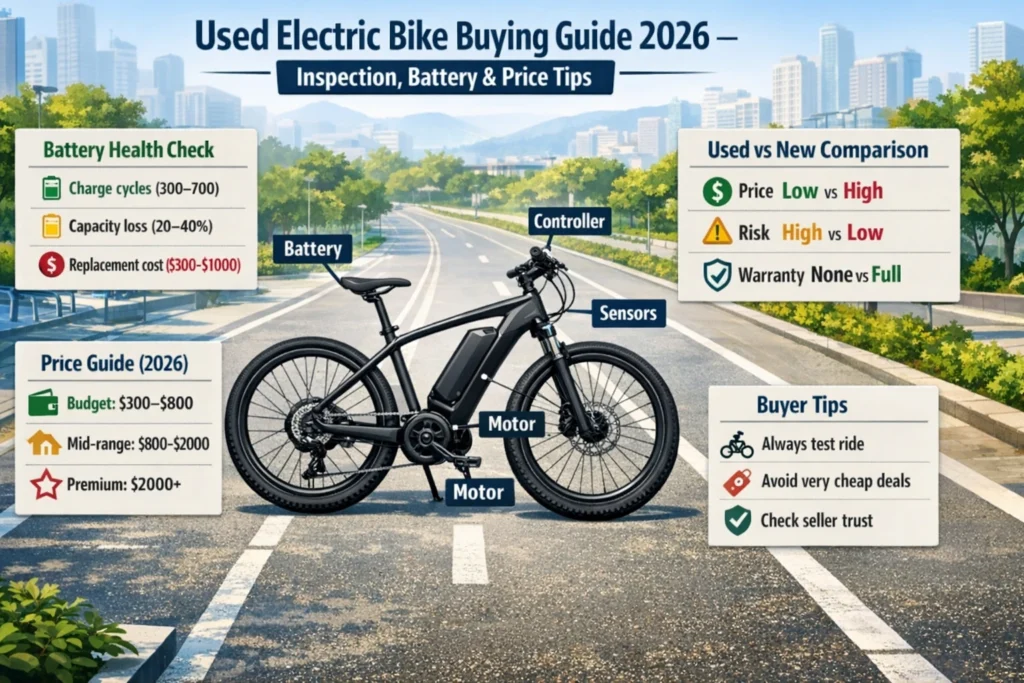
Unlike traditional bicycles, electric bikes are complex machines that combine mechanical engineering with electronic systems. They include components such as lithium-ion batteries, electric motors, controllers, sensors, and wiring systems—all of which degrade over time.
If you fail to properly evaluate these components, you could face:
- Rapid battery drainage
- Weak or inconsistent motor output
- Expensive replacement costs
- Potential safety hazards
In 2026, the demand for second-hand electric bikes is accelerating globally due to:
- Increasing fuel and transportation costs
- Urban congestion and traffic challenges
- Growing environmental awareness and sustainability trends
This comprehensive pillar guide is designed to help you:
Determine whether a used e-bike is a smart purchase
Master advanced battery health inspection techniques
Compare second-hand vs brand-new electric bikes
Identify scams and avoid financial losses
Discover the best platforms and sources worldwide
Whether you’re a beginner exploring your first e-bike or an experienced rider looking for value deals, this guide provides expert-level insights that most competitors fail to deliver.
What is a Used Electric Bike?
A used electric bike, also referred to as a second-hand e-bike, is a previously owned bicycle equipped with an electric propulsion system that assists pedaling and enhances riding efficiency.
These bikes retain all the fundamental features of new models but come with varying degrees of wear depending on usage history.
Key Components of an Electric Bike
Understanding the essential components is critical before making any purchase decision.
Motor System
The motor is the driving force behind the bike’s assisted movement.
- Hub Motors: Installed in the wheel (front or rear)
- Mid-Drive Motors: Located near the crank for better balance
Provides propulsion assistance and determines torque and performance.
Battery Pack
The battery is the most expensive and sensitive component.
- Typically lithium-ion
- Stores and supplies electrical energy
- Determines range and efficiency
Battery condition directly impacts overall value.
Controller & Display Unit
Acts as the brain of the system.
- Regulates speed and power output
- Displays key metrics like speed, battery level, and assist mode
Sensors
Sensors detect rider input and adjust assistance accordingly.
- Pedal-assist sensors
- Torque sensors for a smoother riding experience
Important Insight: All these components experience gradual degradation. A proper evaluation is essential before purchase.
Is Buying a Used Electric Bike Worth It?
This is the most crucial decision point for any buyer.
Advantages of Used Electric Bikes
- Significant cost savings (20–50%)
- Access to premium or high-end brands at reduced prices
- Environmentally sustainable choice
- Lower depreciation compared to new models
Disadvantages
- Battery degradation or reduced capacity
- Hidden electrical or motor issues
- Limited or no warranty coverage
- Higher risk of fraud or scams
Expert Insight
A pre-owned electric bike is worth purchasing only if you possess the knowledge to thoroughly inspect it—especially the battery system.
Used vs New Electric Bike (Full Comparison)
| Feature | Used Electric Bike | New Electric Bike |
| Cost | Lower | Higher |
| Warranty | Limited / None | Full |
| Risk Factor | Elevated | Minimal |
| Battery Condition | Degraded | Optimal |
| Technology | Older | Latest |
| Value Proposition | High | Moderate |
Verdict
Choose a used e-bike if:
- You are budget-conscious
- You understand inspection procedures
Choose a new e-bike if:
- You prioritize reliability and peace of mind
- You want the latest features and warranty protection
Types of Used Electric Bikes
Selecting the correct category based on usage is essential.
City / Commuter E-Bikes
- Designed for daily transportation
- Comfortable riding posture
- Efficient battery usage
Electric Mountain Bikes (eMTB)
- Equipped with advanced suspension systems
- High torque motors for rough terrain
- Ideal for off-road adventures
Folding Electric Bikes
- Compact and portable
- Easy storage and transport
- Perfect for urban commuting
Cargo Electric Bikes
- Designed for heavy loads
- Used for delivery or family transport
Pro Tip: Always prioritize your daily needs and riding conditions over price alone.
Used Electric Bike Price Guide (2026)
Pricing varies depending on condition, brand reputation, and battery health.
| Category | Price Range | Ideal For |
| Budget | $300 – $800 | Beginners |
| Mid-Range | $800 – $2000 | Daily commuters |
| Premium | $2000+ | Enthusiasts |
Key Price Factors
- Battery performance and lifespan
- Brand credibility
- Mileage and usage intensity
- Motor efficiency
- Maintenance history
Golden Rule: A cheap electric bike with a failing battery is not a bargain—it’s a liability.
How to Inspect a Used Electric Bike (Step-by-Step)
This is where most buyers make costly mistakes.
Frame Evaluation
- Check for cracks, dents, or structural damage
- Inspect for rust or corrosion
- Examine weld integrity
Avoid compromised frames at all costs.
Motor Assessment
- Listen for abnormal noises
- Evaluate acceleration smoothness
- Detect delays or jerks
Key Battery Concepts
Charge Cycles
- Average lifespan: 300–700 cycles
- More cycles = reduced efficiency
Capacity Degradation
- Batteries lose 20–40% capacity over time
Voltage Stability
- Stable voltage indicates a healthy battery
Where to Buy Used Electric Bikes
Online Marketplaces
- eBay
- Facebook Marketplace
- Craigslist
Wider selection but higher risk
Local Bike Shops
- Refurbished models
- Professional inspection
Slightly higher prices but more reliable
Specialized Dealers
- Certified pre-owned bikes
- Warranty options
Best option for beginners
Best Used Electric Bike Brands
Investing in reputable brands reduces risk significantly.
Top Brands
- Trek
- Giant
- Specialized
- Cannondale
- Bosch-powered systems
Why Brand Matters
- Superior battery technology
- Easier availability of spare parts
- Higher resale value
Pro Tips from Experts
Always prioritize battery condition
Avoid unknown or generic brands
Check service and maintenance history
Prefer low-mileage units
Be cautious of deals that seem “too good to be true.
Quick Buyer Checklist
| Check Item | Importance |
| Battery Health | ⭐⭐⭐⭐⭐ |
| Motor Condition | ⭐⭐⭐⭐ |
| Frame Integrity | ⭐⭐⭐⭐ |
| Test Ride | ⭐⭐⭐⭐⭐ |
| Seller Credibility | ⭐⭐⭐⭐ |
Pros & Cons of Used Electric Bikes
Pros
- Budget-friendly
- High value for money
- Environmentally sustainable
Cons
- Potential hidden defects
- Battery degradation
- Lack of warranty
FAQs
A: if properly inspected and purchased from a trusted seller.
A: Usually 3–5 years or around 500 charge cycles.
A: But it can be expensive.
A: $800–$1500 is ideal for mid-range.
A: If you understand battery health and inspection.
Final Verdict
Purchasing a used electric bicycle in 2026 can either be a financially smart investment or a costly mistake, depending on your knowledge and approach.
Buy Used If:
- You want to maximize savings
- You understand inspection techniques
- You purchase from reliable sources
Avoid If: Used Electric Bike Guide – Buying Tips, Prices & Battery Check
- You lack knowledge of battery health
- The seller appears suspicious
- The price seems unrealistically low
