Introduction
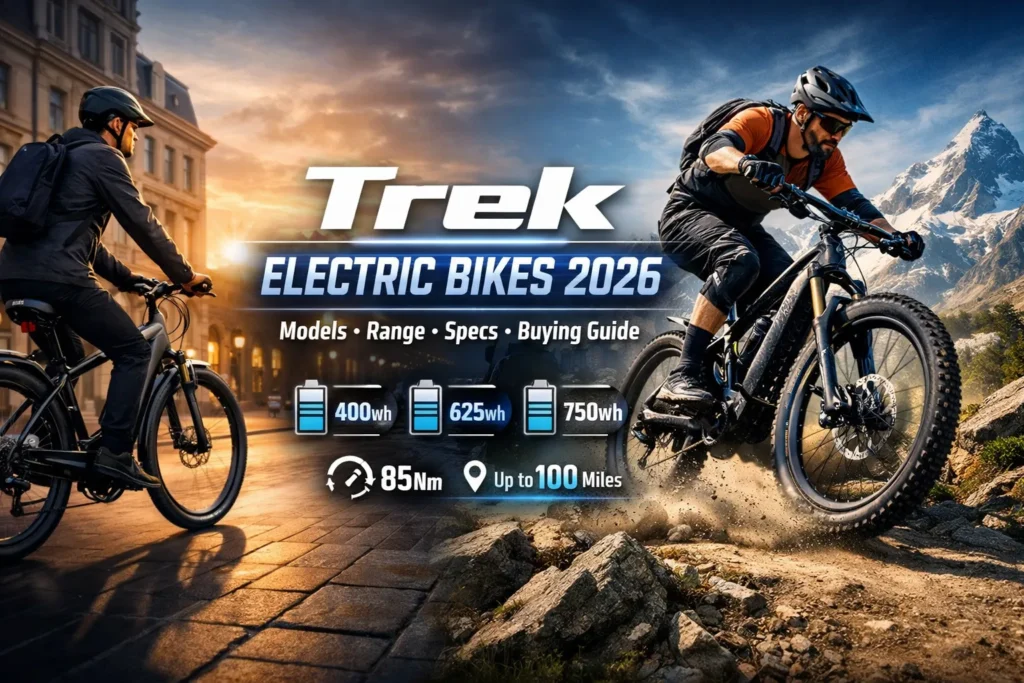
Trek electric bikes are no longer just a passing trend — they are a practical, efficient, and sustainable mobility solution. Across Europe, North America, Australia, and Asia, more riders are choosing electric bicycles for commuting, fitness, adventure, and eco-friendly transportation.
When people search for Trek electric bikes, they usually want something:
- Premium
- Durable
- Technologically advanced
- Supported by a trusted brand
From office commuters in London and Berlin to trail riders in Colorado and the Alps, Trek has built a global reputation for engineering excellence.
But important questions remain:
- Are Trek e-bikes worth the investment?
- Which Trek model fits your riding style?
- How does Trek compare with competitors like Specialized and Giant?
- What is the real-world battery life and riding range?
In this complete 2026 Trek electric bike review, we will cover:
Every major Trek e-bike series
Full specifications and motor details
Trek e-bike range comparison
Pros & cons based on real-world usage
Trek vs Specialized vs Giant comparison
Buying advice for global riders
Maintenance insights and ownership experience
This guide is written in clear, simple English, but it includes deep technical insight for enthusiasts. Whether you are a beginner or an experienced rider, this pillar article will help you make an informed decision.
Welcome to your ultimate Trek electric bike guide 2026.
About the Brand: Trek Bicycle Corporation
Trek Bicycle Corporation was established in 1976 in Wisconsin, USA. What started as a small workshop has grown into one of the largest and most respected bicycle manufacturers globally.
Today, Trek operates in:
- United States
- Canada
- United Kingdom
- Germany
- France
- Netherlands
- Australia
- UAE
- Japan
- Southeast Asia
Trek’s reputation is built on:
- Precision-engineered aluminum and carbon frames
- Advanced electric bike integration
- Long-term structural durability
- Strong dealer-based service network
- Commitment to innovation
Unlike many online-only electric bike brands, Trek prioritizes physical retail stores and certified service centers. This ensures professional assembly, regular maintenance, and reliable spare parts availability.
That is one key reason why Trek’s electric bike reliability ranks high worldwide.
Why Trek Electric Bikes Are So Popular in 2026
The global e-bike market is competitive. Hundreds of manufacturers now produce electric bicycles. Yet Trek continues to lead the premium segment.
Here are the primary reasons:
1. Bosch Motor Integration
Most Trek electric bikes use Bosch drive systems. Bosch is recognized for:
- Smooth power delivery
- High torque output
- Reliable electronic control systems
- Long-term durability
2. Purpose-Built Frame Engineering
Trek designs frames specifically around electric systems. The motor and battery are integrated structurally — not simply attached.
This results in:
- Better balance
- Improved weight distribution
- Enhanced stability
3. International Warranty Support
Trek’s extensive dealership network means you can access certified servicing in many countries.
4. Strong Resale Value
Used Trek e-bikes retain market value better than lesser-known brands.
Trek Electric Bikes Lineup Overview
Trek offers multiple electric bike families tailored to specific riding categories.
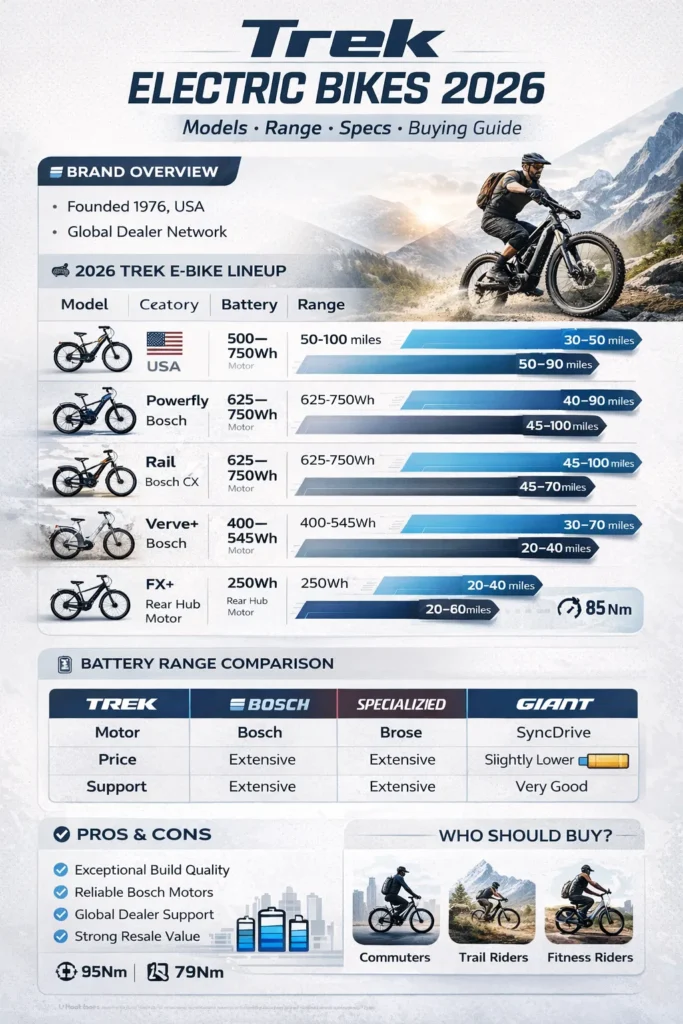
| Series | Category | Motor | Battery | Best For | Price Range (USD) |
| Allant+ | Urban Commuter | Bosch Performance Line | 500–750Wh | Daily city commuting | $3,000–$4,500 |
| Powerfly | Hardtail eMTB | Bosch Performance CX | 625–750Wh | Trail riding | $3,500–$5,500 |
| Rail | Full Suspension eMTB | Bosch CX Smart | 625–750Wh | Aggressive mountain riding | $5,000–$9,000 |
| Verve+ | Comfort Hybrid | Bosch Active Line | 400–545Wh | Leisure cycling | $2,500–$3,800 |
| FX+ | Lightweight Urban | Rear Hub Motor | 250Wh | Light commuting | $2,000–$2,800 |
Each series serves a different rider profile. Let’s explore them individually.
1. Trek Allant+ Series – Premium Urban Commuter
The Allant+ series represents Trek’s flagship commuter e-bike platform.
It is engineered for:
- Urban commuting
- Long-distance city travel
- Fitness-focused riding
- Hilly metropolitan areas
Key Features
- Bosch Performance Line motor (up to 85Nm torque)
- 625Wh or 750Wh integrated battery
- Hydraulic disc braking system
- Integrated front and rear lighting
- Belt-drive variants available
Real-World Performance
The Allant+ accelerates efficiently and delivers consistent torque for hill climbing. It performs exceptionally well in stop-and-go city traffic.
Speed regulations:
- Europe/UK: 25 km/h assistance limit
- USA: Class 3 models up to 28 mph
Trek Allant+ Range Comparison
| Battery | Eco Mode | Turbo Mode |
| 625Wh | 50–80 miles | 30–45 miles |
| 750Wh | 60–100 miles | 40–60 miles |
Range depends on terrain, wind resistance, assist level, and rider weight.
Pros
Powerful hill-climbing torque
Premium build quality
Integrated battery aesthetics
Reliable Bosch motor
Cons
Premium pricing
Heavier than lightweight e-bikes
Best For
- Daily office commuters
- Urban riders
- Delivery professionals
- Fitness enthusiasts
2. Trek Powerfly – Electric Hardtail Mountain Bike
The Powerfly is Trek’s versatile hardtail electric mountain bike.
Technical Specifications
- Bosch Performance Line CX motor
- 625Wh or 750Wh battery
- Aluminum frame construction
- 120–130mm front suspension travel
Trail Performance Analysis
The Powerfly provides strong torque for steep climbs and forest trails. The hardtail setup ensures efficient pedaling and manageable weight.
It feels stable at higher speeds and offers refined motor engagement compared to entry-level competitors.
Pros
Robust Bosch CX motor
Durable chassis design
Balanced price-performance ratio
Cons
Less comfortable on rough terrain compared to full suspension
Premium pricing tier
Ideal Riders
- Beginner eMTB riders
- Weekend trail explorers
- Riders transitioning from traditional MTB
3. Trek Rail – High-Performance Full Suspension eMTB
The Rail is Trek’s advanced electric mountain bike platform.
Core Highlights
- Bosch Performance Line CX Smart System
- 160mm full suspension travel
- Carbon and aluminum frame options
- Aggressive trail geometry
Trail Capability
The Rail excels in:
- Rocky descents
- Technical climbs
- Alpine terrain
- Long mountain rides
It is popular in mountainous regions such as:
- Switzerland
- Austria
- USA Rockies
Pros
Elite suspension performance
Extended battery capacity
Advanced geometry
Cons
High cost
Increased overall weight
4. Trek Verve+ & FX+ – Hybrid and Lightweight Options
Verve+ (Comfort Hybrid)
Designed for relaxed riding.
Features include:
- Upright seating posture
- Step-through frame option
- Bosch Active Line motor
- Comfort-focused saddle
Ideal for:
- Casual riders
- Older cyclists
- Leisure city rides
FX+ (Lightweight Urban)
The FX+ differs from other Trek e-bikes.
Features:
- 250Wh compact battery
- Rear hub motor
- Slim lightweight frame
It feels closer to a traditional bicycle while offering electric assistance.
Trek Electric Bike Technologie
Trek partners primarily with Bosch.
Motor Systems Used
- Bosch Active Line
- Bosch Performance Line
- Bosch Performance Line CX
Bosch motors are known for reliability and smooth power delivery.
Battery Capacity Options
| Battery | Eco Mode | Turbo Mode |
| 400Wh | 30–50 miles | 20–30 miles |
| 625Wh | 50–80 miles | 30–45 miles |
| 750Wh | 60–100 miles | 40–60 miles |
Actual range depends on riding conditions and terrain.
Trek Electric Bikes Pros & Cons
Pros
High structural durability
Reliable motor systems
Strong international dealer network
Impressive resale value
Advanced safety components
Cons
Higher initial purchase cost
Limited entry-level pricing options
Heavier than some direct-to-consumer brands
Trek Electric Bikes vs Specialized vs Giant
When comparing brands, riders often evaluate Trek against Specialized and Giant.
| Feature | Trek | Specialized | Giant |
| Motor | Bosch | Brose / Custom tuned | Yamaha-based SyncDrive |
| Price | Premium | Premium | Slightly lower |
| Dealer Support | Strong | Strong | Strong |
| eMTB Performance | Excellent | Excellent | Very Good |
Comparative Summary
- Trek emphasizes Bosch integration and durability
- Specialized focuses on motor tuning and performance customization
- Giant provides competitive pricing
Trek Electric Bike Buying Guide
Selecting the correct model depends on multiple variables.
1. Riding Purpose
City commuting → Allant+ or FX+
Leisure riding → Verve+
Trail riding → Powerfly
Aggressive mountain riding → Rail
2. Battery Requirements
Short rides → 400Wh
Medium rides → 625Wh
Long touring → 750Wh
3. Budget Planning
$2,000–$3,000 → Entry premium
$3,000–$6,000 → Mid-performance
$6,000+ → High-end eMTB
4. Legal Regulations
Europe → 25 km/h assist limit
USA → Class 1, 2, 3 categories
Maintenance, Reliability & Warranty
Trek offers:
- Bosch-certified service centers
- Genuine spare parts
- Software updates
- Warranty coverage
Battery lifespan: 3–5 years
Charge cycles: 500–1000 cycles
Regular servicing improves longevity.
FAQs
A: They are water-resistant for riding in the rain, but not suitable for full water submersion.
A: Typically 3–5 years or 500–1000 charge cycles.
A: especially for riders who value durability and dealership support.
A: Between $2,000 and $9,000 globally.
A: Most models use Bosch motor systems.
Final Expert
After thorough evaluation, Trek electric bikes remain among the most reliable and premium electric bicycles globally.
- They are not budget-oriented.
- However, they provide:
- Proven Bosch motor systems
- Structural integrity
- Strong resale value
- Worldwide service network
If your financial plan allows, investing in a Trek e-bike is a strategic long-term decision.
For commuters, trail riders, and Mountain enthusiasts alike, Trek continues to deliver engineering excellence in 2026.
