
Introduction
Selecting the right Mountain bikes for kids can feel overwhelming for many parents. The market offers countless brands, multiple wheel sizes, different braking systems, and a variety of suspension technologies. If you are unfamiliar with cycling equipment, these options can quickly become confusing.
However, the reality is quite simple: the right bike can completely transform a child’s riding experience.
A properly sized and well-designed kids’ mountain bike helps children:
- learn balance faster
- develop riding confidence
- enjoy outdoor recreation
- strengthen muscles and coordination
- explore trails and nature safely
For many young riders, mountain biking becomes their first real outdoor adventure activity.
What Are Mountain Bikes for Kids?
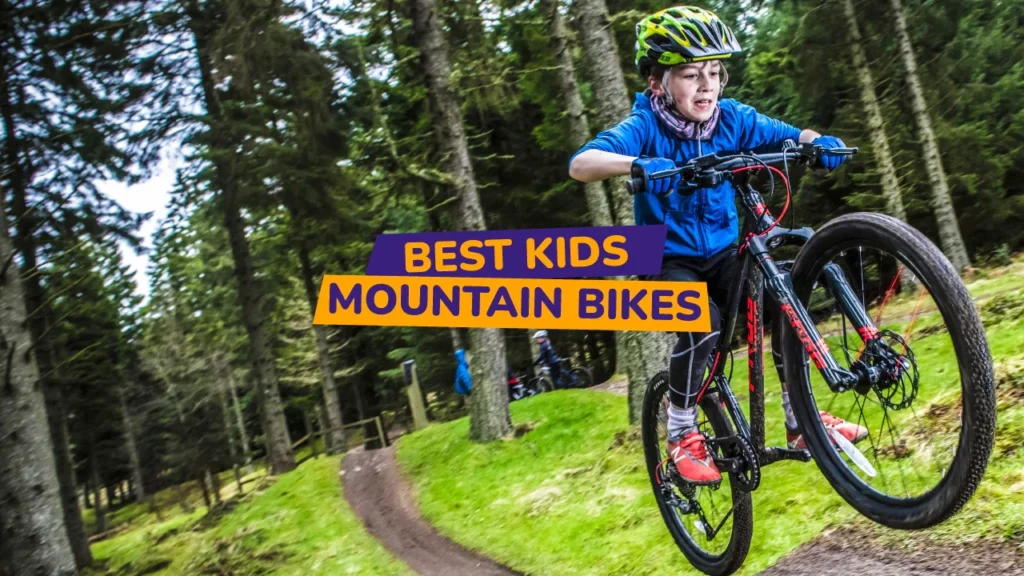
Mountain bikes for kids are specially designed bicycles created for young riders who want to explore off-road environments such as dirt paths, forest trails, gravel roads, and bike parks.
Compared with basic children’s bicycles, these bikes are engineered to handle rough terrain and uneven surfaces.
A proper kids’ MTB includes several features that enhance stability, control, and safety.
Key Characteristics of Kids’ Mountain Bikes
Most children’s mountain bikes include:
- knobby off-road tires for grip
- lightweight aluminum frames
- front suspension forks for shock absorption
- easy-reach brake levers
- lower gearing ratios for climbing hills
- stable mountain bike geometry
Why Mountain Biking Is Great for Kids
Parents often concentrate on price and safety when purchasing bicycles, but they sometimes overlook the developmental benefits of mountain biking.
Riding a kids’ MTB offers numerous advantages for growing children.
Physical Benefits
Mountain biking helps children:
- build leg strength
- improve coordination
- develop endurance
- enhance balance
Since trail riding often involves hills and uneven surfaces, it provides greater physical engagement than riding on flat pavement.
Mental Benefits
Mountain biking also helps develop important mental skills such as:
- confidence
- focus
- problem solving
- risk awareness
When children learn to ride trails, they quickly develop situational awareness and decision-making abilities.
Outdoor Lifestyle
In today’s digital era, children spend more time indoors than ever before. Riding a children’s mountain bike encourages:
- outdoor play
- family activities
- nature exploration
Many professional cyclists began their journey on junior mountain bikes during childhood.
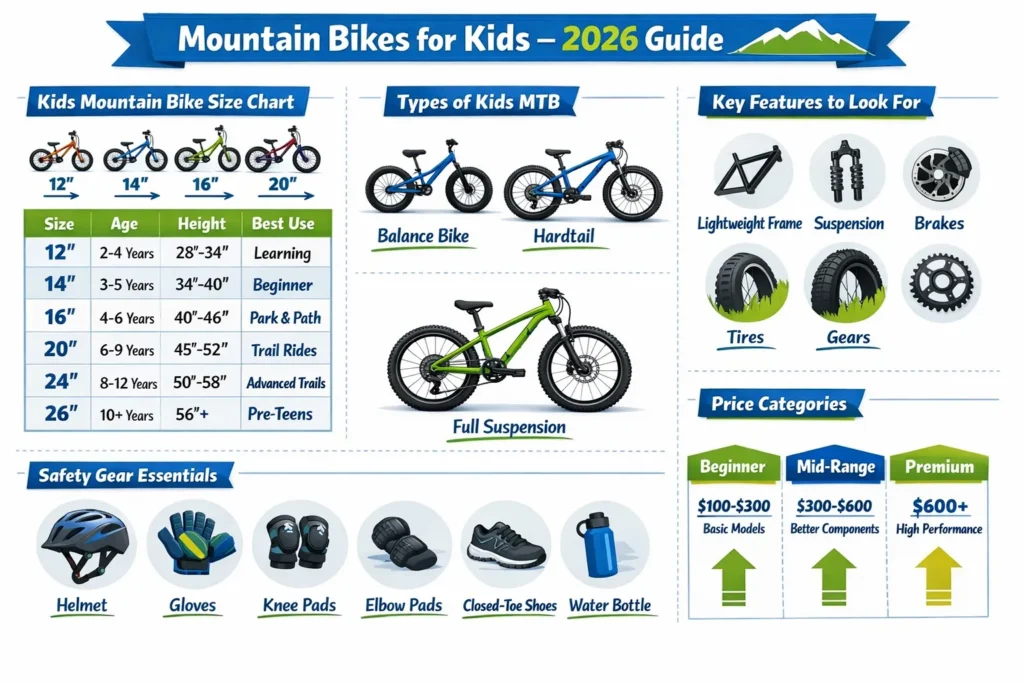
Kids Mountain Bike Size Chart
The single most important factor when buying a mountain bike for kids is proper sizing.
Unlike adult bicycles, children’s bikes are classified primarily by wheel diameter rather than frame size.
Kids Mountain Bike Size Chart
| Wheel Size | Child Age | Height Range | Best For |
| 12″ | 2–4 years | 85–100 cm | Balance bikes |
| 14″ | 3–5 years | 95–105 cm | Learning to pedal |
| 16″ | 4–6 years | 100–115 cm | First real MTB |
| 20″ | 5–8 years | 110–135 cm | Beginner trail riding |
| 24″ | 7–11 years | 130–150 cm | Intermediate MTB |
| 26″ | 10+ years | 145+ cm | Teen mountain bikes |
Why Proper Size Matters
A correctly sized kids’ mountain bike provides:
- easier control
- improved stability
- better safety
- Faster skill development
If a bicycle is too large, children may struggle to control it.
If it is too small, it can feel cramped and unstable.
Pro Tip for Parents
Instead of relying only on age, measure your child’s:
- height
- inseam length
These measurements offer far more accurate sizing recommendations.
Types of Mountain Bikes for Kids
Not all kids’ mountain bikes are built the same way. Some are designed for beginners, while others are engineered for more advanced trail riders.
Balance Bikes
Balance bikes are created for toddlers learning balance before pedaling.
Features
- no pedals
- extremely lightweight frame
- small wheels
- simple design
Benefits
Balance bikes help children:
- develop balance naturally
- transition easily to pedal bikes
- build riding confidence
They are typically ideal for children aged 2–4 years.
Hardtail Kids Mountain Bikes
Hardtail bikes are the most common type of kids’ MTB.
They include front suspension but no rear suspension.
Features
- suspension fork in front
- lightweight aluminum frame
- simple drivetrain
- lower cost
Best For
Hardtail bikes are excellent for:
- beginner riders
- park trails
- gravel paths
- casual off-road riding
Most children start their cycling journey with hardtail mountain bikes.
Full Suspension Kids MTB
Full suspension bikes include both:
- front suspension
- rear suspension
Features
- improved shock absorption
- better traction
- smoother ride on rough terrain
Best For
Full suspension youth MTB bikes are suitable for:
- advanced riders
- downhill trails
- rocky terrain
However, they are generally heavier and more expensive, making them better suited for experienced riders.
Key Features to Look For in Mountain Bikes for Kids
When buying a kids’ mountain bike, several components determine how comfortable and safe the bike will be.
Lightweight Frame
Bike weight is extremely important for children.
A heavy bicycle can make riding difficult and frustrating.
Best Frame Materials
Most kids use mountain bikes:
- aluminum alloy (best choice)
- lightweight steel
- carbon fiber (premium option)
Aluminum frames are popular because they are:
- durable
- lightweight
- affordable
Suspension System
Suspension Types
| Type | Description |
| Rigid fork | No suspension, lighter |
| Front suspension | Ideal for beginners |
| Full suspension | Best for rough trails |
Most kids’ mountain bikes include front suspension forks.
Braking System
Reliable brakes are essential for safety.
Types of Kids Bike Brakes
| Brake Type | Advantages | Best For |
| Rim brakes | Simple and affordable | Beginners |
| Mechanical disc brakes | Strong stopping power | Trail riding |
| Hydraulic disc brakes | Best braking performance | Advanced riders |
Hydraulic disc brakes are typically found on higher-end youth mountain bikes.
Tires and Wheels
Tires greatly influence how well the bike grips the trail.
Look for:
- 1.9″–2.4″ tire width
- knobby tread patterns
- durable rubber compounds
These features improve traction on:
- dirt trails
- mud
- gravel
Gear System
The drivetrain determines how easily kids can pedal uphill.
Gear Options
- Single speed – simple for beginners
- 7-speed drivetrain – common on kids’ MTB
- 9-speed drivetrain – for advanced riders
More gears allow older children to handle steeper hills and longer rides.
Hardtail vs Full Suspension Kids MTB
Parents often wonder which option is better.
Hardtail vs Full Suspension Comparison
| Feature | Hardtail MTB | Full Suspension MTB |
| Weight | Lightweight | Heavier |
| Cost | Affordable | Expensive |
| Maintenance | Simple | Complex |
| Trail comfort | Moderate | Excellent |
| Best For | Beginners | Advanced riders |
Expert Recommendation
For most children, hardtail mountain bikes are the best option because they are:
- lighter
- cheaper
- easier to maintain
Full suspension bikes are usually necessary only for serious young trail riders.
Best Wheel Sizes for Kids’ Mountain Bikes
Different wheel sizes create different riding experiences.
16-Inch Mountain Bikes
Ideal for:
- ages 4–6
- learning to pedal
- light off-road riding
These bikes often have simple drivetrains and small frames.
20-Inch Mountain Bikes
The 20-inch mountain bike for kids is one of the most popular options.
Best for:
- ages 5–8
- beginner trail riding
- park cycling
Many models include 7-speed drivetrains and front suspension.
24-Inch Mountain Bikes
The 24-inch mountain bike for kids is designed for older children.
These bikes offer:
- larger frames
- improved suspension
- more gear options
They are ideal for intermediate trail riding.
26-Inch Mountain Bikes
26-inch bikes are usually used by teenagers transitioning to adult mountain bikes.
They provide:
- full MTB geometry
- advanced gearing systems
- stronger suspension components
Best Mountain Bike Brands for Kids
Several global companies produce high-quality kids’ mountain bikes.
| Brand | Country | Known For |
| Trek | USA | Premium bikes |
| Specialized | USA | High performance MTB |
| Giant | Taiwan | Affordable quality |
| Cannondale | USA | Lightweight design |
| Woom | Austria | Ultra-light kids bikes |
| Prevelo | USA | Premium kids MTB |
| Spawn | Canada | Trail-focused youth bikes |
| Norco | Canada | Durable trail bikes |
These manufacturers are widely trusted for engineering quality and durability.
How to Choose the Perfect Mountain Bike for Kids
Follow this simple buying framework.
Step-by-Step Buying Guide
- Measure your child’s height
- Measure inseam length
- Choose the correct wheel size
- Select a lightweight frame
- Check brake quality
- Choose a suitable suspension
- Test ride if possible
A properly fitted kids’ MTB makes riding safer and far more enjoyable.
Safety Gear for Kids Mountain Biking
Safety should always be the top priority.
Essential Safety Equipment
Every young rider should use:
- certified cycling helmet
- protective gloves
- knee pads
- elbow pads
- closed-toe shoes
- hydration bottle
Helmets are the most important safety equipment and must fit properly.
How Much Do Mountain Bikes for Kids Cost?
The cost of a children’s mountain bike varies depending on brand and components.
Kids Mountain Bike Price Range
| Category | Price Range | Features |
| Beginner | $150–$300 | Basic components |
| Mid-range | $300–$700 | Suspension + gears |
| Premium | $700–$1500 | Lightweight + hydraulic brakes |
Higher-quality bikes are generally lighter and easier for kids to ride.
Pros and Cons
Advantages
- improves balance and coordination
- encourages outdoor activities
- builds confidence
- suitable for trails and parks
- durable construction
Disadvantages
- Hinnger price than basic children’s bikes
- requires safety equipment
- Suspension systems need occasional maintenance
Tips for Teaching Kids Mountain Biking
Introducing children to mountain biking should be fun and positive.
Expert Tips
- Start on smooth beginner trails
- Practice braking first
- teach proper riding posture
- ride together as a family
- keep rides short and enjoyable
Positive early experiences help children develop lifelong cycling habits.
FAQs
A: Most 7-year-olds ride 20-inch or 24-inch mountain bikes, depending on their height.
A: kids MTB bikes are safe when they are correctly sized and used with proper safety equipment.
A: Suspension forks help absorb bumps and improve comfort on rough terrain and trails.
A: Higher-quality bikes are typically lighter, safer, and easier to ride, which improves the overall riding experience.
A: Most children transition to 26-inch bikes around ages 10–12, depending on height.
Final Verdict
Choosing the best mountain bikes for kids depends on several important factors, including wheel size, weight, suspension, and riding style.
The most critical step is selecting the correct bike size based on height and inseam measurements.
For most families, a 20-inch or 24-inch hardtail mountain bike from a trusted brand provides the best balance of:
- performance
- safety
- affordability
With the right bike and proper safety gear, children can safely explore trails, develop cycling skills, and build a lifelong passion for mountain biking.
