Introduction
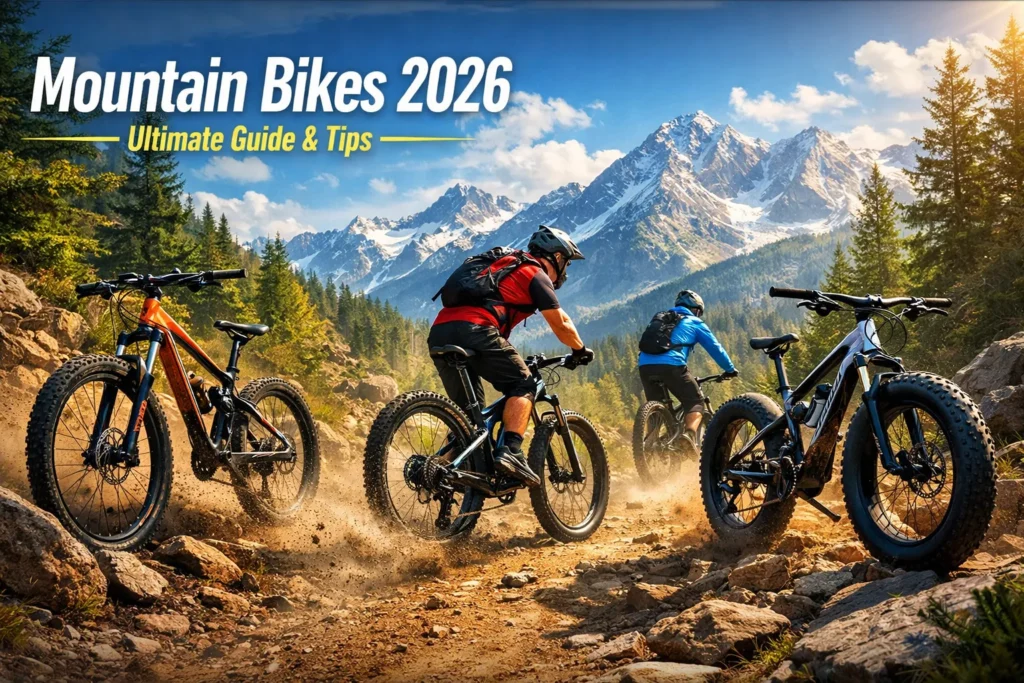
Once just for rough trails, Mountain bikes now roll everywhere. By 2026, they’re not only for speed seekers or race fans. Across Europe, regular people ride them too. Think forest tracks in Germany, high passes in Switzerland, quiet lanes in France. These bikes fit many needs: fun rides, daily trips, weekend exploring. They’ve become a go-to choice without fuss. Not flashy, just useful. Built tough but ready for calm days as much as wild ones.
It just keeps getting more people interested – tough by design, built to handle change, lasting through rough days, yet always ready to perform. Riding these takes you over dirt paths, bumpy stone trails, wet clay ground, jagged uphill sections, sharp slopes, and sometimes even city roads. Put together solid, shaped smart, they hold steady, stay balanced, make tricky ground feel less risky.
Starting on an MTB hunt? Maybe you’re swapping your old ride. Things can get confusing fast. So many choices sit lined up, waiting
- Should I choose a full suspension vs hardtail?
- What is the ideal mountain bike wheel size?
- Who makes the top mountain bikes these days?
- Brands like Specialized, Trek, and Santa Cruz come up often when riders talk gear.
- How do I select the right MTB according to my riding style and budget?
Picture this mountain bike guide for 2026, laying out every answer, step by step. It sorts through kinds of MTBs, what frames are made of, how suspension works, brakes, price ranges, what owning one really costs, plus care basics – explained so simply that anyone just starting gets it right away.
What Are Mountain Bikes?
Bikes meant for trails come ready-made to handle wild terrain. Not like those made for streets – smooth roads matter less here. Tough paths? Bumpy ground? These take it all without slowing down.
Performance stands strong when it comes to:
- Dirt trails
- Rocky pathways
- Gravel tracks
- Steep hills and climbs
- Woodland routes
- Bike park circuits
- Mountain descents
Starting strong, these bikes come built with tougher frames that handle rough paths well. Tires are shaped for grip, gripping wet roads just as easily as dry ones. Braking power arrives through smarter designs, letting riders slow down smoothly when needed. Suspension parts move quietly beneath, soaking up bumps without fuss. Control stays steady, even on uneven ground, thanks to how each piece works together behind the scenes.
Key Characteristics of Mountain Bikes
- Wide knobby tires for improved grip and traction
- Reinforced frame geometry for balance and durability
- Front or dual suspension systems for shock absorption
- Hydraulic disc brakes for strong, responsive stopping power
- Wide-range gearing systems for steep climbing and fast descents
Because of these features, mountain bikes are ideal for:
- Trail exploration
- Fitness and endurance training
- Weekend adventure rides
- Technical downhill riding
- Forest cycling
- Light off-road touring
Types of Mountain Bikes Explained
Understanding MTB types is critical before making a purchase decision. Each category serves a different riding purpose.
Cross-Country (XC) Mountain Bikes
Best For: Endurance rides, racing events, efficient climbing
Suspension Travel: 100–120mm
Weight Profile: Lightweight construction
Cross-country mountain bikes focus on pedaling efficiency, speed optimization, and low-weight performance. They are designed to maximize energy transfer while minimizing rolling resistance.
XC bikes are popular in European countryside terrain and competitive cycling circuits.
Pros
- Lightweight frame design
- Fast acceleration
- Efficient climbing ability
- Energy-saving geometry
Cons
- Reduced comfort on rough terrain
- Limited suspension capacity
- Not ideal for aggressive downhill riding
Trail Mountain Bikes
Best For: Versatile riding conditions
Suspension Travel: 120–150mm
Trail bikes are the most balanced and widely chosen mountain bikes. They combine climbing efficiency with downhill stability. Their geometry offers comfort without sacrificing performance.
For most riders, trail bikes represent the safest and most practical option.
Pros
- Excellent all-around performance
- Balanced geometry
- Comfortable ride quality
- Suitable for beginner to intermediate riders
Cons
- Slightly heavier than XC bikes
- Not as extreme as enduro bikes
Enduro Mountain Bikes
Best For: Technical trails, aggressive descents
Suspension Travel: 150–180mm
Enduro bikes are engineered for high-speed downhill control while still capable of climbing moderately. They feature robust suspension systems and slack geometry for improved stability.
Pros
- Superior downhill stability
- Handles rough terrain confidently
- Strong frame durability
Cons
- Increased weight
- Less efficient climbing
- Higher cost
Downhill Mountain Bikes
Best For: Professional downhill racing
Suspension Travel: 180–200mm
Downhill mountain bikes are purpose-built machines for gravity-focused riding. They prioritize shock absorption, braking strength, and maximum stability.
They are not suitable for everyday commuting or long-distance riding.
Electric Mountain Bikes
Electric mountain bikes incorporate pedal-assist motor systems. These are rapidly expanding across Europe.
Best For: Long climbs, endurance rides, older riders
EU regulations limit pedal assistance to 25 km/h.
Advantages
- Easier hill climbing
- Extended ride range
- Reduced rider fatigue
- Accessible for wider age groups
Disadvantages
- Increased weight
- Higher price point
- Battery maintenance requirements
Hardtail vs Full Suspension Mountain Bikes
Selecting between a hardtail vs full suspension is one of the most important decisions when purchasing mountain bikes.
| Feature | Hardtail MTB | Full Suspension MTB |
| Suspension | Front fork only | Front & rear |
| Cost | Lower investment | Higher investment |
| Weight | Lighter | Heavier |
| Maintenance | Simple servicing | Complex servicing |
| Comfort | Moderate | Superior |
| Best For | Beginners, XC | Trail, Enduro |
Hardtail MTB
Hardtail mountain bikes offer front suspension only. They are affordable, lighter, and easier to maintain.
Full Suspension MTB
Full suspension bikes provide both front and rear shock absorption, improving comfort and traction on technical terrain.
Expert Recommendation:
Frequent rocky terrain → Full suspension
New rider → Hardtail
Mountain Bike Wheel Size Guide
Wheel size influences control, momentum, and ride stability.
| Wheel Size | Ideal Use | Strengths | Weaknesses |
| 26″ | Older designs | Agile handling | Less rollover |
| 27.5″ | Balanced terrain | Playful & responsive | Moderate stability |
| 29″ | Speed & rollover | Smooth obstacle clearance | Slightly heavier |
Modern mountain bikes in 2026 predominantly use 29-inch wheels for enhanced rollover efficiency and trail stability.
Mountain Bike Frame Materials Explained
Aluminum
- Affordable
- Durable
- Most common material
- Strong value proposition
Carbon Fiber
- Extremely lightweight
- High-performance characteristics
- Premium pricing
Steel
- Comfortable ride quality
- High durability
- Heavier structure
For most European riders, aluminum offers an optimal balance between cost and performance.
Best Mountain Bike Brands in 2026
Here are globally respected and established brands:
Specialized Bicycle Components
Country: USA
Known for advanced trail and enduro models.
Trek Bicycle Corporation
Country: USA
Strong European distribution network.
Giant Manufacturing
Country: Taiwan
Reliable value-driven mountain bikes.
Canyon Bicycles
Country: Germany
Direct-to-consumer pricing model.
Scott Sports
Country: Switzerland
Premium engineering and innovation.
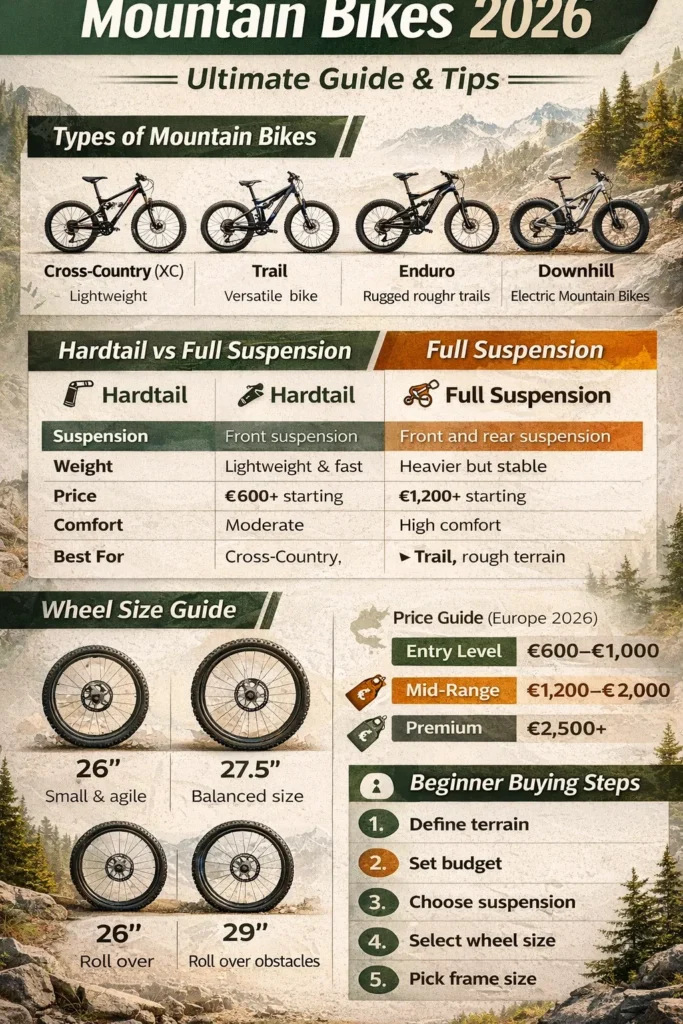
Mountain Bike Price Guide
| Category | Entry | Mid-Range | Premium |
| Hardtail | €500–€1,000 | €1,000–€2,000 | €2,000+ |
| Full Suspension | €1,500 | €2,500–€4,000 | €5,000+ |
| e-MTB | €2,000 | €3,500–€6,000 | €7,000+ |
Additional accessories budget:
- Helmet
- Gloves
- Protective gear
- Pump
- Repair kit
- Lighting system
How to Choose a Mountain Bike
Step 1: Identify Your Riding Style
Forest paths? Bike parks? Long-distance countryside?
Step 2: Define Budget Range
Consider total investment, not just bike cost.
Step 3: Decide Suspension Type
Hardtail vs full suspension.
Step 4: Choose Wheel Size
29” = stability
27.5” = agility
Step 5: Select Proper Frame Size
| Rider Height | Frame Size |
| 150–165 cm | Small |
| 165–175 cm | Medium |
| 175–185 cm | Large |
| 185+ cm | XL |
Step 6: Test Ride Before Purchase
Always evaluate comfort and control before buying.
Mountain Bike Maintenance Tips
Routine care ensures durability and longevity.
- Clean drivetrain weekly
- Lubricate the chain regularly
- Inspect brake pads
- Maintain correct tire pressure
- Annual suspension service
Pros & Cons
Pros
- Highly versatile
- Durable build quality
- Strong resale value
- Suitable for multiple terrains
- Excellent for fitness
Cons
- Heavier than road bikes
- Premium models costly
- Requires regular servicing
- Less efficient on paved roads
Who Should Buy Mountain Bikes?
Mountain bikes are suitable for:
- Adventure enthusiasts
- Fitness-focused riders
- Trail explorers
- Rural and countryside cyclists
- New riders want durability
Not suitable for:
- Pure city commuting
- Professional road racing
FAQs
A: hardtail trail bike with 29” wheels and hydraulic disc brakes.
A: Pedal assist up to 25 km/h without a license.
A: especially for rough terrain.
A: With proper maintenance, 8–15 years.
A: Choose based on your height using a manufacturer’s sizing chart.
Final Expert
Mountain Bikes in 2026 represent innovation, durability, adaptability, and performance. Whether you prefer cross-country efficiency, trail versatility, enduro aggression, or electric assistance, there is an MTB suited to your needs.
Beginner → Hardtail trail bike
Comfort & versatility → Full suspension trail bike
Aggressive rider → Enduro
Long-distance climbing → e-MTB
A mountain bike is more than a transport tool — it is your adventure companion, fitness partner, and exploration machine.
