
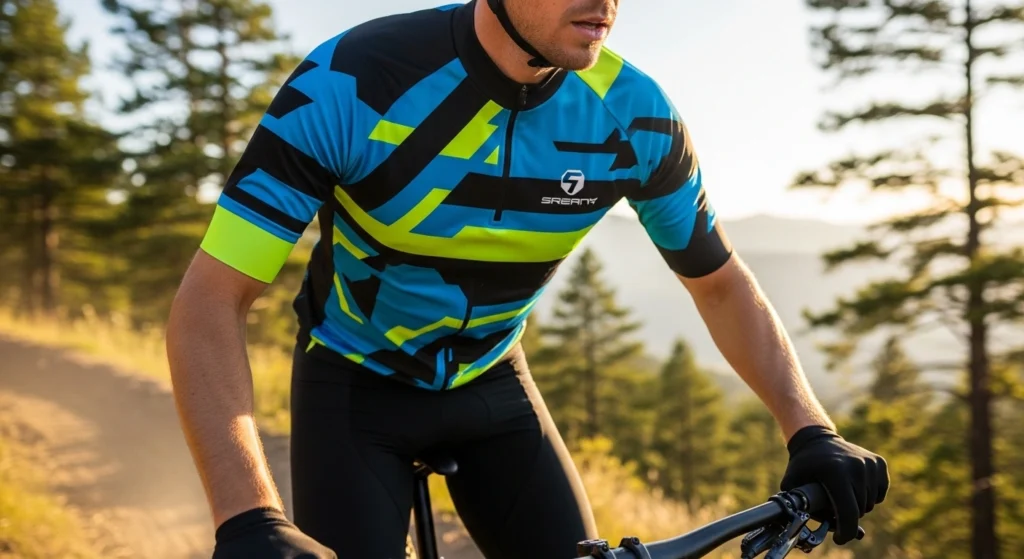
Mountain Bike Jersey
The Mountain bike jersey works hard behind the scenes to keep you cool and moving freely when riding rough paths. Wearing everyday clothes might seem fine at first – yet they trap heat, rub wrong, slow you down when the trail gets tough.
Some mountain bike tops use fabric that pulls sweat away fast. These clothes fit better when riding rough paths. Tough spots guard against scrapes from bark or falls. People used to regular shirts often notice a change right away. Breathability gets easier. Movement feels less restricted. Energy lasts longer on tough climbs. Riding through messy terrain works better now.
A fresh look at how jerseys work begins here – dive into cuts, materials, and ways they fit. Explore side-by-side picks, smart moves when shopping, and tips from riders who know. Confidence grows when choices make sense, especially picking your next ride top for the trails ahead in 2026.
What is a Mountain Bike Jersey?
A bumpy ride through woods or dirt paths needs clothes built for it – that is where a mountain bike jersey fits in. Built differently from everyday workout tops, these shirts handle rough weather, let air move around, yet keep riders moving naturally. Starting high on function, they finish strong on comfort when trails get wild.
Core Features
- Moisture-wicking textiles → efficiently transfer perspiration away from skin.
- Breathable design → prevents overheating during climbs
- Extended tail (drop-tail) cut → provides extra coverage when leaning forward
- Enhanced durability → resists abrasions, branches, and minor crashes
- Trail or performance-oriented fit → adapted to riding posture and activity
Pro Tip: Unlike road cycling tops, MTB jerseys emphasize rider comfort, protective qualities, and functional versatility, rather than just aerodynamic efficiency.
Types of Mountain Bike Jerseys
Understanding the varieties of MTB jerseys is crucial, as each design is tailored to a specific mountain biking discipline. Choosing the wrong type may compromise comfort, protection, or performance.
1. Trail / All-Mountain Jerseys
- Popularity: Widely used for recreational and moderate riding
- Fit: Relaxed yet structured
- Ideal For: Daily trail riders or mixed-terrain enthusiasts
These jerseys provide versatility for beginners and intermediate cyclists, offering an optimal blend of comfort, breathability, and protection.
2. Enduro / Downhill Jerseys
- Designed for high-impact riding: Durable materials and reinforced stitching
- Crash-ready design: Compatible with body armor
- Best For: Technical trails, bike parks, downhill racing
Enduro jerseys are robust, abrasion-resistant, and structured to sustain intense riding conditions.
3. Cross-Country (XC) Jerseys
- Performance-oriented: Lightweight, aerodynamic construction
- Snug fit: Similar to competitive road cycling jerseys
- Efficiency-focused: Reduces drag and fatigue
Perfect for racing or long-distance XC adventures, these jerseys prioritize speed, weight reduction, and minimal resistance.
4. Long Sleeve MTB Jerseys
- Protection-oriented: Shields from sun exposure, debris, and minor scrapes
- Versatile for seasons: Suitable for cooler climates but increasingly lightweight for summer use
Long sleeves provide extra coverage without compromising ventilation, making them increasingly popular among adventure cyclists.
5. Short Sleeve MTB Jerseys
- Optimal for heat: Maximizes airflow and keeps weight low
- Summer riding advantage: Lightweight construction enhances cooling
Short sleeves ensure maximum ventilation and reduced overheating, perfect for high-intensity hot-weather rides.
MTB Jersey Materials Explained
The fabric composition separates premium jerseys from standard options, impacting comfort, durability, and performance.
Polyester (Predominant Material)
- Lightweight yet robust
- Quick-drying for long rides
- Increasingly produced from recycled fibers
Polyester forms the foundation of most contemporary MTB jerseys, combining durability with breathable comfort.
Mesh Panels
- Strategically placed ventilation zones
- Improves airflow in high-sweat regions
- Especially valuable in hot or humid environments
Moisture-Wicking Fabrics
- Draws sweat away from the skin
- Reduces chafing and irritation
- Maintains dryness and comfort over extended periods
Abrasion-Resistant Fabrics
- Reinforced shoulders, elbows, and sleeves
- Built to withstand trail hazards and minor falls
Eco-Friendly Fabrics
- Recycled polyester and sustainable manufacturing processes
- Rising demand among environmentally conscious riders in Europe and North America
Expert Note: Fabrics now often integrate antimicrobial properties, improving hygiene and odor control during prolonged rides.
MTB Jersey Fit Guide (Critical for Comfort & Performance)
Selecting the correct fit significantly influences rider comfort, cooling efficiency, and range of motion.
Loose Fit (Classic MTB Style)
- Relaxed cut for comfort
- Compatible with body armor and pads
- Provides excellent airflow
Best suited for trail, enduro, and downhill disciplines.
Tight Fit (XC & Race-Oriented)
- Aerodynamic and lightweight
- Reduces wind resistance
- Primarily intended for racing and high-speed rides
Best suited for cross-country events and competitive cycling.
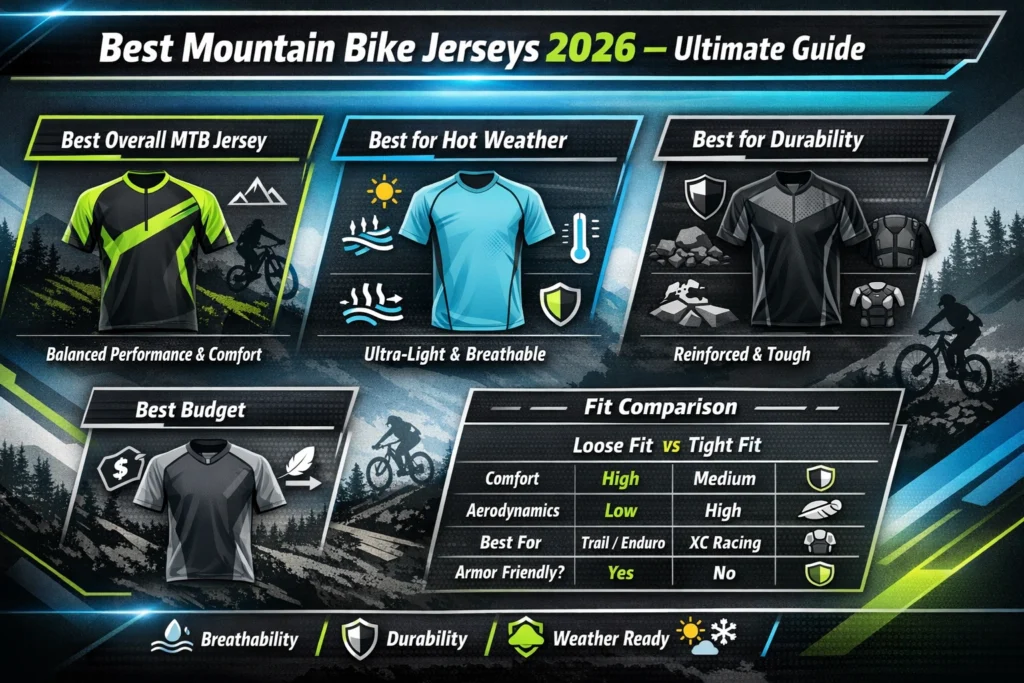
Fit Comparison Table
| Fit Type | Comfort Level | Aerodynamics | Recommended Discipline | Armor Compatibility |
| Loose Fit | High | Low | Trail / Enduro | Yes |
| Tight Fit | Moderate | High | XC Racing | No |
How to Choose a Mountain Bike Jersey Based on Weather
Riding conditions dictate the jersey material, fit, and sleeve length.
Hot Weather
- Lightweight fabrics and maximum ventilation
- Short sleeves or ultra-light long sleeves
- Primary focus: Breathability
Cold Weather
- Long-sleeve construction
- Layering-friendly design
- Windproof and thermal fabrics
Wet & Rainy Conditions
- Quick-drying synthetic materials
- Avoid cotton due to water absorption
Durability vs Breathability (Trade-Off Analysis)
| Feature | Lightweight Jerseys | Reinforced Jerseys |
| Breathability | Very High | Moderate |
| Durability | Low | High |
| Comfort | High | Moderate |
| Recommended Use | Hot Weather | Aggressive Riding |
Rider Insight: Often, riders must compromise between maximum ventilation and crash-resistant durability. Premium designs aim to balance both.
Best Mountain Bike Jerseys (Top Picks 2026)
- Trail-style loose fit
- Balanced comfort, durability, and airflow
- Suitable for most riders of varied skill levels
Best for Hot Conditions
- Ultra-lightweight fabrics with mesh integration
- Maximum ventilation for extreme temperatures
Budget MTB Jerseys
- Affordable under $50
- Functional moisture-wicking fabric
- Beginner-friendly design
MTB Jersey Comparison Table
| Feature | Trail Jersey | Downhill Jersey | XC Jersey |
| Fit | Loose | Loose | Tight |
| Breathability | High | Medium | Very High |
| Durability | Moderate | High | Low |
| Weight | Medium | Heavy | Light |
| Best Use | Daily Riding | Aggressive Trails | Racing |
MTB Jersey Price Guide (2026)
| Price Range | Features & Benefits | Target Rider |
| $20–$50 | Basic wicking & comfort | Beginners |
| $50–$100 | Mid-range technical fabrics | Regular riders |
| $100+ | Advanced material & performance | Professional riders |
Pro Tip: Look for seasonal discounts on premium models; often available post-peak riding season.
MTB Jersey vs Road Cycling Jersey
| Feature | MTB Jersey | Road Jersey |
| Fit | Loose / Relaxed | Tight |
| Durability | High | Moderate |
| Breathability | High | Very High |
| Pockets | Rare | Common |
| Primary Use | Off-road Trails | Pavement & Racing |
Insight: MTB jerseys prioritize comfort, durability, and posture support, while road jerseys maximize speed and aerodynamics.
Common Mistakes to Avoid
- Riding in cotton T-shirts (retains sweat, slow drying)
- Selecting an improper fit
- Overlooking climatic conditions
- Paying a premium solely for brand names
- Ignoring the type of riding
How to Choose the Best Mountain Bike Jersey (Step-by-Step)
Define Riding Discipline
- Trail → versatile loose-fit jersey
- Downhill → reinforced protective jersey
- XC → lightweight, aerodynamic jersey
Evaluate Weather Conditions
- Hot → breathable and ventilated
- Cold → long sleeves with layering options
Determine Ideal Fit
- Loose → comfort and airflow
- Tight → speed and aerodynamics
Pros & Cons of Mountain Bike Jerseys
Advantages
- Superior sweat management
- Comfortable over extended rides
- Durable and resilient for off-road usage
- Optimized for riding posture
- Better thermoregulation
Drawbacks
- Can be costly
- Lightweight designs may compromise durability
- Certain designs overpriced
- Fewer pockets than a road jersey.
Global Buying Considerations
- Europe: Demand for eco-conscious and high-end designs
- USA: Wide selection from budget to premium
- Asia (Pakistan, India): Value-for-money products preferred
- Australia & UAE: Breathable fabrics are essential due to the heat
Ideal Users of MTB Jerseys
Suitable For:
- Trail and enduro riders
- Downhill and park enthusiasts
- XC racers and endurance cyclists
- Adventure and long-distance cyclists
Less Critical For:
- Casual short trips
- Urban commuting
FAQ
A: The most effective MTB jersey is breathable, appropriately fitted, and durable for your riding discipline.
A: Absolutely. They enhance comfort, moisture management, and overall trail performance.
A: Loose → Trail & Downhill
Tight → Cross-country
A: But it won’t provide the same comfort, breathability, or durability as specialized jerseys.
A: Lightweight, mesh-integrated, and moisture-wicking jerseys are ideal.
Conclusion
Built for more than looks, a mountain bike jersey works hard when you ride. Comfort grows when fabric moves with you, not against. Confidence follows suit, step by step, trail after trail. Efficiency climbs without constant adjustments slowing you down. Safety tags along quietly, woven into design choices that matter most mid-ride.
