
Full Face Mountain Bike Helmet (2026 Guide)
Full face mountain bike helmet, and your heart pounds like thunder. Through rocky paths you go, dodging tree roots while air lifts you off big drops. Each turn brings sharp rocks, sudden dips, steep banks – danger waits quietly. A single mistake, maybe a wheel sliding out, can mean broken bones or worse. Head injuries happen quickly when speed meets surprise. That hard shell covering your skull? It isn’t an extra gear. It’s what stands between control and chaos when things fall apart mid-ride.
Around every twist in the road, safety shifts – full coverage means more than just top and side defense. Where standard gear leaves gaps near the lower face, one-piece designs step in without hesitation.
This 2026 walkthrough covers what matters when picking a full-face mountain bike helmet – your ride type, protection needs, and money limits. You walk away knowing exactly which features line up with how you ride, where you ride, why safety fits your plan. Each detail unfolds step by step, shaped by real use, not guesswork. Choices get clearer the more you see them in action, tested through bumps, drops, and long trails. What works clicks only after seeing it live, in motion, under strain
- Why full face helmets are superior in protection
- The different types of full face MTB helmets available in 2026
- How to correctly choose a helmet that fits
- The top helmet models tested and recommended for 2026
- Common mistakes riders make when purchasing helmets
- Emerging trends and technological innovations
A helmet might just be the thing that keeps your head safe when things go wrong. What protects you often comes down to a single smart choice beforehand.
What Is a full-face mountain bike helmet?
A full face mountain bike helmet is a specialized protective gear designed to cover your entire head, including the jaw, chin, and facial regions. Unlike half-shell or trail helmets, full face models are engineered to withstand significant impacts and shield riders from serious head injuries during high-risk scenarios such as downhill runs, technical rock gardens, or steep jumps.
Core Characteristics of Full Face Helmets
- Starting at the chin, this bar shields your jaw when hit hard up front. Hitting force gets spread out across its frame instead of landing right on bone.
- Wrapping around key areas, it shields the sides of your head along with the top and front bone structure.
- Where impacts hit hardest, materials give just enough to slow down harm. Crash energy spreads out before it reaches you.
- Strong outer layers often come from polycarbonate, sometimes ABS, now and then a blend – built to take hits without breaking down.
Folks who care more about safety than lightness might find these helmets fit just right. Built tough, they trade breathability for stronger shields around the head.
Why You Absolutely Need a Full Face Helmet
Riders choose full face helmets for multiple critical reasons:
1. Superior Protection
Full face helmets offer unparalleled protection for:
- Bones in the face, along with teeth and jaw, are better protected when impact happens. Strength across these areas spreads force, lessening chances of breaks.
- Toughness in one part supports neighboring parts during sudden pressure.
- This balance helps avoid cracks or splits under stress
- Skull and temples – decreasing likelihood of concussions
- From front to back, a tougher outer layer works with cushioning inside to handle bumps more effectively compared to standard headgear
2. Designed for Aggressive Riding
Full face helmets excel in demanding conditions such as:
- Downhill racing and bike parks
- Steep technical terrain
- Fast Jumps, drops, and high-speed sections
These helmets are purpose-built for situations where crashes can be severe.
3. Confidence Booster
A helmet that offers robust protection allows riders to push their limits without fear. Feeling secure encourages better technique and more adventurous lines, enhancing performance on steep descents and challenging trail features.
Full Face vs Half Shell Helmet: Which Should You Pick?
| Feature | Full Face | Half Shell |
| Protection | ⭐⭐⭐⭐⭐ | ⭐⭐⭐ |
| Weight | Heavier | Lighter |
| Ventilation | Moderate | Excellent |
| Best For | Downhill / Enduro | XC / Trail |
| Face Protection | ✔ | ❌ |
Takeaway: If safety and facial protection are your top priority, full face helmets are the obvious choice. If you value weight reduction and airflow, a half-shell helmet may suit lighter trail rides better.
Types of Full Face MTB Helmets (2026)
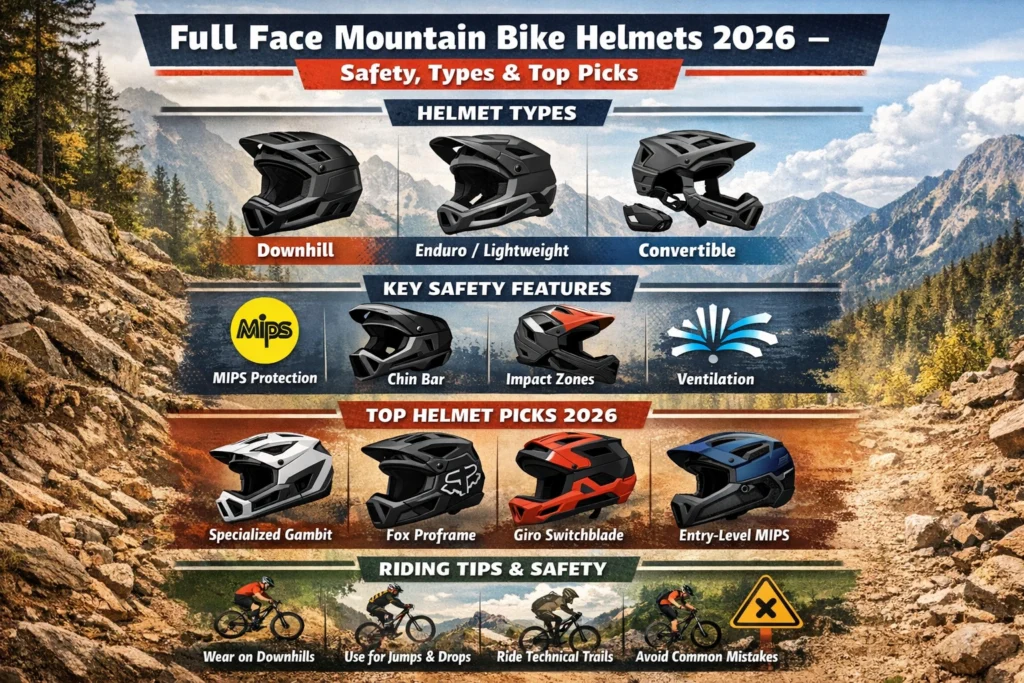
Not all full face helmets are identical. In 2026, the major categories include:
1. Downhill (DH) Helmets
- Maximum protection for extreme riding
- Thick, durable shell with enhanced padding
- Ideal for bike parks, high-speed downhill tracks
- Often ASTM F1952 certified
These helmets are designed for riders who embrace aggressive terrain with high potential for crashes.
2. Enduro / Lightweight Full Face Helmets
- Lighter than downhill models
- Improved ventilation for climbing and long rides
- Balanced protection for mixed terrain riding
Perfect for enduro riders who need both uphill efficiency and downhill security.
3. Convertible Helmets
- Removable chin bar for dual functionality
- Can switch between half-shell and full face
- Offers compromise between protection and versatility
Ideal for riders seeking flexibility without entirely sacrificing safety.
Key Features to Prioritize in 2026
When selecting a full face helmet, pay attention to these attributes:
1. Safety Certifications
Look for verified marks such as:
- ASTM F1952: Downhill racing standard
- CPSC / EN 1078: General mountain biking safety standard
These certifications ensure the helmet has passed rigorous impact tests.
2. MIPS & Rotational Impact Protection
MIPS (Multi-directional Impact Protection System) reduces rotational forces during angled impacts, lowering concussion risk. Other systems include SPIN and WaveCel, all designed to minimize twisting forces on the brain.
3. Ventilation
Effective airflow is critical for comfort, especially on long or hot rides. Features to look for include:
- Air channels and exhaust vents
- Sweat-wicking liners
- Designs that prevent overheating without compromising protection
4. Weight vs Protection Balance
- Lighter helmets: Better for endurance or climbing-focused rides
- Heavier helmets: Offer superior protection on aggressive descents
Determine which aspect aligns with your riding style.
5. Goggle Compatibility
A helmet should seamlessly accommodate your goggles. Look for:
- Strap retention systems
- No pressure points on straps
- Space for anti-fog airflow
How to Choose the Right Size: Your Most Important Step
A poorly fitting helmet can compromise safety regardless of price or brand. Follow these steps:
- Measure your head: Place a tape measure above eyebrows and ears.
- Check brand sizing charts: Each manufacturer varies slightly.
- Try it on: Should feel snug but not painful.
- Shake your head: Helmet should remain stable.
- Check comfort points: Ensure no pressure spots or discomfort.
Tip: Proper fit maximizes both safety and comfort.
Top Full Face MTB Helmets for 2026
Here’s a comparison of the best options heading into 2026:
| Category | Helmet | Features | Price (USD) |
| Best Overall | Specialized Gambit | Lightweight, MIPS, excellent airflow | ~$399 |
| Best Budget | Entry-Level MIPS | Affordable, certified protection | ~$150 |
| Downhill Specialist | Fox Proframe | Heavy-duty, maximum protection | ~$450 |
| Enduro / Lightweight | Giro Switchblade | Convertible chin bar, ventilated | ~$350 |
Pro Tip: Always test your helmet with your preferred goggles before finalizing the purchase.
When Should You Wear a Full Face Helmet?
Full face helmets are recommended for:
- Downhill trails
- Bike parks
- Performing jumps or drops
- Riding technical terrain
- Even beginners on challenging tracks
Rule of thumb: Replacing a helmet is cheaper than replacing your face.
Common Mistakes to Avoid
Even seasoned riders make these errors:
- Purchasing the wrong size
- Ignoring safety certifications
- Choosing style over protection
- Not replacing after a crash
- Buying cheap, uncertified helmets
Avoiding these pitfalls ensures long-term safety.
2026 Trends in Full Face MTB Helmets
- Ultra-light DH helmets: Lighter shells without sacrificing protection
- Advanced airflow systems: Innovative vent designs to keep riders cool
- Smart crash detection: Sensors that detect falls and alert emergency contacts
- E-bike safety: Increased use of full-face helmets on electric mountain bikes
These trends highlight ongoing helmet innovation.
Pro Tips & Hidden Insights
- Always test helmets with goggles
- Replace helmets after serious impacts
- Avoid inexpensive, uncertified models
- Select helmets based on riding style rather than appearance
- Check airflow performance while carrying your bike
Pros & Cons of Full Face MTB Helmets
Pros:
- Maximum head and face protection
- Builds confidence on technical trails
- Goggle-compatible
- Durable and long-lasting
Cons:
- Heavier than half-shell options
- Ventilation is moderate
- Bulkier to carry
Conclusion
A full-face mountain bike helmet does more than hold your gear together – it stops serious injury. Your head needs shielding first; everything else follows. Ride fast down steep slopes or pick through rocky paths; either way, a proper fit gives steadier focus, less fatigue, and better control. Protection shapes how freely you move when the terrain turns harsh.
Your Helmet matters more than anything else when you hit the road. See what stands out in 2026 – staying safe begins right there.
FAQ
A: If trails are technical or fast, yes. Even beginners benefit from added safety.
A: It should feel snug, stable, and not shift when shaking your head.
A: MIPS reduces rotational forces during angled impacts — extra protection is always beneficial.
A: After a significant crash or every 3–5 years, depending on wear.
A: Although dedicated DH helmets provide the maximum protection.
