
Introduction
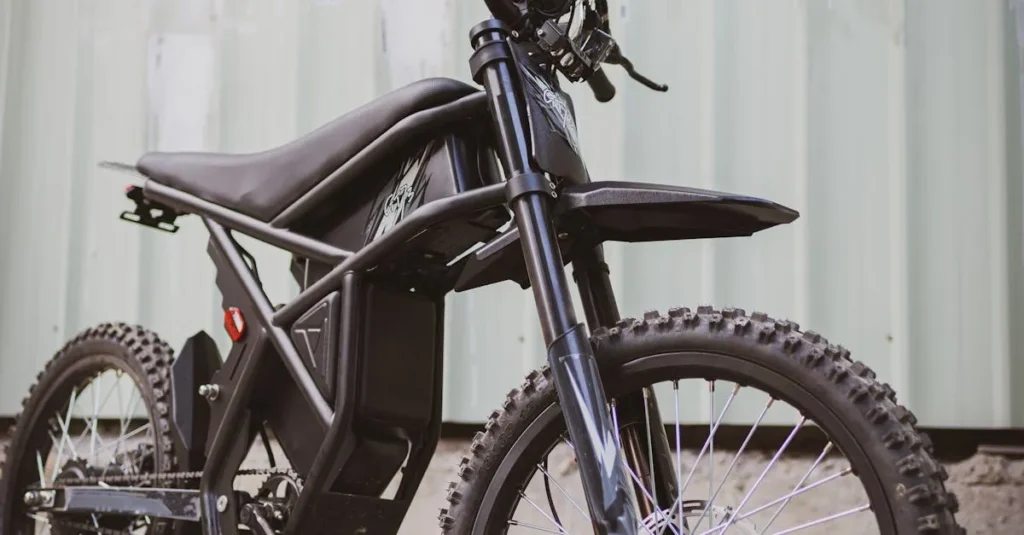
Electric mountain Bikes, often called eMTBs, are no longer just a niche product—they have become one of the most influential innovations in modern cycling. By 2026, these bikes will no longer be seen as a shortcut or compromise; instead, they represent a new class of performance-driven trail machines that make reaching mountainous trails easier and open up new possibilities in cycling.
Across the world—whether in the United States, Europe, the UK, Australia, or the rapidly growing markets in Asia—riders are now choosing eMTBs not to avoid effort, but to enjoy a better riding experience. This means conquering higher elevations, covering longer trails, and riding more challenging terrain with greater ease and enjoyment.
Electric mountain bikes now appeal to
- New riders are intimidated by sheer gradients
- Experienced trail riders seeking longer adventures
- Older cyclists preserving joint health and stamina
- Busy professionals maximizing limited ride time
- Riders recovering from injury or managing physical limitations
For BikesLover.com’s readers around the world, this Electric Mountain Bike Ultimate Guide (2026) is a fundamental and ever-useful resource. In this guide, we cover everything—from basic information to complex purchasing decisions, legal considerations, comparisons of different models, and best maintenance practices—so you can confidently choose the right eMTB according to your needs.
What Is an Electric Mountain Bike?
An electric mountain bike is essentially a bike designed for off-road cycling that comes with a pedal-assist motor and a rechargeable battery. Unlike motorcycles or throttle-controlled e-bikes, these bikes assist only when the rider pedals. The motor does not replace human effort—it amplifies it.
This distinction is very important. You are still riding a mountain bike, using the same cycling skills as before—balancing, shifting gears, and braking. The electric system simply helps overcome your physical limits, allowing you to tackle steep climbs and long trails without getting exhausted.
Key Characteristics of an Electric Mountain Bike
- Pedal-assist (PAS) technology
- Marked specifically for off-road terrain
- Reinforced rims and components
- Trail-oriented trigonometry
- Built to handle rocks, roots, mud, and sheer inclines
Most trail-legal electric mountain bikes fall under the Class 1 classification, which means
- Motor assistance up to 25 km/h (EU/UK) or 20 mph (USA)
- No throttle-only operation
- Legal on the utmost mountain bike trails worldwide
How an Electric Mountain Bike Works
Step-by-Step eMTB Function
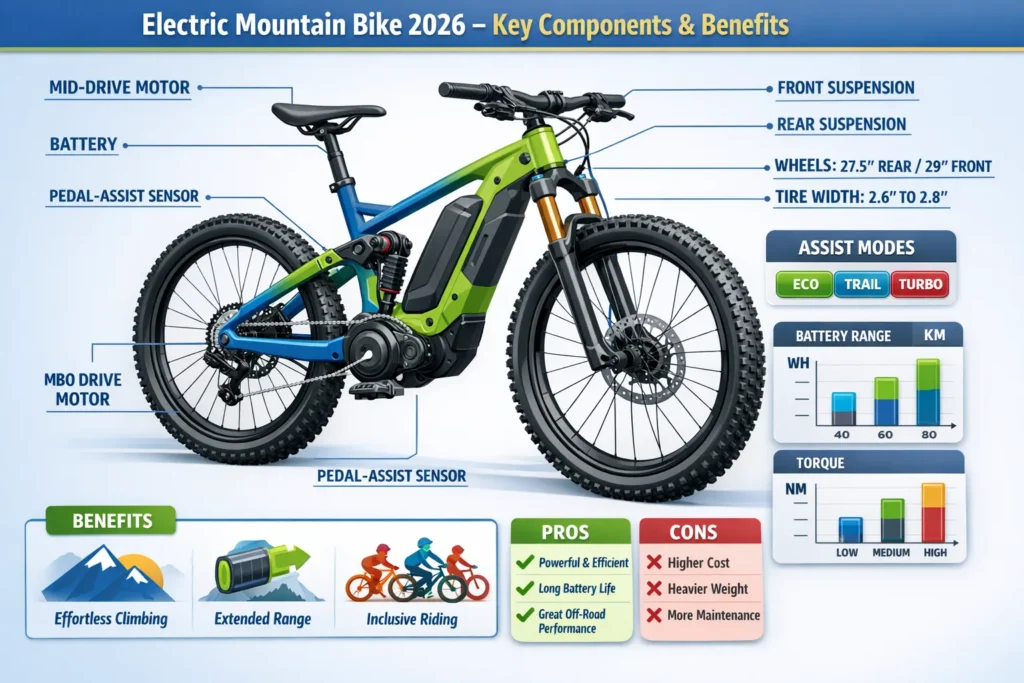
Pedal cadence and turn sensors detect rider input
The controller processes pedaling force and speed
The battery delivers electrical power to the motor
The motor augments pedaling power proportionally
Assistance adjusts in real time based on terrain
Common Assist Modes
- Eco – Minimal assistance, maximum efficiency
- Trail – Adaptive power for varied terrain
- Turbo / Boost – Maximum turn for sheer climbs
Why Choose an Electric Mountain Bike?
Effortless Climbing
Challenging climbs become manageable, and loving riders to clean technical sections that were previously impossible.
Extended Riding Range
Cover more distance without excessive fatigue, enabling exploration of new trail networks.
Inclusive Riding Experience
Perfect for mixed-ability groups, family rides, or riders returning to cycling.
Improved Skill Focus
Reduced exhaustion allows greater concentration on line selection, braking technique, and bike control.
Time Efficiency
Ideal for riders with limited time—more trail per hour.
Drawbacks & Limitations
Increased Weight
Electric systems add approximately 7–10 kg, affecting maneuverability.
Higher Purchase Price
Quality components and motors increase overall cost.
Battery Management Required
Range planning is essential for long rides.
Trail Access Restrictions
Local regulations vary by region and trail authority.
Types of Electric Mountain Bikes
Key Features
- Front suspension only
- Lower overall weight
- More affordable entry point
- Simpler maintenance
Limitations
- Less comfort on rough terrain
Full-Suspension Electric Mountain Bikes
Key Features
- Front and rear suspension
- Improved traction and control
- Superior downhill confidence
Limitations
- Higher price
- Increased complexity
Fat-Tire Electric Mountain Bikes
Key Features
- Ultra-wide tires
- Exceptional flotation and grip
Limitations
- Slower handling
- Not trail-optimized
Lightweight / Trail eMTBs
Key Features
- Compact Motors
- Reduced battery capacity
- Agile handling
Limitations
- Lower turn and range
Key Components Explained
Motor Types & Torque
| Motor Type | Location | Pros | Cons |
| Mid-Drive | Crank | Balanced weight, strong climbing | Higher cost |
| Hub Motor | Rear wheel | Affordable | Poor handling |
Torque Explained
Turn (Nm) determines climbing strength.
- 60–70 Nm – Light trail use
- 75–85 Nm – Aggressive trail riding
Battery Capacity & Real-World Range
| Battery Size | Typical Range |
| 400–500 Wh | 30–50 km |
| 600–750 Wh | 60–100 km |
| 900+ Wh | 100+ km |
Suspension, Wheels & Tires
Suspension Travel
- 120–150 mm – XC / Trail
- 160–180 mm – Enduro
Wheel Sizes
- 27.5″ – Playful
- 29″ – Stable
- Mullet – Balanced
Tire Width
- 2.3″–2.8″ recommended
Electric Mountain Bike vs Traditional Mountain Bike
| Feature | Electric MTB | Traditional MTB |
| Climbing | Easy | Demanding |
| Weight | Heavy | Light |
| Range | Battery-based | Rider-based |
| Fitness | Moderate | High |
| Cost | Higher | Lower |
How to Choose the Right Electric Mountain Bike
Step-by-Step Buying Guide
Define riding style
Choose the motor system
Select battery size
Choose suspension
Get the correct frame size
Best Electric Mountain Bikes
| Model | Motor | Battery | Best For |
| Cannondale Moterra SL 2 | Shimano EP801 | 601 Wh | Trail |
| YT Decoy SN 29 | Shimano EP8 | 720 Wh | Enduro |
| Marin Alpine Trail E | Bosch CX | 750 Wh | Value |
| Trek Rail 9 | Bosch CX | 750 Wh | All-mountain |
| Giant Trance X E+ | Yamaha | 625 Wh | Balanced |
Maintenance & Safety Guide
Essential Maintenance Tips
- Store battery at 20–80%
- Clean drivetrain frequently
- Update firmware regularly
- Inspect Brakes before rides
Safety Essentials
- Certified helmet
- Protective pads
- Obey Class-1 regulations
Electric Mountain Bike Laws (Global Overview)
USA & Canada: Class-1 allowed
UK & EU: 250W, 25 km/h
Australia: Pedal-assist only
Asia: Regulations vary
Pros & Cons of Electric Mountain Bikes
Pros
- Greater accessibility
- Improved climbing
- Longer adventures
Cons
- High upfront cost
- Increased weight
- Battery replacement expense
FAQs
A1:They reduce fatigue and accelerate learning.
A2: But it feels heavier.
A3:Around 500–1,000 cycles.
A4:Mostly, but local laws apply.
Final Bike Electric Mountain
Electric mountain bikes represent a fundamental shift in how people experience mountain biking. In 2026, they are lighter, smarter, and more capable than ever before. Rather than replacing traditional Bikes, eMTBs expand the sport—bringing more riders, more adventures, and more joy to the trails.
