
Introduction
Electric Bike trekking is really popular now. It used to be something that a few people did, but now it is one of the biggest things in getting around and having adventures. This is especially true in Europe, where electric bike trekking is really taking off. People, all over Europe, are doing electric bike trekking, and it is becoming a huge trend. Electric bike trekking is changing the way people travel and have fun.
By 2026, trekking bicycles will not be seen as weird or too expensive anymore. They are practical. They work really well for daily commutes, long trips and going outdoors. The main reasons for this change are that fuel is getting more expensive, there are rules to protect the environment, cities are getting too crowded and electric trekking bicycles are getting better because of improvements in batteries and motors. Electric trekking bicycles are now reliable tools for people to use every day. Electric trekking bikes are different from pedal bicycles. They give trekking bike riders the ability to do things that regular pedal bicycles do not. Electric trekking bikes allow riders to:
- Travel long distances without physical burnout
- Transport panniers, camping equipment, and groceries
- Handle inclines, strong winds, and varied terrain effortlessly
- Enjoy multi-day cycling journeys at a controlled, comfortable pace
Where city e-bikes focus on short commutes and electric mountain bikes prioritise aggressive trail riding, trekking e-bikes are engineered for endurance, balance, and adaptability. They are purpose-built for riders who want to go farther—not faster—while remaining comfortable, upright, and safe.
Electric bike trekking has opened up cycling
- First-time riders
- Senior cyclists
- Families with mixed fitness levels
- Daily long-distance commuters
- Adventure tourists and bikepackers
Most existing online articles merely recycle manufacturer specifications.
This comprehensive A–Z electric bike trekking guide (2026) goes far beyond that.
In this guide, you will discover:
- What electric bike trekking truly means
- How trekking e-bikes differ from other electric bicycle categories
- Real-world battery performance and distance expectations
- Terrain handling, tyre selection, and popular routes
- Safety preparation, reliability, and maintenance
- A step-by-step framework to choose the best electric trekking
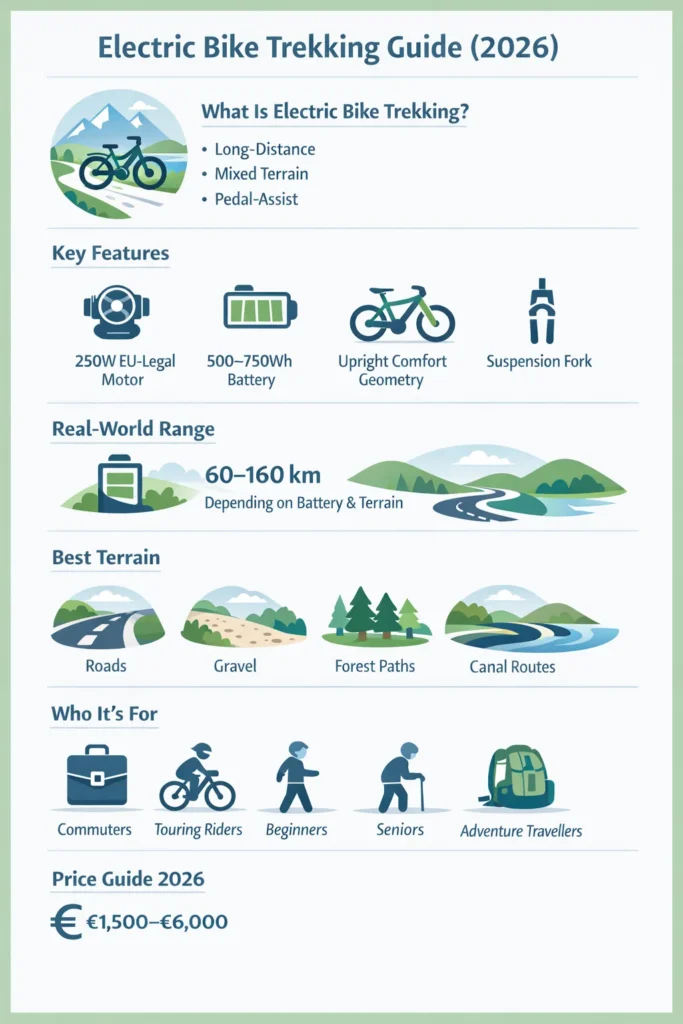
Electric bike trekking is a type of cycling where you go on trips. You ride on all kinds of roads and trails with a bike that helps you pedal. These electric bikes are made to be comfortable and stable, so you can keep going for a long time. Electric bike trekking is about using these special electric bikes to travel far on different surfaces.
What Is Electric Bike Trekking?
- These bicycles have the following things:
- Touring bicycles
- Urban commuter bikes
- Lightweight gravel machines
The result is a versatile platform capable of handling daily rides, weekend excursions, and multi-day adventures.
Core Characteristics of Electric Trekking Bikes
A genuine electric trekking bike typically includes:
- Upright riding posture to reduce spinal and neck strain
- Extended-range battery suitable for full-day travel
- High-efficiency motor optimised for steady assistance
- Stable frame geometry for predictable handling
- Integrated luggage mounting systems
- Weather-resistant, all-season components
Unlike performance-oriented bicycles, trekking e-bikes prioritise comfort and consistency over speed and aggression.
Ideal Use Cases for Electric Bike Trekking
Electric trekking bicycles are really great for a lot of things. I think electric trekking bicycles are perfect for people who want to travel distances without getting too tired. Electric trekking bicycles can also be used on terrain, which is a big advantage. Overall, trekking bicycles are very useful and fun to ride.
- Rural and countryside exploration
- Long daily commutes exceeding 20–40 km
- Multi-day touring holidays
- Gravel roads and forest service paths
- Canal routes, coastal highways, and scenic byways
I think electric trekking bicycles are really good for people who want to go on trips. You can travel a way without getting too tired. This is because electric trekking bicycles give you a lot of help when you are riding. Electric trekking bicycles make it easier to ride.
Trekking E-Bike vs Other E-Bike Categories
| Bike Type | Primary Purpose | Terrain | Cargo Capacity | |
| Trekking E-Bike | Long-distance mixed riding | Road + Gravel | High | |
| Touring E-Bike | Extended expeditions | Mostly road | Very High | |
| Electric MTB | Trail performance | Off-road | Low | |
| City E-Bike | Urban commuting | Pavement | Medium |
Key takeaway:
Electric trekking bikes occupy the sweet spot between touring endurance and everyday usability, making them the most adaptable e-bike category in 2026.
Why Electric Bike Trekking Is a True Game Changer
Travel Farther With Minimal Physical Stress
Pedal-assist systems allow riders to comfortably cover 60–120 km per day, even while carrying luggage or navigating rolling terrain.
Accessible for Every Fitness Level
Electric support enables beginners, seniors, and mixed-ability groups to ride together at a consistent pace.
Dominate Hills and Headwinds
Modern mid-drive motors deliver high torque, transforming steep climbs and persistent winds into manageable challenges.
Environmentally Responsible Exploration
Electric trekking bikes provide:
- Zero direct emissions
- Silent operation
- Minimal ecological footprint
Budget-Friendly Touring Alternative
Compared to cars or motorcycles, trekking e-bikes are:
- Cheaper to operate
- Less expensive to maintain
- More flexible for travel and storage
Key Features of an Electric Trekking Bike
Choosing the right trekking e-bike requires understanding the components that truly matter for long-Distance comfort and durability.
Motor Type & Power Delivery
| Motor Type | Advantages | Limitations |
| Mid-Drive Motor | Superior climbing, natural pedalling feel, energy-efficient | Higher upfront cost |
| Hub Motor | Affordable, simple mechanics | Reduced torque on inclines |
Best Choice for Trekking:
Mid-drive systems from trusted manufacturers such as Bosch, Shimano, and Yamaha deliver smoother power distribution and better hill performance.
EU-Legal Motor Regulations
To remain street-legal in Europe, trekking e-bikes must comply with:
- 250W continuous motor output
- Assistance limited to 25 km/h
- Pedal-assist only (no throttle operation)
Battery Capacity & Real-World Distance
Battery capacity is measured in watt-hours (Wh) and directly influences range.
| Battery Size | Typical Real-World Range |
| 250–400 Wh | 30–60 km |
| 500–625 Wh | 70–120 km |
| 750 Wh+ | 120–160 km |
Factors Influencing Actual Range
- Rider body weight
- Terrain elevation
- Assistance level used
- Wind resistance
- Cargo and pannier load
For genuine electric bike trekking, 500 Wh is the absolute minimum recommendation.
Frame Design, Geometry & Rider Comfort
Comfort is not optional—it is essential.
Essential Comfort Elements
- Relaxed, upright seating position
- Suspension fork
- Ergonomic handlebar grips
- Pressure-relieving saddle
- Adjustable stem for fine-tuning fit
Frame Construction
- Aluminium frames dominate for strength and affordability
- Carbon forks absorb vibration and road chatter
Gearing & Drivetrain Options
A capable trekking e-bike should offer:
- Wide-range gearing
- Internal gear hubs for reduced maintenance
- Belt-drive transmissions for silent, long-lasting performance
Cargo Capacity & Touring Equipment
A proper electric trekking bike typically includes:
- Heavy-duty rear rack
- Pannier compatibility
- Integrated lighting systems
- Full-length mudguards
- Stable kickstand
Best Terrains for Electric Bike Trekking
Electric trekking bicycles are engineered for multi-surface versatility.
Ideal Riding Surfaces
- Smooth asphalt roads
- Compacted gravel paths
- Forest access trails
- Canal towpaths
- Coastal highways
Popular European Trekking Routes
- Danube Cycle Path
- Loire Valley cycling routes
- EuroVelo network corridors
- Alpine foothill regions
Optimal terrain handling depends heavily on tyre width (40–50 mm) and suspension quality.
How to Choose the Best Electric Trekking Bike
Define Your Riding Purpose
- Daily commuting with weekend rides
- Long-distance touring and holidays
- Gravel and countryside exploration
Select Appropriate Battery Size
- Short commutes → 400 Wh
- Touring adventures → 500–750 Wh
Ensure Proper Fit & Ergonomics
Correct sizing prevents:
- Lower back discomfort
- Wrist fatigue
- Knee strain
Consider Total Bike Weight
Typical electric trekking bike weight ranges between 22 and 28 kg.
Pros & Cons of Electric Bike Trekking
Advantages
- Exceptional long-distance capability
- Comfortable upright riding position
- Excellent cargo support
- Environmentally friendly transport
- Accessible for all age groups
Disadvantages
- Higher purchase cost
- Heavier than non-electric bicycles
- Charging logistics on extended trips
Safety & Preparation for Trekking Adventures
Essential Safety Equipment
- Certified cycling helmet
- Protective gloves
- High-visibility or reflective clothing
- Front and rear lighting
Pre-Ride Inspection Checklist
- Battery fully charged
- Brakes functioning correctly
- Tyre pressure optimised
- Route and weather reviewed
Battery Management on Long-Distance Trips
Smart Range-Saving Strategies
- Use Eco mode on flat sections
- Reduce assistance on descents
- Carry a compact charger
- Identify charging points in advance
Some experienced riders also:
- Carry spare batteries
- Use solar-assisted charging solutions
Maintenance & Long-Term Reliability
Routine Care Tasks
- Lubricate drivetrain components
- Inspect brake pads and rotors
- Install firmware updates
- Monitor battery health
Well-maintained electric trekking bikes deliver years of dependable service.
Electric Trekking Bike Price Guide
| Category | Price Range |
| Entry-Level | €1,500 – €2,000 |
| Mid-Range | €2,000 – €3,500 |
| Premium | €3,500 – €6,000 |
Prices vary based on:
- Motor brand
- Battery capacity
- Country of purchase
Who Should Buy an Electric Trekking Bike?
- Long-distance commuters
- Touring enthusiasts
- Adventure travelers
- Older cyclists
- Environmentally conscious riders
FAQs
A1:30–160 km depending on battery size, terrain, and riding style.
A2:when limited to 250W motors and 25 km/h assistance.
A3:it functions like a standard bicycle when the motor is off.
A4:they are stable, forgiving, and easy to control.
A5:40–50 mm puncture-resistant tyres offer the best balance.
Final Verdict
Electric bike trekking is the way people will travel distances on bikes in the future. People will use bikes for long-distance cycling. Electric bike trekking is what people are going to do.
In 2026, electric trekking bikes became a good idea because they have better batteries, smarter Motors and they are designed to be comfortable for the person riding the electric trekking bike. Electric trekking bikes are one option if you want a good way to get around.
- Riding farther
- Reducing fatigue
- Maximizing versatility
An electric trekking bike is the perfect companion for your journey.
