
Introduction
Electric Bicycles have dramatically transformed the way individuals commute, travel, and explore globally. Electric Bike Racks From city commuters in Europe to adventurous riders in North America, the UAE, Australia, and Asia, e-bikes are increasingly heavier, bulkier, and more expensive than traditional bicycles.
Yet, many riders still rely on outdated advice designed for conventional bikes. This often leads to bent racks, damaged frames, unstable travel, and hazardous accidents on highways.
- Why e-bike racks differ from standard racks
- Which rack types are best for your vehicle and bike
- How weight capacities and hitch classes affect safety
- Step-by-step guidance on installation and usage
- Global considerations for legal and practical use
Whether you have a lightweight city e-bike, a fat-tire off-road e-bike, or a touring e-bike, this guide offers expert, practical, and straightforward advice to make your rack choice simple and safe.
Why Electric Bike Racks
Many newcomers assume any bike rack will suffice. This is one of the most common and costly errors among e-bike owners. Unlike standard bicycles, electric bikes come with higher weight, wider tires, step-through frames, integrated batteries, and sensitive electronics.
Using an inappropriate rack can cause:
- Structural failures
- Damage to your vehicle’s hitch
- Frame stress on the bike
- Dangerous movement or wobbling
Electric bike-specific racks are designed to mitigate these risks.
Weight Capacity — The Most Critical Factor
Typical standard bike racks accommodate 15–20 kg (30–45 lbs) per bike. In contrast, most e-bikes weigh 22–36 kg (50–80+ lbs), excluding accessories like racks, water bottles, fenders, and cargo.
If a rack cannot sustain the weight, consequences include:
- Structural collapse of the rack
- Hitch distortion or breakage
- Stress on bike frames
- Risky wobbling at highway speeds
Expert tip: Always choose a rack rated 20–30% higher than your total bike weight for safety.
Tire Width & Wheelbase Differences
Electric bikes frequently feature:
- Fat tires (3–5 inches)
- Extended wheelbases
- Wider rims than standard bicycles
Traditional trays and cradles often fail to accommodate these dimensions, making e-bike-specific racks essential.
Frame Design & Electronics
Modern e-bikes can include:
- Step-through frames
- Integrated battery downtubes
- Carbon fiber or alloy blends
Racks that clamp onto frames risk damaging paint, wiring, or battery housings. Frame-free or platform racks solve this by supporting the bike by the wheels.
Types of Electric Bike Racks Explained
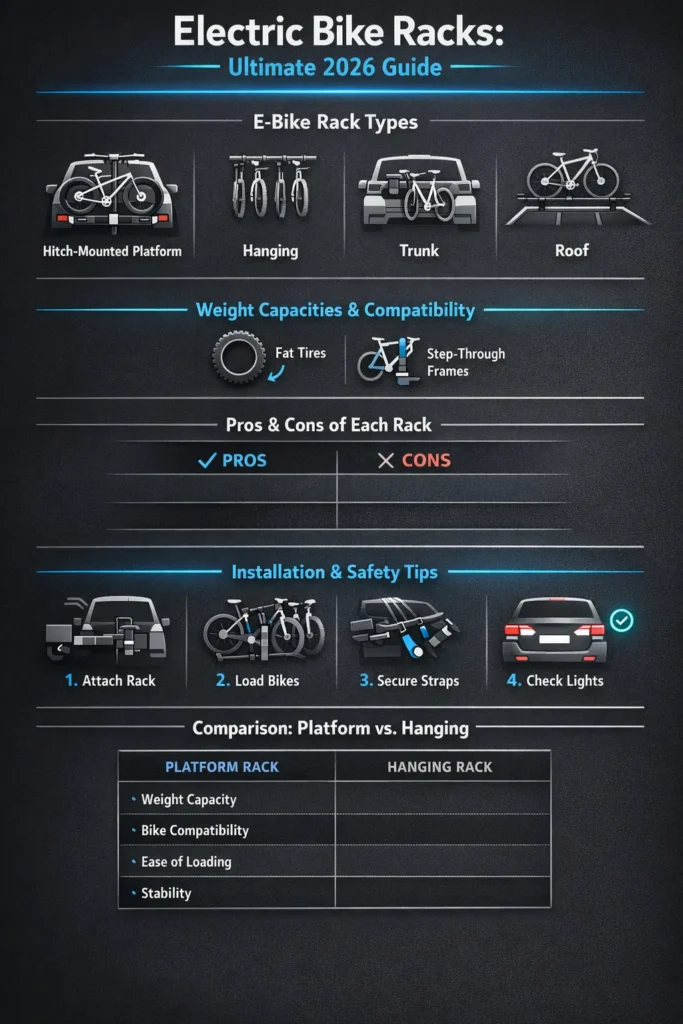
Hitch-Mounted Platform Racks
Best for: SUVs, vans, trucks, heavy e-bikes
Rated: ⭐⭐⭐⭐⭐
How They Work
These racks slide into the hitch receiver and support bikes from below using trays or platforms. Some come with tilt functions and loading ramps.
Pros
- High weight capacity (60–100+ lbs per bike)
- Stable at highway speeds
- Compatible with fat tires and step-through frames
- Optional ramps and tilt mechanisms
Cons
- Requires a vehicle hitch
- Higher upfront cost
- Slight rear obstruction
Hanging Racks
Best for: Budget-conscious or light e-bike users
Rated: ⭐⭐
How They Work
Suspend bikes by clamping the frame to horizontal arms.
Pros
- Affordable and lightweight
- Easy installation
Cons
- Limited weight capacity
- Step-through frames often incompatible
- Can damage bike frames
Roof-Mounted Racks
- Lifting heavy e-bikes overhead is unsafe
- Wind drag reduces efficiency
- Risk of vehicle roof damage
Expert Verdict: Use roof racks only if no other option exists.
Platform vs Hanging E-Bike Racks
| Feature | Platform Rack | Hanging Rack |
| Weight Capacity | ⭐⭐⭐⭐⭐ | ⭐⭐ |
| Fat Tire Support | Yes | Rare |
| Step-Through Frames | Excellent | Poor |
| Stability | Very High | Moderate |
| Ease of Loading | Easy (ramps) | Moderate |
| Price Range | Higher | Lower |
How to Choose the Right Electric Bike Rack
Weight Capacity
Rule of thumb: Rack rating should exceed your total bike weight + accessories + safety margin.
Example: Bike 30 kg + Accessories 3 kg → Choose rack rated ≥36 kg.
Hitch Class Compatibility
| Hitch Class | Rating | E-Bike Suitability |
| Class I | 2,000 lbs | Not ideal |
| Class II | 3,500 lbs | Limited |
| Class III | 5,000 lbs | Recommended |
| Class IV | 10,000+ lbs | Heavy-duty |
Tip: For two e-bikes, use Class III or higher.
Tire Width & Wheel Size
- Look for trays that support up to 5″ tires
- Adjustable wheel cradles
- Long wheelbase support
Ease of Loading
- Ramps and low tray height reduce strain
- Tilt-down access is beneficial for older riders
Security Features
- Integrated locks
- Anti-wobble Systems
- Hitch pin locks
Installation & Safety Guide
Step-by-Step Installation
- Confirm your vehicle hitch class
- Insert rack into receiver
- Tighten anti-wobble mechanism
- Load bikes (heaviest closest to vehicle)
- Secure wheels and frame arms
- Lock bikes and rack
Safety Tips
- Remove batteries to reduce weight
- Check straps after first 20 km
- Avoid reversing on steep slopes
- Respect manufacturer speed ratings
Essential E-Bike Rack Accessories
| Accessory | Purpose |
| Loading Ramp | Safe bike loading |
| Wheel Straps | Prevent movement |
| Frame Pads | Protect paint & finish |
| Hitch Lock | Theft prevention |
| Light Adapter | Legal compliance |
Global Considerations
- Europe: Light boards for rear plate visibility
- USA/Canada: Hitch ratings vary by state/province
- Australia: Overhang regulations
- Asia: Compact vehicles → foldable racks preferred
- UAE: Heat-resistant materials recommended
Pros & Cons
Pros
- Safe long-distance transport
- Protects electronics
- Compatible with modern e-bike designs
- Reduces interior clutter
Cons
- Higher cost
- Vehicle compatibility required
- Storage space needed
FAQs
A1:use a rack rated ≥150–200 lbs total.
A2:Only for light or short trips.
A3:reduces weight and risk.
A4:Only racks with wide trays (4–5″) are suitable.
A5:Class III or higher is best.
Final Expert Verdict
Choosing the right electric bike rack is not about brand names. It’s about weight, safety, compatibility, and real-world usability. Platform-style hitch racks are safest and most versatile in 2026.
Weight capacity
Compatibility
Safety
Real‑world usability
Platform‑style hitch racks are the best and safest option for most e‑bike owners in 2026 — especially as electric bikes continue to grow heavier and more advanced.
