
Introduction
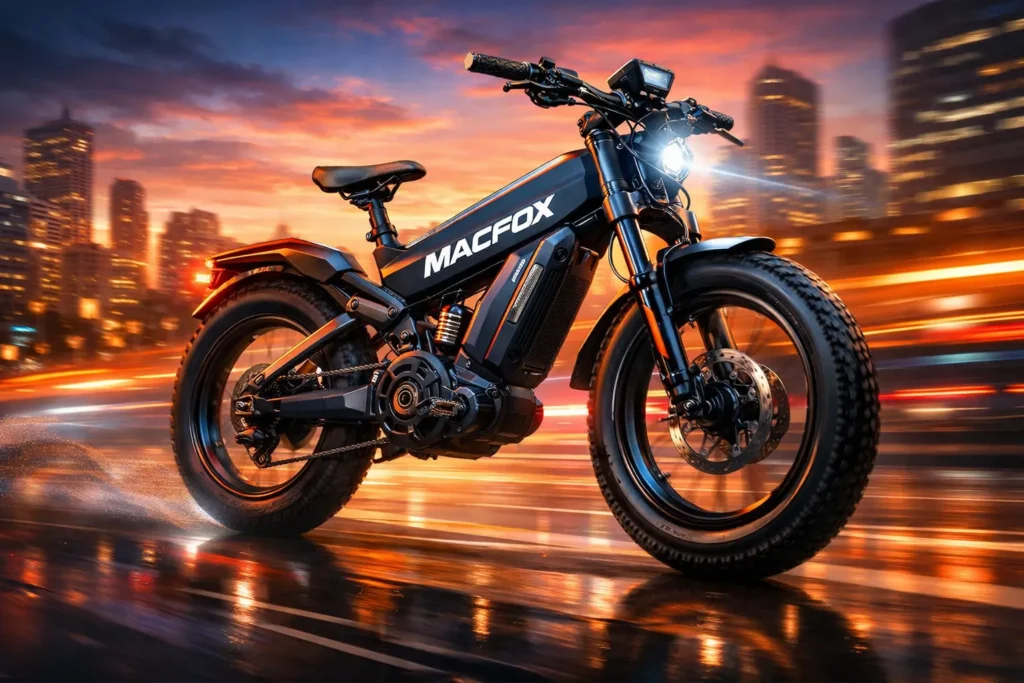
Macfox electric bikes are no longer a rare sight. By 2026, they have become part of daily life, moving smoothly through traffic in London and Berlin. In Austria and Switzerland, they tackle steep roads with ease. Meanwhile, food delivery riders rely on them every day in Dubai, New York, and Paris.
If you are looking for a complete Electric Bike Guide 2026, this detailed pillar article will give you everything you need.
This is not just another basic overview. This guide deeply explains:
- Electric bike types explained
- Electric bike motors & batteries
- E-bike motor torque explained
- Battery management systems for e-bikes
- Electric bike maintenance cost 2026
- Electric bike safety tips
- A full E-bike buying checklist 2026
At BikesLover.com, our mission is to provide trustworthy, research-based, easy-to-understand content. We combine technical knowledge with real-world riding experience. This article uses simple English so even a 15-year-old can understand it, but it still delivers professional-level insights for enthusiasts.
Why 2026 Is a Turning Point for Electric Bikes
The electric bicycle industry has expanded rapidly since 2020. However, 2026 marks a major shift in technology, regulation, and consumer awareness.
Three main changes define this year:
1. Mandatory Safety Certifications Worldwide
Governments across the globe now enforce stricter electrical safety rules. This protects riders from battery failures and electrical fires.
In the United States, compliance with UL 2849 is increasingly required.
In Europe, EN 15194 and CE marking are mandatory for legal road use.
These standards ensure:
- Safer wiring systems
- Fire-resistant battery construction
- Certified electronic controllers
- Proper insulation and testing
As a result, low-quality, untested batteries are gradually disappearing from reputable markets.
Smarter and More Efficient Motor Technology
Leading manufacturers like:
- Bosch eBike Systems
- Shimano
- Bafang
integrating advanced software and sensor technology.
Modern systems now include:
- Precision torque sensors
- Improved heat dissipation
- Intelligent power delivery algorithms
- Smartphone connectivity
- Ride analytics tracking
These advancements improve smoothness, energy efficiency, and durability.
3. Enhanced Battery Management Systems
Modern battery management systems and e-bike technology play a crucial role in 2026.
Updated BMS designs now:
- Prevent overcharging
- Avoid deep discharge
- Balance lithium cells automatically
- Monitor temperature in real time
- Increase battery cycle life
This significantly reduces fire risks and increases reliability.
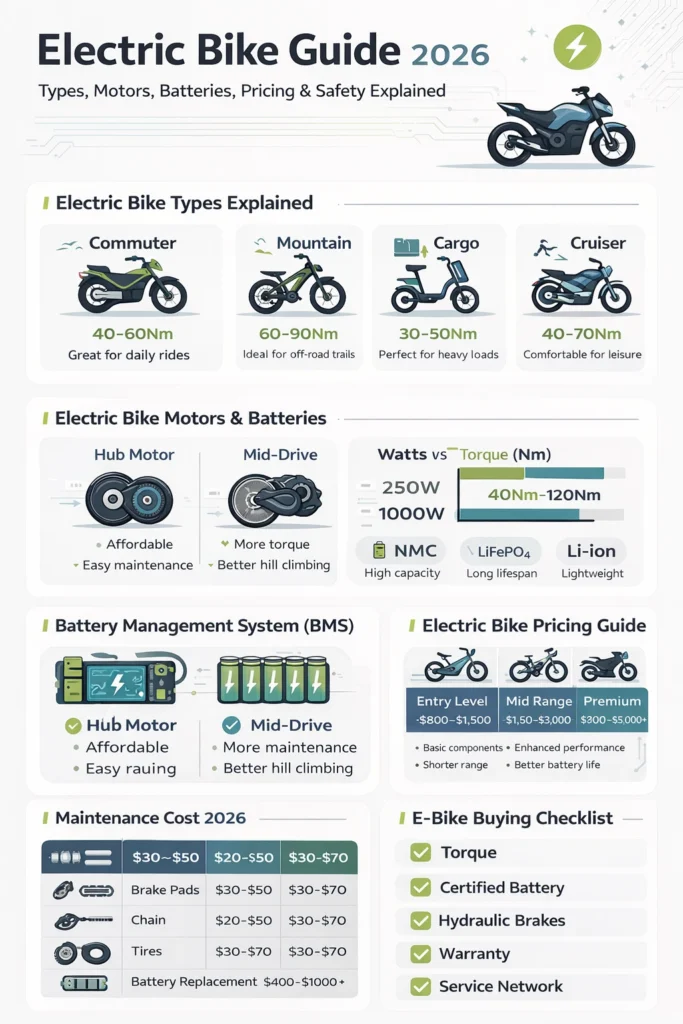
Electric Bike Types Explained
Understanding the types of electric bikes is essential before making any purchase decision.
Different riding environments require different configurations. Let us clearly explore each type.
1. Commuter / City Electric Bikes
Ideal for:
- Daily office travel
- Grocery shopping
- Short-to-medium urban trips
Key Characteristics:
- Upright riding geometry
- Integrated lighting system
- Mudguards and racks
- 250W–500W motor
- 400Wh–600Wh battery
- 25 km/h assistance limit in Europe
These bikes prioritize practicality, efficiency, and convenience.
2. Mountain / Trail Electric Bikes
Designed for:
- Steep gradients
- Gravel roads
- Technical forest tracks
Important Specifications:
- High torque output (70–90Nm)
- Mid-drive motor placement
- Full suspension system
- Hydraulic disc braking system
For mountainous terrain, torque matters more than maximum wattage.
3. Cargo & Utility Electric Bikes
Best suited for:
- Family transport
- Commercial deliveries
- Heavy cargo hauling
Features include:
- Extended reinforced frame
- Powerful motor system
- Large-capacity battery
- Strong braking hardware
European cities are increasingly adopting cargo e-bikes as eco-friendly alternatives to vans.
4. Folding & Travel Electric Bikes
Perfect for:
- Apartment living
- Multi-modal commuting
- Caravan and RV trips
Advantages:
- Space-saving design
- Lightweight construction
- Easy portability
Limitations:
- Smaller wheel diameter
- Reduced stability at higher speeds
5. Cruiser / Comfort Electric Bikes
Built for:
- Rlaxed leisure rides
- Coastal roads
- Comfortable posture
Features:
- Wide cushioned saddle
- Swept-back handlebars
- Low step-through frame
They prioritize ergonomics over aggressive performance.
Electric Bike Type Comparison Table
| Type | Primary Use | Motor Type | Torque Range | Price Range 2026 |
| Commuter | Urban mobility | Hub/Mid | 40–65Nm | $1,200–$2,500 |
| Mountain | Off-road trails | Mid-drive | 70–90Nm | $2,500–$6,000 |
| Cargo | Heavy transport | Hub/Mid | 80–100Nm | $2,000–$5,500 |
| Folding | Compact travel | Hub | 35–55Nm | $900–$2,000 |
| Cruiser | Comfort riding | Hub | 40–60Nm | $1,200–$3,000 |
Electric Bike Motors & Batteries
Now let us explore the heart of every electric bike: the motor and battery.
Hub Motor vs Mid-Drive
Hub Motor System
- Positioned inside the wheel hub
- Lower production cost
- Minimal mechanical complexity
- Reduced climbing efficiency
Suitable for flat metropolitan areas.
Mid-Drive Motor System
- Mounted near the crankset
- Utilizes a bicycle gear system
- Superior torque transfer
- Balanced weight distribution
- Higher acquisition cost
Ideal for hilly environments.
E-Bike Motor Torque Explained
Many riders misunderstand the difference between power and torque.
Watts (W)
Represents electrical power output.
Affects acceleration and top speed.
Newton-Meters (Nm)
Measures rotational force.
Determines climbing capability.
For example:
- 250W with 85Nm = strong uphill performance
- 750W with 45Nm = faster on flat terrain but weaker uphill
Therefore, in realistic riding conditions, torque determines practical strength.
Electric Bike Batteries
Battery technology determines range, durability, and safety.
Battery Types in 2026
| Chemistry | Energy Density | Safety Level | Lifespan |
| NMC Lithium | High | Moderate | 800–1000 cycles |
| LiFePO4 | Medium | Very High | 1500–2000 cycles |
| Standard Lithium-ion | Medium | Good | 700–900 cycles |
Most urban commuter models use NMC batteries due to higher energy density.
Real-World Range Factors
The advertised range often differs from the actual riding distance.
Range depends on:
- Rider body weight
- Pedal assist mode
- Elevation changes
- Wind resistance
- Tire pressure
- Road surface
Expect 20–30% lower distance than promotional claims.
Battery Management Systems
A quality battery management system e-bike configuration:
- Protects against voltage spikes
- Controls thermal fluctuations
- Extends battery lifespan
- Maintains balanced cell charging
Low-cost models sometimes compromise on this vital safety component.
Electric Bike Safety Tips & Regulations 2026
Safety compliance is no longer optional.
Required Certifications
Always verify:
- UL 2849 (USA)
- CE Mark (EU)
- EN 15194 (Europe)
- UKCA certification
Never purchase uncertified electrical systems.
Essential Protective Equipment
- Certified helmet
- Reflective clothing
- Gloves
- Daytime running lights
Safe Charging Practices
- Avoid unattended overnight charging
- Use the original manufacturer’s charger
- Store the battery in a moderate temperature
- Keep away from moisture
These precautions prevent accidents.
Electric Bike Pricing Guide 2026
Understanding pricing tiers helps you plan realistically.
Entry-Level Category
- Basic hub motor
- Mechanical disc brakes
- Smaller battery pack
Ideal for beginners or occasional riders.
Mid-Range Segment
- Hydraulic braking system
- Larger battery (500–750Wh)
- Improved torque sensors
Best value option for most consumers.
Premium Segment
- Advanced mid-drive system
- Carbon fiber frame
- Smart connectivity features
- Extended-range battery packs
Premium bikes focus on performance and technology.
Electric Bike Maintenance Cost 2026
Ownership includes recurring expenses.
Annual Maintenance Breakdown
| Component | Service Interval | Estimated Cost |
| Brake Pads | 1,500–3,000 km | $30–$80 |
| Chain | 2,000–4,000 km | $25–$60 |
| Tires | 3,000–5,000 km | $60–$150 |
| Battery | 3–5 years | $400–$900 |
Average annual maintenance cost ranges between $150 and $350.
DIY vs Professional Maintenance
DIY Tasks
- Clean drivetrain
- Lubricate chain
- Adjust brakes
- Monitor tire pressure
Professional Services
- Motor diagnostics
- Firmware updates
- Electrical inspection
- Battery health testing
Trends in Electric Bike Technology 2026
Major industry movements include:
- Comfort-focused frame geometry
- High-capacity battery packs
- GPS-based anti-theft systems
- Integrated mobile applications
- Smart diagnostic software
- Improved hydraulic braking
Manufacturers are balancing comfort vs performance electric bike engineering.
Case Study – Macfox Electric Bikes
Macfox has gained recognition in urban markets.
Popular variants:
- X1
- X2
Advantages:
- Competitive pricing
- Modern styling
- Strong marketing range claims
Reported disadvantages:
- Heavier chassis
- Lower real-world range
- Limited European service network
For casual riders, Macfox offers affordability.
For daily commuters, mid-drive brands may provide superior efficiency.
Expert E-Bike Buying Checklist 2026
Before purchasing, confirm:
Required torque level
Battery capacity in Wh
Certified electrical system
Hydraulic brake system
Legal speed compliance
Warranty duration
Spare part availability
Local service center access
This checklist prevents poor buying decisions.
Pros & Cons
Pros
- Environmentally sustainable
- Reduced fuel expenses
- Easier hill climbing
- Lower commuting stress
Cons
- Higher initial investment
- Battery replacement cost
- Heavier than standard bicycles
- Regulatory differences globally
FAQs
A: Most commuter e-bikes offer 40–80 km real-world range.
A: For hills and efficiency, yes. For budget city riding, hub motors are fine.
A: UL 2849 in the USA and EN 15194 in Europe are essential.
A: Usually $400–$900, depending on size and brand.
Final Verdict
Absolutely — but purchase wisely.
Focus on:
- Torque specifications
- Certified battery systems
- Realistic range expectations
- Reliable service support
A well-selected electric bike can transform daily transportation. It reduces operating expenses, promotes healthier living, and minimizes environmental impact.
When chosen carefully, an electric bike is not just a product — it is a long-term mobility solution.
