
Introduction:
Picking top-notch Mountain bike tires by 2026 might just change everything about how your ride feels outdoors.
What touches the ground directly is your tire. Because of that position, it shapes how everything else performs
- Grip.
- Speed
- Braking control
- Cornering precision
- Shock absorption
- Stability
- Confidence
Riders often spend big on suspension forks, wheels, drivetrains, or lightweight frames. Still, they tend to overlook how much a good tire choice can improve things.
- Riding situation
- Racing hard on UK trails
- Up steep rocky slopes across southern Europe
- Dusty desert trails in the USA
- Technical mountains in Pakistan
- Dry, loose conditions in Australia
Tires on your mountain bike play a bigger role in how well it rides than many think.
This guide covers everything you need for 2026 MTB tire selection, shaped by real-world experience, clear analysis, and results-driven choices.
What Makes a Mountain Bike Tire the “Best”?
The best mountain bike tires 2026 are not simply the most expensive models. They are the tires that align with:
Your riding discipline
Your terrain conditions
Your local climate
Your riding intensity
Your bike geometry
Let’s break down every critical element.
Tread Pattern – The Core of Traction
The tread pattern refers to the configuration of rubber knobs across the tire surface. This design directly determines traction, braking power, and rolling efficiency.
Aggressive, Tall Knobs
These tires feature deep, prominent lugs with wider spacing.
Best for:
- Mud
- Loose soi
- Rocky descents
- Technical terrain
Advantages:
- Superior braking bite
- Enhanced cornering control
- Improved mud evacuation
- Increased downhill stability
Disadvantages:
- Slower rolling speed
- Higher rolling resistance
- Slightly louder ride
Low-Profile, Tightly Packed Knobs
These tires emphasize speed and efficiency.
Best for:
- Hardpack trails
- Dry XC courses
- Compact dirt surfaces
Advantages:
- Faster rolling
- Lower energy loss
- Efficient climbing
Disadvantages:
- Reduced grip in wet terrain
- Limited braking bite in mud
Mixed or All-Trail Patterns
These hybrid designs blend moderate center knobs with reinforced shoulder blocks.
Best for:
- Mixed terrai
- Every day trail riding
- Riders who want versatility
Tip: Wider spacing between knobs allows mud to shed quickly, enhancing wet-weather performance.
Tire Compound – Rubber Composition Matters
The rubber compound affects:
Traction
Wear rate
Rolling resistance
Heat tolerance
Durability
Compound selection is one of the most overlooked aspects of MTB tire buying.
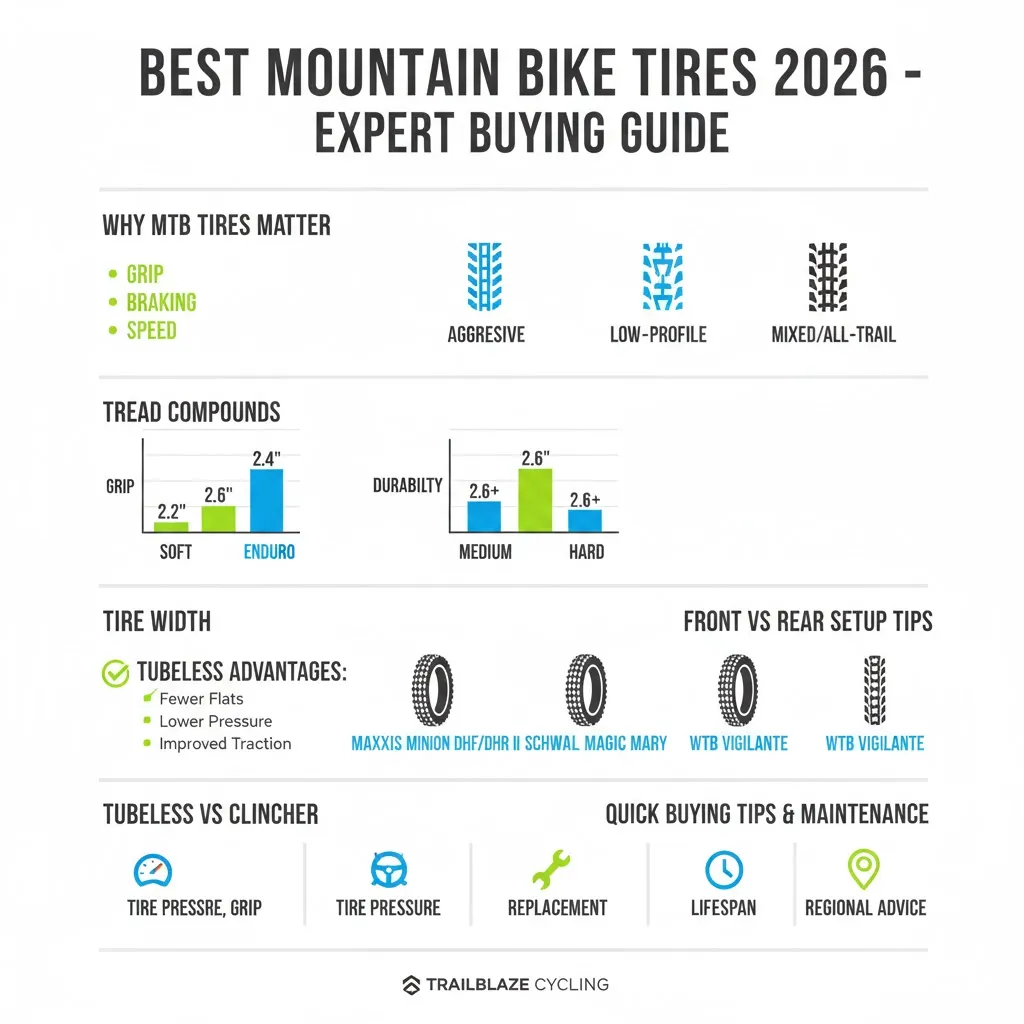
| Compound | Grip | Durability | Best For |
| Soft | Maximum | Wears quickly | Enduro, downhill |
| Medium | Balanced | Moderate | Trail riding |
| Hard | Lower grip | Long-lasting | XC, dry terrain |
Soft compounds conform to terrain irregularities, offering exceptional traction. However, they degrade faster — especially in hot climates like Australia or the Middle East.
Medium compounds deliver a harmonious balance between traction and lifespan.
Hard compounds prioritize longevity and efficiency but sacrifice some adhesion in technical corners.
Tire Width – Finding the Ideal Size
Modern MTB tires typically range from 2.2” to 2.6” or wider.
2.2–2.3”
- Lighweight
- Agile
- Faster acceleration
- Ideal for XC racing
2.3–2.5”
- Most versatile range
- Balanced grip and speed
- Perfect for trail riders
2.5–2.6”+
- Maximum traction
- Greater surface contact
- Enhanced stability
- Ideal for aggressive riding and enduro
Wider tires provide more traction and cushioning. Narrower tires offer reduced rolling resistance and quicker handling.
The “best” width depends entirely on your riding discipline and terrain conditions.
Tubeless vs Clincher – What’s Superior in 2026?
From one end of the globe to the other, tubeless setups now set the standard.
- Benefits of a tubeless setup.
- Lower tire pressure capability
- Better grip on uneven surfaces
- Shorter extensions cut clearance risks
- Self-sealing punctures
- Enhanced ride comfort
- Better shock absorption
- Tubeless systems show up a lot in:
- USA
- Europe
- UK
- Australia
- From Pakistan and across Asia, it’s growing fast.
Most cyclists using high-level gear find that tubeless offers real benefits.
One big thing about clincher tires is that they stay cheap to buy and simple to care for. Still, punctures happen more often here, plus the air inside tends to run stiffer.
“Top Mountain Bike Tires 2026 – Reviews & Picks”
After analyzing industry testing, rider feedback, durability metrics, and real-world trail data, these models stand out.
Best Overall – Maxxis Minion DHF / Minion DHR II
The Minion combination continues to dominate global trail riding.
Why It Excels:
Predictable cornering
Outstanding braking traction
Versatile performance
Multiple casing options
Best For:
Trail riders, alpine terrain, aggressive all-mountain riders.
Pros
Exceptional cornering stability
Durable construction
Reliable in mixed terrain
Cons
Slightly heavier than XC tires
Premium price bracket
Best for Enduro & Mud – Schwalbe Magic Mary / Big Betty
A benchmark for wet and steep terrain performance.
Features:
Deep, open tread spacing
Aggressive braking edges
Excellent mud clearance
Strong casing support
Best For:
Wet forests, muddy European trails, downhill riders.
Pros
Incredible wet grip
Confidence on steep descents
Durable sidewalls
Cons
Faster wear with soft compounds
Slightly slower rolling
Best Trail Tire – WTB Vigilante / Trail Boss
A balanced option for daily trail riders.
Reinforced casing
Strong shoulder grip
Competitive pricing
Best For:
Riders seeking reliability without premium expense.
Pros
Excellent value
Long lifespan
Predictable performance
Cons
Not ultra-fast rolling
Less aggressive than enduro models
Best Fast Rolling XC Tire
Engineered for speed and efficiency.
Features:
Low rolling resistance
Lightweight construction
Consistent cornering control
Best For:
XC racers, dry hardpack trails.
Pros
Efficient climbing
Lightweight feel
Strong pedaling response
Cons
Limited mud traction
Not designed for aggressive enduro
Comparison Table – Best Mountain Bike Tires 2026
| Tire Model | Best For | Grip | Rolling Speed | Durability | Price |
| Maxxis Minion DHF/DHR II | Trail & All-Mountain | High | Medium | High | Premium |
| Schwalbe Magic Mary/Big Betty | Enduro & Mud | Very High | Medium-Low | Medium | Premium |
| WTB Vigilante/Trail Boss | Trail Riding | Balanced | Medium | High | Mid |
| Continental Cross King | XC Racing | Medium | High | Medium | Mid |
How to Choose the Best Mountain Bike Tires (Step-by-Step)
Step 1: Identify Your Riding Style
XC (Cross-Country)
Lightweight
Fast rolling
Narrower profile
Efficiency-focused
Trail
Balanced traction
Moderate width
Versatile tread
Enduro / Downhill
Maximum grip
Reinforced Casing
Aggressive lugs
Match Your Terrain
| Terrain | Recommended Tread |
| Mud | Deep, spaced knobs |
| Hardpack | Low-profile pattern |
| Loose gravel | Strong center & shoulder knobs |
| Mixed | All-trail versatile tread |
Front vs Rear Tire Setup
Front Tire Controls:
Steering precision
Cornering stability
Confidence
Rear Tire Controls:
Acceleration
Braking force
Efficiency
Common Performance Setup:
Aggressive front tire
Faster-rolling rear tire
This configuration enhances speed while maintaining control.
MTB Tire Tread Anatomy Explained
Understanding tire structure improves buying decisions.
Center Knobs
Control rolling efficiency and braking traction.
Shoulder Knobs
Provide cornering grip and lateral stability.
Siping
Tiny slits that improve flexibility and wet grip.
Advantages & Disadvantages of Upgrading MTB Tires
Advantages
Immediate performance enhancement
Increased safety
Personalized ride feel
Better traction
Disadvantages
Premium pricing
Faster wear with soft compounds
Slight speed reduction with aggressive tread
Maintenance & Replacement Guide
When to Replace Tires:
Flattened knobs
Cracked sidewalls
Frequent punctures
Reduced traction
Typical lifespan:
1,000–2,000 miles depending on compound and terrain.
Proper pressure management significantly extends durability.
Regional Buying Advice for Global Riders
UK Riders
Prioritize mud-shedding tread
Choose reinforced casing
USA Riders
Match tire to region
Rocky West → durable casing
Dry Southwest → faster rolling
European Alpine Riders
Aggressive tread
Maximum braking control
Pakistan & Asia
Durable casing
Medium compound for heat
Australia
Harder compounds
Dust-compatible tread
Expert Pro Tips for 2026
Run lower pressure with tubeless
Check rim width compatibility
Experiment with front/rear mixing
Avoid overinflation
Monitor wear regularly
A strategic tire upgrade can make your bike feel completely rejuvenated.
FAQs
A: Aggressive tread options like Magic Mary-style patterns perform best in wet, soft terrain.
A: Most riders prefer 2.3″–2.5″ for balance.
A: Slightly, but modern compounds reduce rolling resistance impact.
A: Not always. Mixed setups often perform better.
A: Mid-range offers excellent value. Premium delivers maximum performance.
Final Expert
Alright, so here’s the deal with the best mountain bike tires for 2026. It’s not about picking the most expensive ones. Nope. The right tires depend on a few things that really matter to you.
First, think about your riding style. Are you into aggressive downhill runs or long cross-country rides? Then, consider the terrain you usually hit—rocky, muddy, or smooth trails? Climate matters too. Wet or dry conditions change what you need. And don’t forget your skill level. Beginners and pros want different things.
If you want max grip, go for aggressive enduro tires. They dig into the dirt and keep you steady. If speed and pedaling efficiency are your priorities, XC tires are the way to go. They’re lighter and roll faster. For a mix of both, trail tires offer a good balance.
Upgrading your tires with this in mind can seriously improve how you ride. You’ll feel safer, ride better, and gain more confidence on the trails. So, don’t just grab the priciest set—pick what fits your Ride.
