
Introduction
Selecting the best kids’ Bikes in 2026 is far more than purchasing a recreational product. A child’s bicycle is a developmental tool that enhances equilibrium, coordination, motor skills, spatial awareness, and personal independence.
Across the USA, UK, Germany, France, Canada, and Asia-Pacific regions, modern parents are increasingly informed. They now understand that:
- Bicycle weight influences control
- Wheel diameter affects stability
- Proper fit determines safety
- Frame geometry impacts posture
- Brake systems influence stopping power
- Safety always outweighs visual design
A brightly decorated cartoon-themed bicycle may look attractive, but aesthetics never compensate for incorrect sizing or excessive mass. A properly proportioned, lightweight, ergonomically designed bike consistently delivers superior performance and safety.
Why Choosing the Right Kids’ Bike Truly Matters
Many caregivers unintentionally purchase bicycles that are:
- Overweight
- Oversized
- Poorly balanced
- Difficult to maneuver
- Built with low-grade components
Children lack the muscle strength, grip power, and endurance of adults. When a bike is too heavy or too large, it becomes intimidating rather than empowering.
Golden Rule for 2026
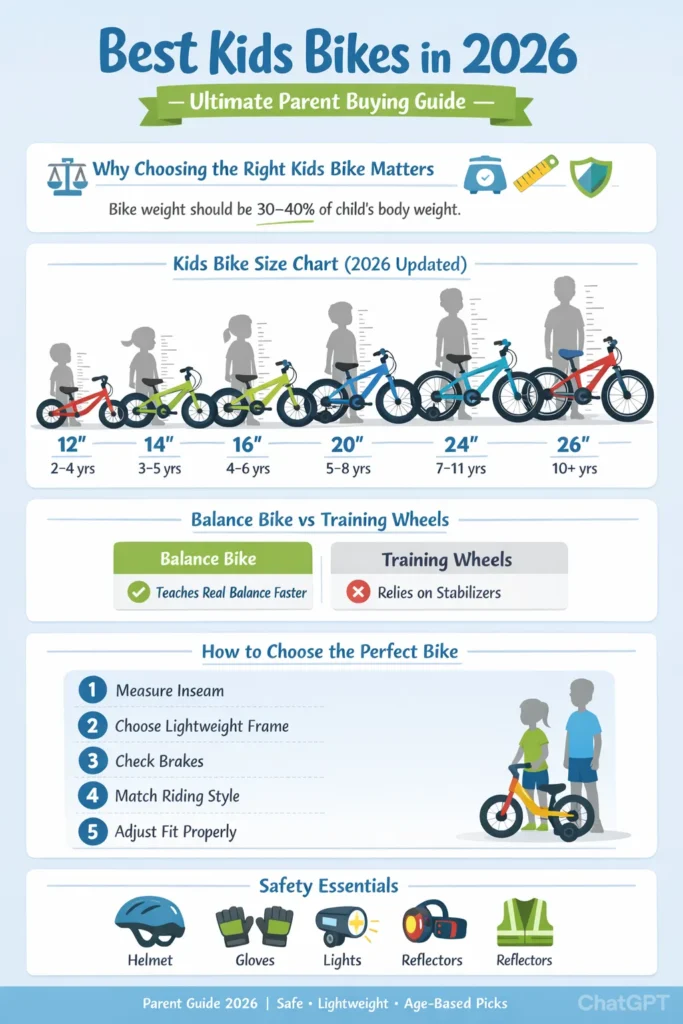
A child’s bicycle should weigh no more than 30–40% of their body weight.
If your child weighs 20 kg, the ideal bicycle weight should remain under 8 kg.
This ratio significantly improves handling, responsiveness, and confidence.
Why Lightweight Kids’ Bikes Are Superior
A correctly fitted, lightweight children’s bike:
- Enhances balance acquisition
- Encourages quicker skill development
- Reduces fall severity
- Minimizes fatigue
- Improves steering precision
- Boosts enjoyment and motivation
- Promotes daily riding habits
Conversely, a bulky, steel-framed bicycle can create discouragement. Frustration often leads to abandonment of cycling altogether.
Modern pediatric cycling research confirms that lighter frames improve early riding success rates.
Kids Bike Wheel Size & Age Guide
Children’s bicycles are categorized by wheel diameter, not frame measurement, like adult bikes.
| Wheel Size | Age Range | Height (cm) | Inseam (cm) | Ideal Usage |
| 12” | 2–4 yrs | 85–100 | 35–42 | Balance / first pedal |
| 14” | 3–5 yrs | 95–110 | 40–50 | Small beginners |
| 16” | 4–6 yrs | 105–115 | 45–55 | First real pedal bike |
| 20” | 5–8 yrs | 114–130 | 55–63 | Daily riding |
| 24” | 7–11 yrs | 125–145 | 60–70 | Trails & longer rides |
| 26” | 10+ yrs | 140+ | 65+ | Teen transition |
Pro Tip: Measure Inseam — Not Just Age
Chronological age varies significantly between children. Two five-year-olds may differ in height by 10–15 cm.
How to Measure Inseam Properly:
- Let your child stand barefoot against a flat wall
- Place a hardcover book between their legs
- Measure from the floor to the top edge of the book
- Record this number
This measurement determines the correct minimum standover clearance.
Types of Kids’ Bikes Explained
Children’s bicycles are not one-size-fits-all. Each category serves a developmental purpose.
Balance Bikes
A balance bike eliminates pedals and drivetrain components. Children propel themselves using their feet while gradually learning equilibrium.
Why Experts Strongly Recommend Balance Bikes Over Training Wheels
- Develops authentic balance skills
- Eliminates dependency on stabilizers
- Accelerates pedal transition
- Encourages natural riding posture
- Enhances proprioception
- Builds early confidence
Most children who begin with balance bikes bypass training wheels entirely.
Ideal Age:
18 months – 4 years
Essential Features to Prioritize:
- Lightweight aluminum chassis
- Adjustable seat post
- Ergonomic handlebar grips
- Footrest Platform
- Pneumatic or foam tires
A 3-year-old using a 3 kg balance bike can learn gliding within weeks. The same child on a 7 kg pedal bicycle with stabilizers may struggle for months.
Pedal Bikes
After balance mastery, pedal integration becomes intuitive.
14” & 16” Bikes – Beginner Stage
Recommended for ages 4–6.
Features commonly include:
- Single-speed drivetrain
- Coaster brake (back-pedal stop)
- Optional detachable stabilizers
- Narrow handlebars
- Smaller crank arms
These models emphasize simplicity and control.
Bikes – Growth Phase
Ages 5–8.
Enhancements include:
- Hand-operated brakes
- Multi-speed gear systems (6–8 gears)
- Improved tire compounds
- Lighter alloy frames
- Adjustable brake reach
This is often the most versatile and longest-used size.
24” Bikes – Youth Performance Tier
Ages 7–11.
Typical features:
- 7–21 gear options
- Front suspension (quality matters)
- Hydraulic or V-brakes
- Trail-capable geometry
Avoid low-cost heavy suspension systems. They add unnecessary mass and reduce pedaling efficiency.
Kids Mountain Bikes
For families who enjoy trail riding, countryside cycling, or forest paths, youth mountain bikes are ideal.
Popular in:
- Germany
- Austria
- Switzerland
- UK rural regions
- US trail networks
Features include:
- Knobby traction tires
- Reinforced alloy frame
- Multi-gear drivetrain
- Suspension forks (mid to high quality)
Investing in higher-grade components improves safety and durability.
Balance Bike vs Training Wheels
| Feature | Balance Bike | Training Wheels |
| Teaches Balance | Yes | No |
| Transition to Pedals | Smooth | Often difficult |
| Weight | Lighter | Heavier |
| Learning Speed | Faster | Slower |
| Confidence Building | High | Moderate |
Final Professional Verdict
Modern cycling instructors overwhelmingly recommend balance bikes for foundational learning.
Best Kids Bike Brands in 2026
🇦🇹 Woom Bikes
Ultra-lightweight frames
Child-specific geometry
Premium braking systems
Higher price, exceptional quality
🇺🇸 Prevelo
Adjustable ergonomics
Light alloy construction
Strong safety testing
🇩🇪 Cube
European engineering
Excellent youth MTB range
Reliable performance
🇬🇧 Frog Bikes
Child-centered design
Lightweight tubing
Strong resale market
🇺🇸 Priority Bicycles
Low-maintenance belt drive
Rust-resistant components
Urban-friendly
How to Choose the Perfect Kids’ Bike
Measure Height & Inseam
Avoid guessing by age category.
Prioritize Weight
Choose aluminum or a lightweight alloy.
Evaluate the Brake System
Under 5 years:
Coaster brake acceptable
Over 5 years:
Introduce hand brakes with adjustable levers
Match Riding Purpose
| Riding Style | Recommended Bike |
| Learning | Balance bike |
| Pavement / School | 16”–20” hybrid |
| Trails | 20”–24” MTB |
| Long family rides | Lightweight geared bike |
Check Adjustability
- Saddle Range
- Handlebar reach
- Brake lever span
- Replaceable components
Safety Essentials Every Parent Must Know
Safety is mandatory, not optional.
Must-Have Equipment:
- CPSC / CE certified helmet
- Reflective element
- LED front & rear lights
- Protective gloves
- Knee and elbow guards
Pre-Ride Safety Inspection Checklist
- Test brake responsiveness
- Check tire pressure
- Ensure the seat clamp is tight
- Inspect chain lubrication
- Tighten bolts
Supervise beginner riders at all times.
Advantages & Disadvantages of Kids’ Bikes
Benefits
- Enhances coordination
- Encourages outdoor engagement
- Builds independence
- Improves cardiovascular health
- Reduces screen exposure
Drawbacks
- Frequent size upgrades
- Premium models expensive
- Cheap models are heavy and inefficient
Pricing Guide
| Bike Type | Budget | Mid-Range | Premium |
| Balance Bike | €60–€120 | €120–€200 | €200–€300 |
| 16” Bike | €120–€250 | €250–€400 | €400–€600 |
| 20” Bike | €200–€350 | €350–€600 | €600–€900 |
| 24” MTB | €300–€600 | €600–€900 | €900–€1500 |
Premium bicycles offer lighter construction, superior components, and higher safety standards.
Maintenance & Longevity Advice
Routine maintenance extends lifespan.
Monthly:
- Lubricate drivetrain
- Inspect brake pads
- Check tire inflation
- Examine cables
After Wet or Muddy Rides:
- Wash frame
- Dry chain
- Re-lubricate
Well-maintained quality bikes retain strong resale value.
Who Should Buy What?
Toddlers (2–4 Years)
Best option: Lightweight balance bike
Beginners (4–6 Years)
Best option: 14”–16” pedal bike
Growing Riders (6–10 Years)
Best option: 20” geared model
Trail Enthusiasts
Best option: 20”–24” youth MTB
FAQs
A: Most children start with balance bikes between 18 months and 3 years.
A: Lighter bikes improve control, safety, and confidence.
A: Oversized bikes are unsafe and harder to ride.
A: Usually every 2–3 years.
A: Aluminum is lighter and rust-resistant.
Final Expert
The best kids’ bikes in 2026 emphasize:
- Accurate Sizing
- Lightweight engineering
- Adjustable ergonomics
- Reliable braking systems
- Durable materials
Avoid prioritizing flashy graphics over functionality. Fit, weight, geometry, and braking performance determine safety and riding enjoyment.
For most families:
- Balance bikes provide the ideal introduction
- 16”–20” lightweight bikes deliver the best value
- 24” MTBs suit adventurous young cyclists
When carefully selected, a children’s bicycle becomes more than transportation — it becomes the foundation for lifelong cycling confidence, healthy habits, outdoor exploration, and personal freedom.
