
Introduction
Best balance bike for 2 year old your child to ride a bike is a precious memory and an important milestone in your child’s development and your family’s history. You’ll remember the thrill and excitement as your child rides away from you in the beginning with a simple push. You will cherish the experience for years.
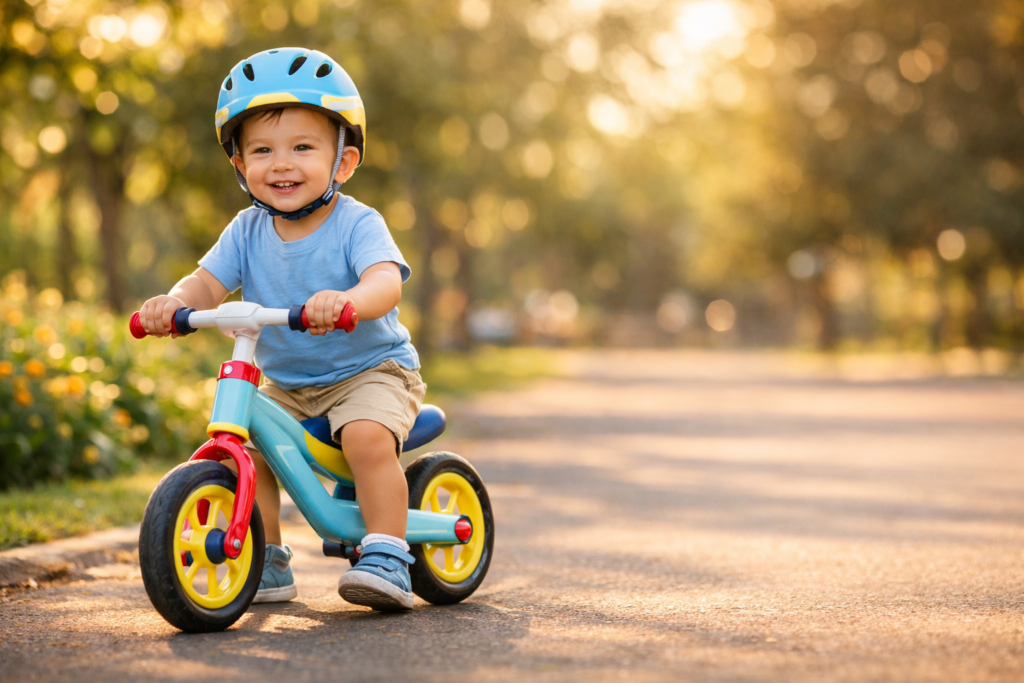
Most parents do not realize how simple beginning to ride a bike. It starts with selecting the proper type of bike. For years, starting toddlers on bikes with training wheels was the standard. Now the guidelines suggest starting toddlers on balance bikes. Balance bikes are designed specifically for toddlers and young children. They are two-wheeled pedal-free bikes. Instead of pedaling, toddlers move their legs like a runner from a seated position. This helps them learn to balance on the bike.
Teaches Balance First
Traditional bikes with training wheels emphasize pedaling before balancing.
Because the extra wheels stabilize the bike artificially, children never properly learn how to balance on two wheels.
When the training wheels are eventually removed, many children feel unstable, frightened, or discouraged because they must suddenly learn a completely new skill.
Balance bikes reverse this learning order.
Instead of focusing on pedaling, toddlers naturally learn how to balance, steer, and control movement from the very beginning.
This gradual learning method significantly reduces frustration and makes riding feel intuitive.
Many children who start with balance bikes are able to skip training wheels entirely and transition directly to a pedal bike.
2. Improves Coordination and Motor Skills
Balance bikes help toddlers strengthen several important physical development skills simultaneously.
As they ride, children learn to coordinate:
- Leg movements for pushing and momentum
- Arm movements for steering and control
- Core muscles for maintaining stability
- Body posture for balance and direction
These activities improve gross motor skills, spatial awareness, and coordination — essential developmental abilities during early childhood.
Because toddlers actively control the bike themselves, they gain stronger physical awareness and movement control compared to passive riding methods.
3. Faster Transition to Pedal Bikes
One of the biggest advantages of balance bikes is how quickly children can transition to pedal bicycles later.
Parents are often surprised to see their children ride a pedal bike within minutes or hours of trying it.
This rapid progress occurs because children who have used balance bikes already understand:
- How to maintain balance
- How to steer and navigate turns
- How to control speed
- How to maintain body stability
The only new skill they must learn is pedaling.
Because balance is already mastered, the transition feels natural and smooth.
4. Builds Confidence in Toddlers
Confidence plays an essential role in the learning process.
Toddlers who feel safe and in control are more likely to experiment and improve their skills.
Balance bikes empower children because they allow them to control their speed with their feet.
If they feel unsure or unstable, they simply place their feet on the ground and stop instantly.
This sense of control greatly reduces fear and anxiety.
As a result, toddlers often become more confident riders much faster.
Quick Comparison Table – Best Balance Bikes for 2-Year-Olds
| Bike Model | Weight | Tire Type | Frame Material | Best For |
| Strider 12 Sport | 6.7 lbs | Foam | Steel | Best Overall |
| Woom 1 | 6.6 lbs | Air | Aluminum | Premium Choice |
| KRIDDO Toddler Bike | 7.5 lbs | Foam | Steel | Budget Option |
| Chillafish Charlie | 5.5 lbs | Foam | Aluminum | Lightweight Budget |
| Hornit Airo | 6 lbs | Air | Magnesium | Ultra-Light Design |
| Banana Bike LT | 6.6 lbs | Foam | Aluminum | Ergonomic Design |
| Kinderkraft Runner | 7.7 lbs | Air | Wood | Eco-Friendly |
Top 7 Best Balance Bikes for 2-Year-Olds
Below are some of the best balance bikes for toddlers in 2026, evaluated based on weight, safety, durability, build quality, and parent feedback.
1. Strider 12 Sport Balance Bike
Best Overall Balance Bike
The Strider 12 Sport Balance Bike is widely recognized as one of the most popular toddler balance bikes worldwide.
It is frequently recommended by cycling instructors, parenting experts, and pediatric specialists because of its durability, lightweight design, and beginner-friendly geometry.
Key Features
- Weight: 6.7 lbs
- Adjustable seat height
- Maintenance-free foam tires
- Durable steel frame
- Built-in footrest for gliding
Why Parents Love It
This bike is designed to grow with children from 18 months up to approximately 5 years old, making it an excellent long-term investment for families.
Pros
- Extremely lightweight frame
- Highly durable construction
- Easy assembly process
- Wide range of accessories available
Cons
- Foam tires offer less grip on rough terrain
2. Woom 1 Balance Bike
Best Premium Balance Bike
The Woom 1 Balance Bike is widely regarded as one of the highest-quality toddler bikes available today.
This bike is engineered by a company that specializes exclusively in children’s bicycles, ensuring every detail is optimized for small riders.
Key Features
- Weight: 6.6 lbs
- Air-filled tires
- Rear hand brake
- Steering limiter
- Lightweight aluminum frame
Why It Stands Out
The rear hand brake introduces toddlers to real braking mechanics, helping them develop safe riding habits early.
Pros
- Smooth riding experience
- Premium craftsmanship
- Excellent balance geometry
Cons
- Higher price compared to basic models
3. KRIDDO Toddler Balance Bike
Best Budget Balance Bike
The KRIDDO Toddler Balance Bike offers a great entry-level solution for parents seeking affordability without sacrificing safety.
Key Features
- Carbon steel frame
- Adjustable seat height
- Wide tires for stability
- Customizable number plate
Pros
- Affordable price
- Durable frame
- Beginner-friendly design
Cons
- Slightly heavier than premium models
4. Chillafish Charlie Balance Bike
Best Lightweight Budget Option
The Chillafish Charlie Balance Bike is famous for its extremely lightweight structure, making it ideal for small toddlers.
Key Features
- Weight: 5.5 lbs
- Adjustable saddle
- Built-in carry handle
- Puncture-proof tires
Pros
- One of the lightest toddler bikes
- Budget friendly
- Minimal maintenance required
Cons
- Fewer premium features
5. Hornit Airo Balance Bike
Best Ultra-Light Bike
The Hornit Airo Balance Bike uses a magnesium alloy frame, making it exceptionally lightweight.
Key Features
- Weight: about 6 lbs
- Air-filled tires
- Magnesium frame
- Adjustable saddle
Pros
- Ultra-light construction
- Smooth riding performance
- Stylish contemporary design
Cons
- Slightly more expensive
6. Banana Bike LT Balance Bike
Best Ergonomic Design
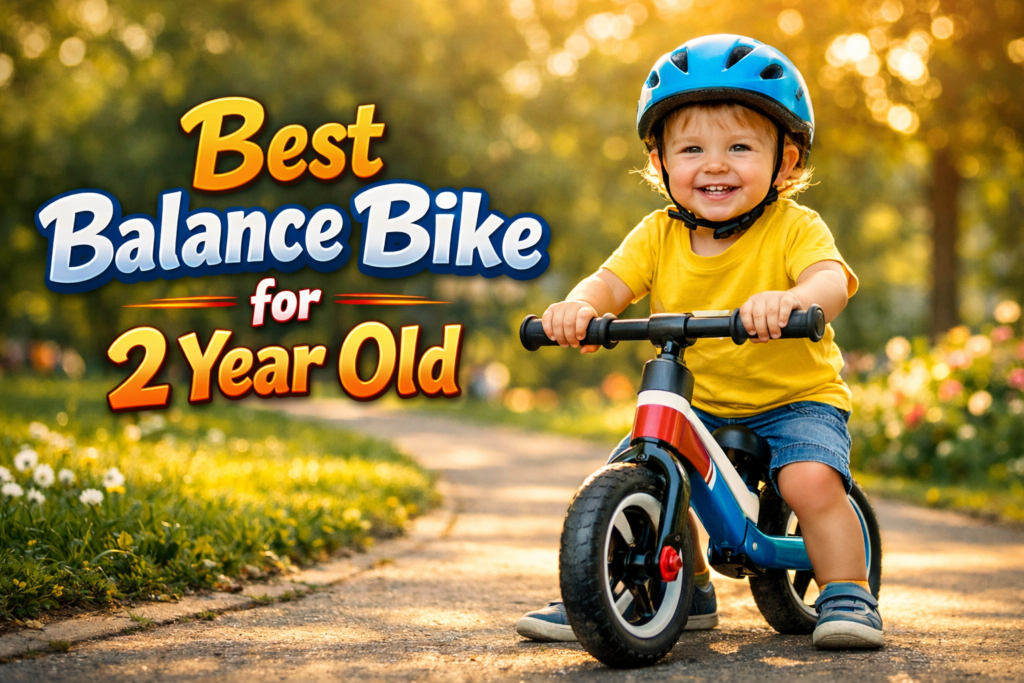
The Banana Bike LT Balance Bike focuses strongly on comfort and rider ergonomics.
Features
- Lightweight aluminum frame
- Adjustable handlebars
- Puncture-proof tires
Pros
- Comfortable riding position
- Strong build quality
- Excellent for beginners
Cons
- Limited regional availability
7. Kinderkraft Runner Balance Bike
Best Eco-Friendly Bike
The Kinderkraft Runner Balance Bike stands out due to its unique wooden frame.
Pros
- Stylish natural wood design
- Air tires for smoother rides
- Good stability
Cons
- Slightly heavier than aluminum bikes
How to Choose the Best Balance Bike for a 2-Year-Old
Buying a toddler bike requires more consideration than simply choosing an attractive design or brand.
Parents should carefully evaluate several key factors.
1. Bike Weight
A toddler bike should ideally weigh less than 30–40% of your child’s body weight.
Lighter bikes are easier for toddlers to maneuver, steer, and control.
If a bike is too heavy, young children may struggle with balance and steering.
2. Seat Height
Seat height is one of the most crucial factors.
Your child should be able to sit comfortably while placing both feet flat on the ground.
Recommended Seat Height
| Age | Seat Height |
| 18–24 months | 11–13 inches |
| 2–3 years | 12–15 inches |
3. Tire Type
Balance bikes typically use two types of tires.
Foam Tires
- Maintenance-free
- Lightweight
- Ideal for sidewalks and indoor use
Air Tires
- Better traction
- Smoother ride quality
- Ideal for parks and outdoor trails
4. Frame Material
Different materials affect durability and weight.
| Material | Benefits |
| Aluminum | Lightweight |
| Steel | Highly durable |
| Magnesium | Ultra-light |
| Wood | Eco-friendly |
Balance Bike vs Training Wheels
Many parents still wonder whether to choose training wheels or a balance bike.
Here is a quick comparison.
| Feature | Balance Bike | Training Wheels |
| Teaches balance | Yes | No |
| Learning speed | Fast | Slow |
| Confidence building | High | Medium |
| Transition to pedal bike | Easy | Harder |
Winner: Balance Bikes
Most experts agree that balance bikes help children develop cycling skills faster and more naturally.
How to Teach a 2-Year-Old to Ride a Balance Bike
Teaching a toddler to ride can be simple and enjoyable with the right approach.
Follow these steps.
Step 1 – Adjust the Seat Height
Ensure the saddle allows your child to place both feet flat on the ground.
This creates a sense of safety and stability.
Step 2 – Let Them Walk First
Encourage toddlers to walk while seated on the bike.
This builds familiarity and comfort.
Step 3 – Encourage Gliding
After practicing for a while, children naturally begin lifting their feet and gliding.
This indicates they are developing balance.
Step 4 – Practice Steering
Use a safe open space such as a park or playground.
Allow them to practice turning slowly.
Safety Tips for Toddler Riders
Safety should always remain a top priority.
Essential safety rules include:
- Always wear a helmet
- Ride on flat surfaces
- Avoid busy roads
- Supervise toddlers at all times
- Use closed-toe shoes
Safety guidance from organizations like the American Academy of Pediatrics and the Consumer Product Safety Commission also recommends proper protective gear and adult supervision.
Pros & Cons of Balance Bikes
Pros
- Teaches balance naturally
- Faster learning process
- Improves coordination
- Safer than training wheels
- Builds confidence
Cons
- No pedals initially
- Requires supervision
- Not ideal for very rough terrain
Who Should Buy a Balance Bike?
Balance bikes are perfect for:
- Toddlers aged 18 months to 4 years
- Parents teaching first cycling skills
- Children transitioning to pedal bikes
- Families who enjoy outdoor activities
FAQs
A: Most toddlers can start using a balance bike between 18 months and 2 years old.
A: Most children this age use a 12-inch balance bike.
A: Balance bikes teach balance first, which makes riding easier later.
A: Younger toddlers stop using their feet, but older children benefit from learning hand brakes.
A: Most children ride balance bikes for 1–3 years before moving to pedal bikes.
Final Verdict
Finding the right balance bike for a child who is 2 years old will determine how quickly your child will learn how to ride. Strider 12 Sport Balance Bike is ideal for many families because of its good price, adjustability, and long-lasting quality.
Woom 1 Balance Bike is for parents who want a more premium experience, thanks to its high-quality construction and smooth ride.
Selecting a bike for toddlers has main features that are the most significant.
- Weighing little
- Great safety features
- Sizing is adjustable
- Comfort to use
With nice balance bikes and encouragement, toddlers will start riding a lot quicker than parents expect.
