
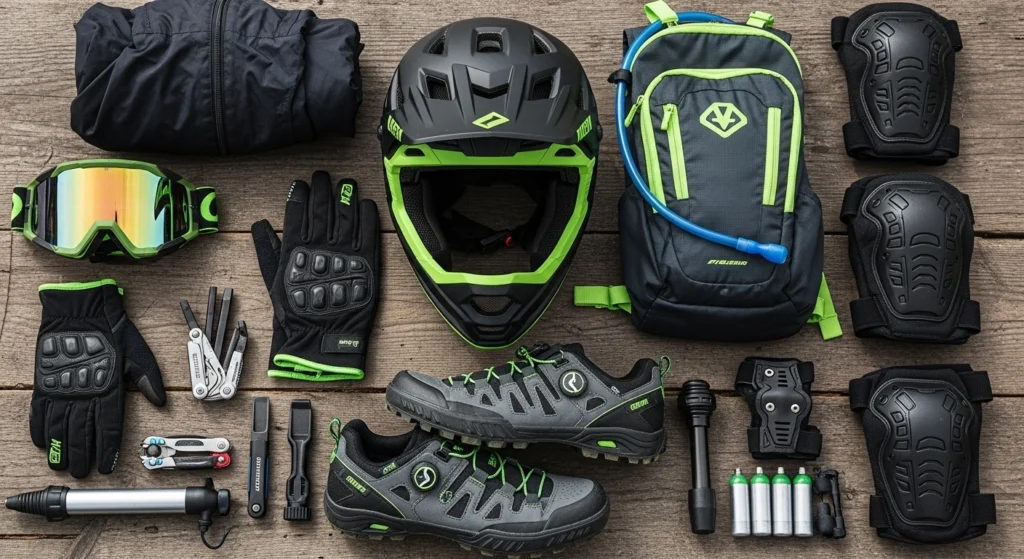
Mountain Bike Gear Guide
Mountain bike gear is among the most exhilarating, immersive, and physically engaging outdoor activities available today. It blends adventure, endurance, and technical skill into one dynamic experience. However, without appropriate equipment, even a short ride can become uncomfortable, inefficient, or potentially hazardous.
Whether you’re navigating dense forest trails in Europe, descending rugged mountain paths in Asia, or cruising through technical singletracks in North America, your gear significantly influences your safety, efficiency, and overall riding satisfaction.
This in-depth mountain bike gear guide for 2026 has been carefully structured to assist riders across all experience levels—from novices to seasoned professionals. Instead of presenting a generic checklist, this guide categorizes equipment into essential, performance-enhancing, and advanced segments. It also includes practical insights, strategic buying recommendations, and commonly overlooked mistakes.
By the conclusion of this article, you will possess a comprehensive understanding of the equipment you truly need, how to select suitable gear, and how to progressively build a reliable and efficient setup.
What Mountain Bike Gear Do You Actually Need?
Not all equipment serves the same purpose. Some items are absolutely indispensable, while others are designed to enhance comfort, optimize performance, or provide additional convenience.
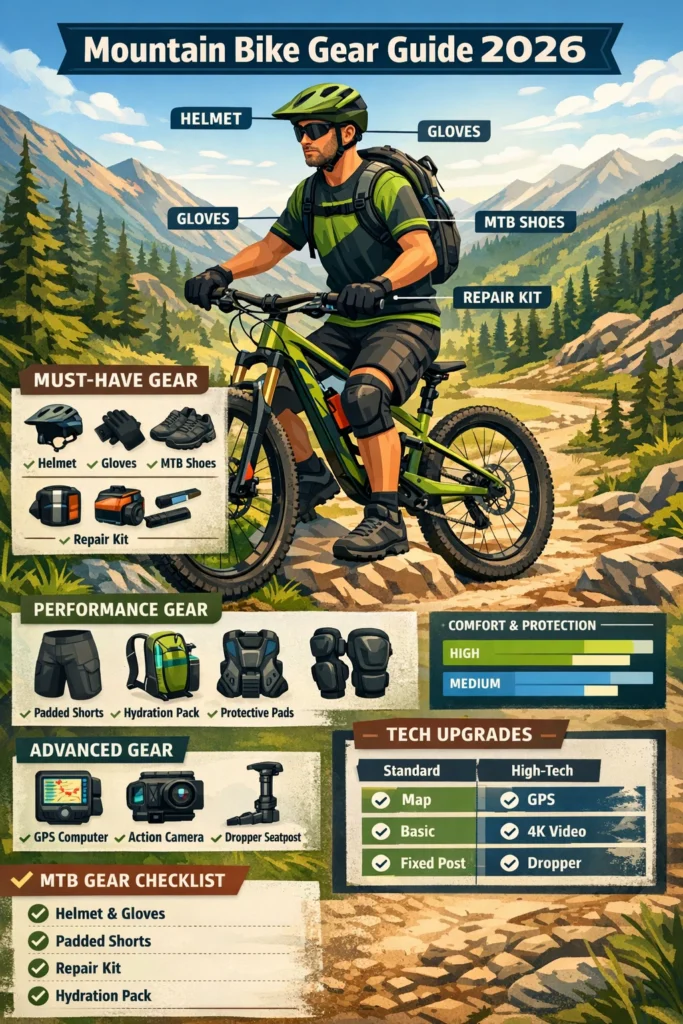
Gear Categories Overview
| Category | Gear Type | Importance Level |
| Must-Have | Helmet, Gloves, Shoes, Repair Kit | Critical |
| Performance | Padded Shorts, Hydration Pack, Pads | Recommended |
| Advanced | GPS Devices, Action Cameras, Upgrades | Optional |
Must-Have Gear (Non-Negotiable)
These items are fundamental and should never be omitted:
- Helmet
- Gloves
- Proper MTB shoes
- Basic repair kit
These components are not optional—they are essential for safety, control, and preparedness.
Performance Gear (Recommended)
These elements significantly enhance your riding experience:
- Padded shorts
- Hydration systems
- Protective pads
They improve endurance, reduce fatigue, and increase overall comfort.
Advanced Gear (Optional)
These are best suited for experienced riders:
- GPS cycling computers
- Action cameras
- Dropper seatposts
They are not mandatory, but provide technological advantages and improved ride efficiency.
Essential Mountain Bike Gear (Beginner to Pro)
Helmet (The Most Important Gear)
A helmet is the most critical safety component in mountain biking. It protects your head from impact and can prevent severe injuries.
Types of MTB Helmets
- XC Helmets: Lightweight, breathable, and ideal for long-distance rides
- Trail Helmets: Balanced in terms of protection, ventilation, and comfort
- Full-Face Helmets: Offer maximum coverage and are best for downhill and enduro riding
What to Look For
- Certified safety standards (CPSC, CE, MIPS)
- Secure yet comfortable fit
- Efficient airflow and ventilation
Pro Insight: Many experienced cyclists prioritize upgrading their helmets before investing in other bike components.
Gloves
Gloves are often underestimated but play a crucial role in control and protection.
Benefits
- Enhanced grip on handlebars
- Protection against abrasions and impacts
- Reduction in vibrations and hand fatigue
Types
- Full-finger gloves (ideal for most terrains)
- Half-finger gloves (suitable for lighter conditions)
MTB Shoes
Footwear directly affects power transmission, balance, and bike control.
Types of MTB Shoes
| Type | Best For | Key Feature |
| Flat Shoes | Beginners | Easy foot repositioning |
| Clipless Shoes | Advanced Riders | Efficient power transfer |
Tip: Beginners should start with flat pedals and gradually transition to clipless systems.
Padded Shorts & Jerseys
Comfort is a major factor in long rides. Proper clothing enhances endurance and prevents irritation.
Benefits
- Reduces saddle discomfort
- Improves ventilation and moisture management
- Minimizes skin irritation and chafing
Material Features
- Breathable textiles
- Stretchable fabrics
- Moisture-wicking technology
Repair Kit (Critical for Every Ride)
Mechanical failures are inevitable, and preparation is key.
Essential Tools Checklist
- Multi-tool
- Spare inner tube
- Tire levers
- Mini pump or CO2 inflator
- Chain lubricant
Real-World Insight: A flat tire is the most frequent issue riders encounter. Without tools, even a minor problem can end your journey.
Mountain Bike Accessories You Shouldn’t Ignore
Accessories often determine how convenient and enjoyable your ride will be.
Must-Have Accessories
- Hydration packs or water bottles
- Front and rear bike lights
- Saddle bags
- Phone mounts
- Bike locks
Accessory Comparison Table
| Accessory | Benefit | Ideal Use Case |
| Hydration Pack | Hands-free water access | Long-distance rides |
| Bike Lights | Improved visibility | Night or low-light rides |
| Saddle Bag | Storage efficiency | Carrying tools |
| Phone Mount | Navigation assistance | Trail exploration |
Gear Based on Riding Style
Different riding disciplines require different configurations.
Trail Riding Gear
Recommended Setup
- Lightweight helmet
- Flat shoes
- Minimal protective gear
- Hydration pack
Focus on versatility, adaptability, and comfort.
Enduro / Downhill Gear
Heavy Protection Required
- Full-face helmet
- Knee and elbow guards
- Body armor
- High-grip footwear
Reality: Downhill riding carries higher risk levels, making protective gear indispensable.
Cross-Country (XC) Gear
Speed-Oriented Setup
- Lightweight helmet
- Clipless pedals
- Minimal gear weight
- Aerodynamic apparel
How to Choose the Right Mountain Bike Gear
Match Gear to Terrain
- Rocky terrain → more protection
- Smooth trails → lighter equipment
Don’t Overspend Early
Many beginners invest excessively at the beginning.
Start with mid-range gear and upgrade progressively.
Focus on Fit First
Improperly fitting equipment can:
- Decrease efficiency
- Cause discomfort
- Increase injury risk
Balance Price vs Quality
| Factor | Budget Gear | Premium Gear |
| Durability | Moderate | High |
| Comfort | Basic | Advanced |
| Weight | Heavier | Lightweight |
| Performance | Standard | Superior |
Tip: Allocate a larger portion of your budget to helmets and shoes.
Complete Mountain Bike Gear Checklist
Safety Gear
- Helmet
- Gloves
- Knee guards
- Elbow guards
Clothing
- Jersey
- Padded shorts
- MTB shoes
Tools
- Pump
- Multi-tool
- Spare tube
- Tire levers
Extras
- Water or hydration system
- Snacks
- Navigation device
- Mobile phone
How to Prepare for a Mountain Bike Ride
Preparation Process
| Step | Action | Purpose |
| 1 | Inspect bike condition | Ensure safety |
| 2 | Wear protective gear | Prevent injuries |
| 3 | Pack tools & hydration | Emergency readiness |
| 4 | Plan route | Navigation clarity |
| 5 | Test brakes & tires | Performance assurance |
Pros & Cons of Investing in MTB Gear
Advantages
- Enhanced safety
- Improved performance
- Greater comfort
- Reduced fatigue
- Increased confidence
Disadvantages
- Initial investment can be costly
- Too much equipment can feel overwhelming
- Requires maintenance and upkeep
Who Should Buy What Gear?
Beginner Riders
- Focus on essential gear
- Avoid unnecessary upgrades
Intermediate Riders
- Add performance-enhancing equipment
- Upgrade footwear and clothing
Advanced Riders
- Invest in premium-quality gear
- Customize setup based on riding discipline
FAQs
A: You need a helmet, gloves, proper shoes, and a basic repair kit.
A: Not for beginners. Start mid-range and upgrade later.
A: You can, but MTB-specific shoes provide better grip and control.
A: A simple flat tire can end your ride without one.
A: The helmet—always prioritize safety.
Final Expert
Selecting the right Mountain bike gear is not about acquiring everything immediately—it’s about making informed, strategic decisions based on your riding style, terrain, and skill level.
Begin with essential items such as a helmet, gloves, and a repair kit. As your experience grows, gradually invest in performance-enhancing and advanced equipment that improves efficiency and comfort.
Remember:
The most skilled riders are not defined by expensive gear but by their ability to use their equipment effectively.
By following this comprehensive guide, you will ride with greater safety, confidence, and enjoyment—no matter where your trail takes you.
