
Introduction
Mountain bike helmet, a trail on two wheels, brings raw energy as few things can. Through forests, across rough country tracks, along jagged edges of cliffs, dropping fast – each turn tests balance and nerve. Speed mixes with breathless moments when terrain turns sharp. Pushing limits feels natural here – even though danger never stays far behind.
Rough paths out in the wild never play by clear rules. Around every turn, riders face surprise hurdles, ground that moves under pressure, yet tricky structures needing exact steering. Balance slips now and then, despite skill – gravel gives way beneath tires, jumps get miscalculated more than expected.
- How mountain bike helmets function
- Different categories of MTB helmets
- Advanced helmet safety technologies
- How to choose the best MTB helmet
- Top mountain biking head protection seen in 2026
- Helmet sizing, maintenance, and safety tips
Why Every Mountain Biker Needs a Helmet
Bumpy trails swap out pavement for roots, rocks, and surprises. While one tires on highways, the other dances through mud, drops, and sudden turns.
- Common trail hazards include:
- Loose gravel and sand
- Exposed rocks and boulders
- Tree roots crossing the trail
- Steep descents and switchbacks
- Technical drops and jumps
Through mud that clings, rivers to step across instead of around, feet sliding on wet ground without warni
1. Impact Energy Absorption
During a collision or fall, the helmet’s internal foam liner compresses. This dissipates and distributes kinetic energy, significantly reducing the force transferred to the rider’s skull.
2. Skull and Surface Protection
The helmet’s rigid outer shell functions as protective armor for the head.
It shields riders from:
- Rocks and trail debris
- Branches and vegetation
- Hard-packed dirt surfaces
- Technical obstacles on trails
Even a relatively small rock can cause serious injury without adequate protection.
A durable helmet shell prevents penetration and distributes impact energy across a larger surface area.
3. Rotational Impact Reduction
One of the most dangerous types of head injury occurs during angled impacts.
When the head hits the ground at an angle, rotational forces cause the brain to twist inside the skull. These forces are often responsible for concussions and traumatic brain injuries.
Many modern MTB helmets include technologies designed to reduce rotational acceleration.
These systems allow controlled internal movement between helmet layers, which helps reduce the rotational energy transferred to the brain.
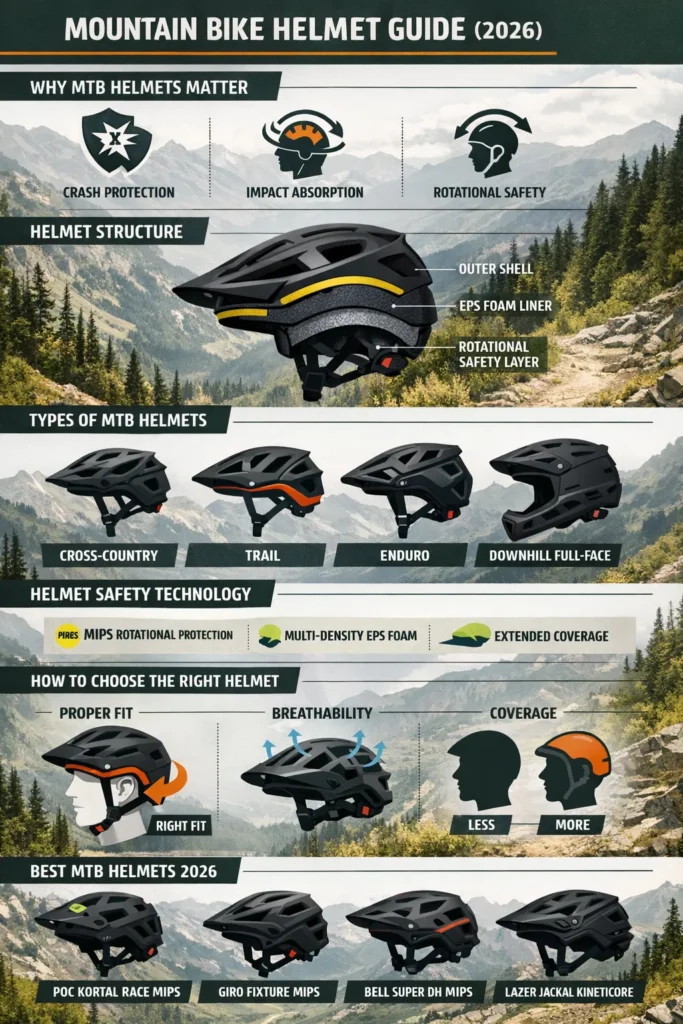
How Mountain Bike Helmets Work
To understand why helmets are so effective, it helps to explore their engineering structure.
Most mountain bike helmets feature a three-layer protection system.
1. Outer Protective Shell
Outside layers are often made of polycarbonate plastic, though some use strong mixtures instead.
What it does mostly covers these areas:
- Spreading out the force of hits over the whole helmet area
- Preventing sharp objects from penetrating the liner
- Protecting the inner foam structure
A few high-end helmets use layered composite shells, also adding reinforced polymers for longer life. Built tough, these models resist wear much better than basic versions. Their shell design combines different materials, boosting strength over time. Rather than single-material builds, they rely on mixtures that hold up under stress. Long-term resilience becomes possible through such construction choices.
2. EPS Foam Core
Inside the helmet lies the Expanded Polystyrene (EPS) foam liner.
This component performs the primary energy-absorption function.
During a crash:
- The foam compresses
- Impact energy is dissipated
- Head acceleration is reduced
This controlled compression significantly lowers the probability of severe head trauma.
However, EPS foam is designed for single-impact absorption. After a major crash, the foam structure becomes permanently deformed, which is why helmets should always be replaced after impact.
3. Rotational Protection Systems
Modern mountain bike helmets frequently include rotational impact mitigation systems.
These technologies are engineered to reduce angular acceleration during oblique impacts.
Examples include:
- Slip-plane liners
- Floating helmet shells
- Multi-density foam structures
One widely known example is the MIPS (Multi‑Directional Impact Protection System), which allows the helmet liner to slide slightly relative to the shell.
Another innovative design is Kineticore safety technology, which integrates energy-absorbing zones directly into the helmet structure.
Types of Mountain Bike Helmets
Not all mountain bike helmets are designed for the same riding style. Different MTB disciplines require different levels of protection, ventilation, and weight.
Below are the four main categories of MTB helmets.
Cross
Cross-country riders prioritize speed, endurance, and climbing efficiency.
XC helmets are designed to be:
- Extremely lightweight
- Highly ventilated
- Aerodynamically efficient
Typical characteristics include:
- Large airflow vents
- Minimal rear coverage
- Lightweight foam structures
- Thin but strong outer shells
These helmets typically weigh 250–300 grams, making them ideal for long-distance rides and endurance racing.
However, they offer less coverage compared to trail or enduro helmets.
Trail Helmets
Of all mountain bike headgear, trail models show up most often. Their flexibility makes them a go-to choice for many riders.
Few helmets manage this mix so well – light enough to wear all day, yet tough when it counts. Air flows through without letting safety slip. Comfort stays high even as miles add up. Weight never drags down your focus.
Common features include:
- Extended rear coverage
- Adjustable sun visor
- Moderate weight
- Improved side protection
Trail helmets are ideal for:
- Recreational riders
- Technical trail riding
- Mixed climbing and descending terrain
A bunch of folks on bikes go for trail helmets since these keep heads safe but stay light. Though protection matters, bulk doesn’t follow along here.
Enduro Helmets
Enduro riding combines high-speed downhill sections with challenging climbs.
Because riders reach higher speeds, helmets require stronger protective structures.
Enduro helmets often feature:
- Deep head coverage
- Reinforced shell materials
- Rotational impact protection
- Optional removable chin bars
A popular example is the Bell Super DH MIPS, known for its removable chin guard and strong safety certification.
These helmets are designed for aggressive trail riding and competitive enduro racing.
Downhill (Full-Face) Helmets
Faster than most expect, downhill mountain biking includes massive drops, rapid descents, and heavy landings. Crashes come hard, bodies take hits,, kes often break midair. Speed builds quickly, jumps appear suddenly, and control slips fast.
When it comes to staying safe, a helmet that covers the whole face – including the chin – is what most riders choose. Protection matters most, so they go with gear that shields everything.
- Key features include:
- Full head and jaw protection
- Reinforced shell structures
- Thick impact-absorbing foam
- Goggles compatibility
Starting at six hundred grams, full-coverage headgear goes up to nine hundred. Protection peaks here, though weight climbs too.
These show up often in situations like the following
- Downhill racing
- Bike parks
- Freeride mountain biking
Mountain Bike Safety Technology
Helmet engineering has advanced dramatically in recent years. Manufacturers now integrate sophisticated safety innovations designed to minimize head injuries.
Below are the most important technologies found in modern helmets.
MIPS
A brainchild born from crash research, MIPS works by slipping slightly upon impact. This tiny movement helps reduce rotational forces during angled hits. Many makers now include it in their designs. Sliding layers inside the shell makes a difference when accidents aren’t straight-on. The idea spread fast across bike, ski, and motorcycle helmets.
Movement inside the helmet happens a little when hits come at an angle. This design helps handle off-center crashes differently from straight ones.
Benefits include:
- Reduced rotational forces
- Lower concussion risk
- Improved crash protection
Many premium helmets now feature MIPS technology.
Take the POC Kortal Race MIPS – solid protection meets smart engineering. It stands out because of how much it shields, plus thoughtful details built in. Safety takes a clear shape here, shaped around real needs.
EPS and Multi-Density Foam
Although EPS foam has been used for decades, modern helmets incorporate multi-density foam layers.
Advantages include:
- Improved impact energy absorption
- Better force distribution
- Enhanced shock management
Some helmets also integrate EPP foam, which provides multi-impact protection.
Kineticore Safety Technology
Kineticore safety technology is a newer innovation developed to integrate safety structures directly into the helmet shell.
Benefits include:
- Built-in crumple zones
- Reduced helmet weight
- Improved airflow channels
An example helmet using this technology is the Lazer Jackal Kineticore.
Extended Head Coverage
Modern MTB helmets provide greater coverage than earlier designs.
Improved geometry protects:
- The temples
- The back of the skull
- Side head regions
This extended protection significantly improves safety during off-road crashes.
How to Choose
Choosing the best mountain helmet requires more than selecting an attractive design. Several important factors determine helmet safety and performance.
1. Helmet Fit
Fit is the most important safety factor.
A properly fitted helmet should:
- Sit level on your head
- Feel snug but comfortable
- Stay stable when you shake your head
- Cover the forehead properly
Most helmets include dial-based retention systems for precise adjustment.
2. Ventilation
Mountain biking is physically demanding, especially during long climbs.
Good ventilation keeps riders cool and comfortable.
Look for helmets with:
- Large airflow vents
- Internal ventilation channels
- Moisture-wicking padding
Proper ventilation reduces heat buildup and improves long-ride comfort.
3. Weight
Helmet weight directly affects comfort, particularly on long rides.
| Helmet Type | Average Weight |
| Cross-Country | 250–300 g |
| Trail | 300–400 g |
| Enduro | 350–450 g |
| Full-Face | 600–900 g |
Lighter helmets improve comfort but may provide less structural coverage.
4. Coverage
More coverage generally equals better protection.
Trail riders should look for helmets with:
- Extended rear protection
- Temple coverage
- Adjustable visors
These features improve safety during crashes.
5. Safety Certification
Always choose helmets that meet official safety standards.
Common certifications include:
| Certification | Region |
| CPSC | United States |
| CE EN1078 | Europe |
| ASTM F1952 | Downhill racing |
Certified helmets undergo strict laboratory testing for impact protection.
Best Mountain Helmets in 2026
Below are some of the best mountain bike helmets in 2026, recommended by riders and industry experts.
| Helmet | Category | Key Feature | Price |
| POC Kortal Race MIPS | Trail | Excellent coverage | Premium |
| Giro Fixture MIPS | Budget | Great value | Budget |
| Bell Super DH MIPS | Enduro | Removable chin bar | Mid-Premium |
| Lazer Jackal Kineticore | Lightweight | Advanced safety | Premium |
Best Trail Helmet
A high-quality trail helmet offers the best balance between protection, ventilation, and comfort.
Important features include:
- Extended rear coverage
- Adjustable visor
- Rotational protection systems
- Effective airflow channels
Trail helmets are ideal for most mountain bikers.
Best Budget Helmet
Affordable helmets can still provide excellent protection.
They usually include:
- EPS foam liners
- Basic rotational safety systems
- Comfortable interior padding
Budget helmets are perfect for beginner riders and recreational cyclists.
Best Enduro Helmet
Enduro riders need helmets built for aggressive trail riding and high-speed descents.
Look for helmets with:
- Reinforced shell construction
- Deep head coverage
- Optional chin guards
These helmets handle rough terrain and technical descents.
Best Downhill Helmet
Downhill riders should always use full-face helmets.
These helmets provide:
- Maximum head protection
- Face and jaw coverage
- Strong impact absorption
They are essential for downhill racing and bike park riding.
Helmet Fit Guide
Finding the correct helmet size is essential for safety.
Step 1: Measure Your Head
Use a flexible measuring tape.
Measure around your head:
- Above the eyebrows
- Above the ears
- Around the widest part of the skull
Step 2: Compare with Helmet Size Charts
Typical helmet sizing:
| Size | Head Circumference |
| Small | 51–55 cm |
| Medium | 55–59 cm |
| Large | 59–63 cm |
Always check brand-specific sizing charts.
Step 3: Adjust the Retention System
Use the helmet’s dial and straps to achieve a secure but comfortable fit.
The helmet should feel snug without causing pressure points.
Common Bike Helmet Mistakes
Many riders unintentionally reduce helmet safety.
Avoid these common mistakes.
Wearing a Loose Helmet
Loose helmets move during crashes and cannot absorb impact energy effectively.
Wearing a Damaged Helmet
Helmets should always be replaced after crashes, even if the damage is not visible.
Choosing Style Over Safety
Always prioritize:
- Proper fit
- Protective coverage
- Certified safety technology
Appearance should be a secondary consideration.
Helmet Maintenance & Replacement
A well-kept helmet lasts longer while keeping its protective strength. How you treat it shapes how long it works right.
Cleaning
To clean your helmet:
- Remove interior padding
- Wash using mild soap
- Afterward, wash it off using fresh water
A sudden reaction can ruin soft foams – steer clear of strong cleaners. Harsh substances might eat away at the structure over time. Stick to gentle formulas if longevity matters. Chemicals labeled tough often do more harm than good here.
Storage
Store helmets in:
- Cool environments
- Dry locations
- Areas away from direct sunlight
Foam loses strength when it gets warm for too long.
Replacement Timeline
Experts recommend replacing helmets:
- Every 3–5 years
- Immediately after crashes
- If foam becomes cracked or damaged
Pros & Cons
Pros
- Protects against severe head injuries
- Reduces concussion risk
- Increases rider confidence
- Some trails demand it. Bike parks often insist too
- Lightweight modern designs improve comfort
Cons
- Falls apart when hit hard, needs swapping out right after. A big jolt means it won’t last another round. After a serious crash, forget reuse – start fresh instead..
- High-end helmets can be expensive
- Full-face helmets may feel hot during climbs
FAQs
A: Many affordable helmets meet the same safety standards. However, expensive helmets usually offer:
A: Rotational safety systems improve protection during angled impacts, which are common in mountain biking crashes.
A: Most helmets last 3–5 years with regular use.
A: MTB helmets provide better coverage and protection for off-road crashes.
A: However, cross-country racers usually prefer lighter helmets for climbing efficiency.
Final Thoughts
Nothing on a bike ride counts like what sits atop your head. When wheels roll over rough paths, protection wins out over every other piece of equipment you carry.
Modern helmets combine:
- Advanced impact-absorbing materials
- Rotational protection technology
- Lightweight ventilation designs
- Improved coverage for aggressive trails
